
















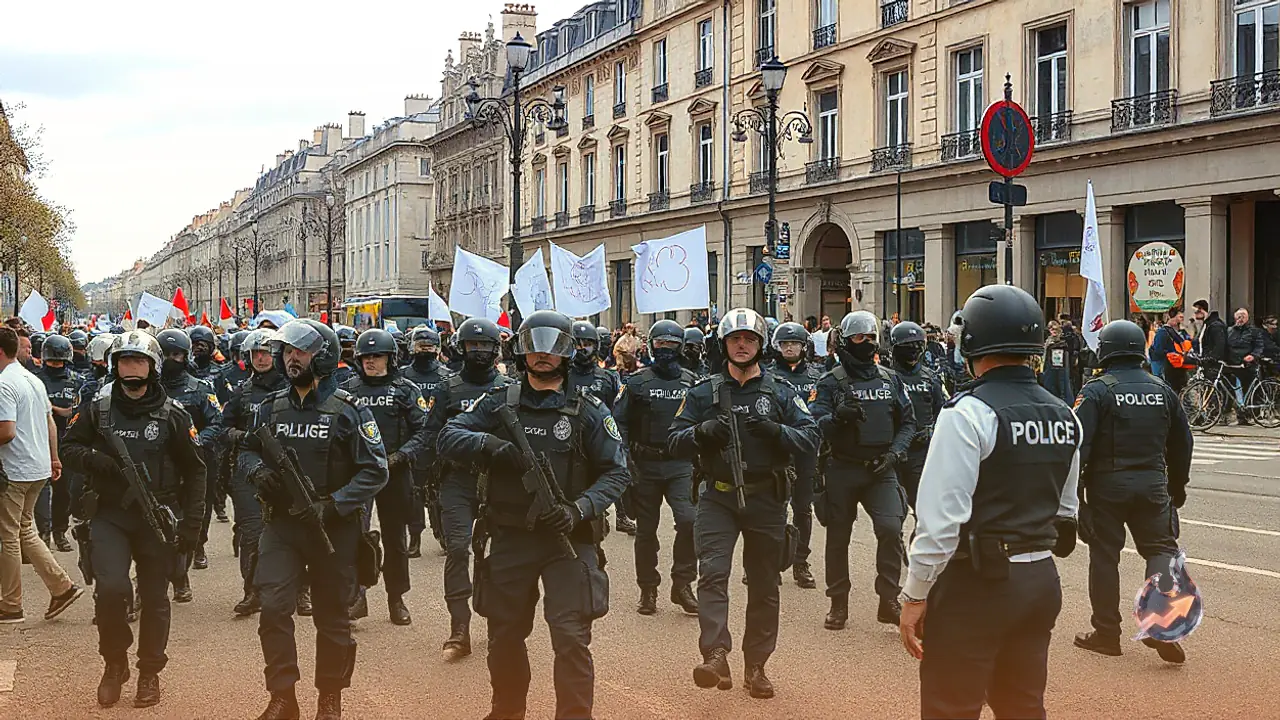

Security forces across France have been placed on maximum alert ahead of a fresh wave of nationwide demonstrations scheduled for Saturday, exactly one week after cities experienced their most intense civil unrest in decades. Despite widespread administrative curbs aimed at limiting public gatherings, hundreds of thousands of demonstrators are projected to converge on Paris and major regional hubs in a coordinated display of public anger organized by high school students, labor syndicates, and broader anti-government factions.
Massive Police Mobilization and Zero Tolerance Warning
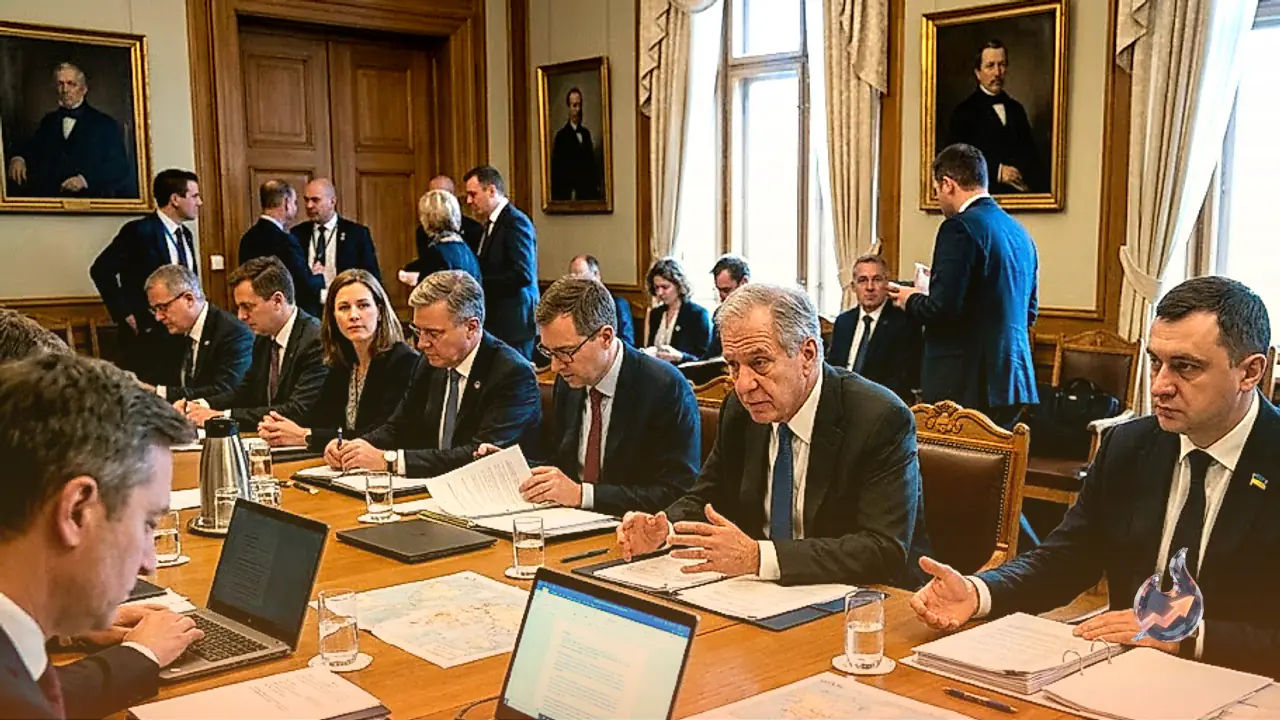
To prevent a repeat of the widespread chaos that erupted on 17 October, the interior ministry confirmed the deployment of 70,000 police officers across the national territory. The dramatic reinforcement of urban security follows sharp rebukes from parliamentary opposition parties, who accused state authorities of grossly underestimating the scale and intensity of the previous weekend's street clashes. Strategic perimeters have been established around civic infrastructure to ward off potential unrest.
Interior Minister Laurent Nuñez delivered a stern warning ahead of the weekend mobilizations, declaring that law enforcement will take an uncompromising stance against criminal behavior. Laurent Nuñez emphasized that security forces will demonstrate zero tolerance toward vandals, looters, and perpetrators of violence. He further stated that beyond legitimate strike actions, intelligence monitoring had detected widespread online calls inciting unrest originating from far-left and radical extreme-left networks. The legal system has already moved swiftly against previous offenders, with fast-track judicial hearings sending hundreds of individuals to prison for burglary, looting, and setting deliberate fires.
Classroom Grievances Evolve into Broader Cost-of-Living Anger
The current cycle of civil friction originally ignited over specific classroom issues raised by secondary school students. Teenagers had taken to the streets demanding urgent state interventions to remedy degrading school facilities and alleviate severe shortages of educational staff. However, those targeted walkouts quickly expanded into a nationwide outlet for widespread societal discontent. Citizens across France continue to grapple with escalating cost-of-living pressures, compounded by persistent warnings that any successor administration will likely implement aggressive austerity packages and deep public spending reductions.
In a bid to defuse escalating tensions before Saturday, President Emmanuel Macron hosted high school student representatives for direct talks on Friday. While student delegates acknowledged that the head of state offered specific commitments, they urged their peers to maintain active street mobilization. Presidential aides informed national broadcasters that Emmanuel Macron pledged a comprehensive package of education reforms set to be unveiled from Monday. Nevertheless, the executive concessions did little to curb momentum, as hundreds of decentralized gatherings remained scheduled across the nation.
Urban Lockdown Measures and Cultural Closures in Paris
Municipal responses to the planned marches have varied significantly across French regions. Several mayors moved forward with blanket prohibitions on public assemblies, whereas other local administrations permitted formally registered processions. In Marseille, an initial decree banning all public rallies was promptly rescinded to allow an authorized trade union march to proceed without confrontation.
In Paris, municipal authorities directed the primary rally, spearheaded by student unions and backed by organized labor, to follow a tightly restricted route skirting the city center. Precautionary measures were visible across renowned commercial and cultural corridors, where storefronts and businesses boarded up exterior windows to safeguard inventory. Major cultural institutions announced complete closures for Saturday, including the Louvre, the Musée d'Orsay, and the Picasso Museum. Sporting events were also disrupted, with football club PSG seeing its scheduled home fixture postponed until Monday.
Resurgence of Yellow Vest Movement and Demands for Resignation
Highlighting the transformation of educational walkouts into an all-encompassing political showdown, participants linked to the re-emerging yellow vest (gilets jaunes) movement are preparing to mobilize in large numbers on Saturday. The grassroots movement, which previously drew support from across the political spectrum, staged disruptive demonstrations during Emmanuel Macron's initial presidential mandate.
An online portal associated with the yellow vests registered over 500 planned protests and 200 secondary disruptive actions for Saturday, coupled with explicit demands for Emmanuel Macron to resign from office. Rejecting the official narrative surrounding the 17 October disorder, the group stated that it refused to join the general condemnation of the violence and instead accused police forces of assaulting demonstrators. Last weekend, protesters made their presence felt in the capital by draping a symbolic yellow vest over the Monument à la République in Paris.
Legal Fallout, Fast-Track Sentences, and Reconstruction Pledges
During an official visit to Limoges on Friday, French Prime Minister Sébastien Lecornu addressed the physical damage inflicted on civic structures during the previous unrest. Sébastien Lecornu promised that the central government would fully finance the reconstruction of damaged public buildings to their exact original condition, ensuring local taxpayers would not bear the financial burden of restoration work.
Simultaneously, Justice Minister Gérald Darmanin detailed the judicial repercussions facing arrested demonstrators. Gérald Darmanin stated that 232 individuals were handed immediate custodial sentences for their roles in the 17 October violence, while over 1,100 suspects had appeared before magistrates. Approximately 260 cases involved formal charges of organized gang activity. The justice minister instructed state prosecutors to pursue stringent punitive penalties against those convicted of assaulting police personnel or looting retail properties, including protest bans, the stripping of voting rights, and total prohibitions on social media usage.
Deep Political Polarization Ahead of High-Stakes Presidential Race
The escalating street battles are occurring amidst an intensely fractured political environment, as France edges toward what analysts consider its most volatile electoral cycle in decades. Emmanuel Macron is set to conclude his second presidential term next spring, and prevailing polling data indicates that a candidate representing his centrist coalition could be eliminated before reaching the decisive runoff vote in May.
Such an outcome would force the electorate into a direct contest between the hard-right National Rally and the radical-left La France Insoumise (LFI). Prominent figures from both opposing camps have laid total responsibility for the public unrest on Emmanuel Macron and his cabinet, capitalizing on widespread frustration after months during which the centrist administration struggled to maintain stable legislative majorities.
Orléans Gathering Emerging as Potential Hotspot for Clashes
Jean-Luc Mélenchon, leader and presidential contender for La France Insoumise, condemned the state's security apparatus for what he characterized as disproportionate policing. Jean-Luc Mélenchon accused Emmanuel Macron of eroding the core of the republican state by imposing sweeping curbs on civic dissent. While he had condemned the violent outbreaks following the previous week's marches, Mélenchon publicly urged his supporters to turn out for Saturday's demonstrations.
Meanwhile, the central city of Orléans, located roughly 120 kilometers (75 miles) south of Paris, has emerged as another critical flashpoint. The city is hosting a two-day gathering of the hard-right National Rally, where thousands of party members are convening to hear an address from party figurehead Marine Le Pen. Counter-protesters from various left-wing factions are expected to converge on the venue.
The mayor of Orléans cautioned this week that the city faced an unprecedented influx of political crowds, announcing the deployment of thousands of police personnel and the total suspension of municipal transit systems to curb potential brawls. Polling indicates that Marine Le Pen enjoys her strongest electoral standing yet as she undertakes her fourth presidential campaign, despite a court ruling earlier this year that found her guilty of embezzling European Union funds, an offense she continues to deny while pursuing an appeal.