

















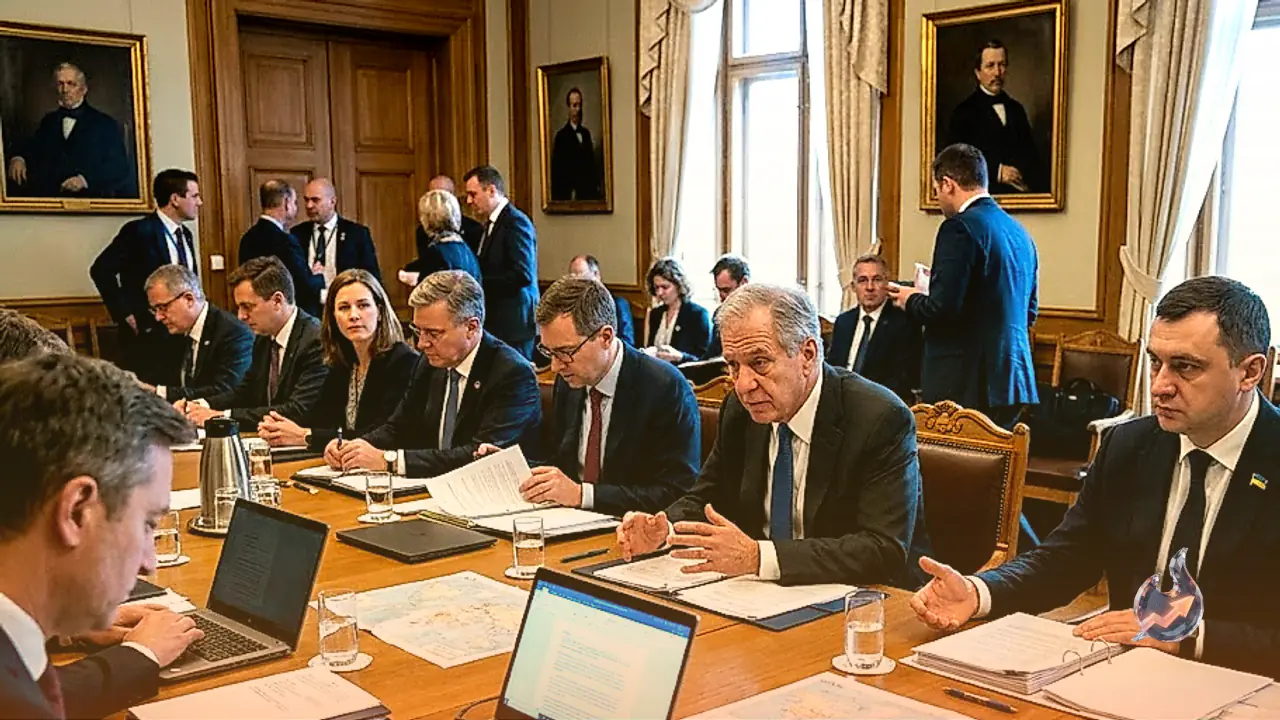

Following two days of high-level diplomatic engagements spanning Norway capital and Russia St Petersburg, the central question remains whether the conflict in Ukraine is drawing any closer to a definitive resolution. Norway prime minister characterized Tuesday discussions between Ukrainian President Volodymyr Zelensky, US President Trump special envoy Steve Witkoff, and various European representatives as good and constructive. In Oslo, participants floated the concept of convening a trilateral summit at the leadership level, harboring hopes that Steve Witkoff diplomatic mission to Russia would pave the way for a historic meeting involving President Vladimir Putin, Volodymyr Zelensky, and Donald Trump to finalize an end to hostilities.
Diplomatic Hurdles and Moscow Stance
The primary objective in Oslo was to lay the groundwork for Steve Witkoff upcoming trip to Russia, thereby facilitating a three-way summit to negotiate a ceasefire. However, President Vladimir Putin has exhibited minimal inclination to share a negotiating table with Volodymyr Zelensky unless that gathering occurs strictly within Moscow. The Kremlin has indicated a potential willingness to resume trilateral discussions next month in Abu Dhabi, though these would be strictly restricted to a technical level rather than a presidential summit.
In a published post on X, Steve Witkoff himself conceded that substantial work remains ahead, even as he maintained that President Trump stays fully committed to seeing this conflict brought to a conclusion. From the Russian perspective, the most revealing commentary emerged from Vladimir Putin foreign policy aide Yuri Ushakov, who participated directly in the St Petersburg negotiations. Ushakov noted that Steve Witkoff briefed President Putin regarding the Oslo dialogues and what the US envoy termed as fresh approaches originating from European capitals and Kyiv.
Kremlin Assessment and Strategic Realities
The Kremlin adviser appeared distinctly unpersuaded by the diplomatic overtures presented during the discussions. Yuri Ushakov remarked that concerning any substantive resolution to the broader Ukraine crisis, the proposals contained little of practical utility. During a subsequent exchange with Russian state television regarding prospective peace timelines, Ushakov stated that while the exact proximity to peace remains uncertain, diplomatic trajectories are moving in that general direction. Observers note that President Putin currently experiences negligible internal pressure to expedite an end to the war.
The Russian leadership is fully aware that Ukraine air defence systems are enduring severe operational strain. Furthermore, with the winter season approaching, Moscow may well calculate that freezing weather conditions will serve as a strategic lever to pound Ukraine into submission. Additionally, the Kremlin recognizes that the White House currently houses an American president who openly desires a more expansive, enhanced, and economically profitable partnership with Moscow.
Shifting US Policies and International Alignment
Over recent days, Donald Trump has temporarily paused several existing sanctions against Moscow, agreed to procure Russian diesel fuel, and voiced sharp public criticism directed at President Volodymyr Zelensky. These policy shifts directly benefit the Kremlin by significantly alleviating geopolitical pressure on Russian leadership. Russian parliamentarian and television anchor Evgeny Popov remarked that presently, Trump stands as the sole Western leader actively pursuing tangible steps toward peace, though critics question whether such peace aligns exclusively with Russian terms.
While an immediate trilateral summit involving Putin, Zelensky, and Trump appears unlikely, diplomatic circles anticipate a high-profile meeting between Vladimir Putin, Donald Trump, and Xi Jinping on the sidelines of the Apec summit in China next month. Political commentators have begun referring to the prospect as The New Yalta, invoking comparisons to the 1945 Yalta Conference where Josef Stalin, Winston Churchill, and Franklin Roosevelt convened to organize the post-war territorial architecture of Europe. As the conflict approaches nearly five years of relentless warfare, these developments threaten to secure Vladimir Putin prime objective of cementing Russia position at the pinnacle of global superpower politics.