





















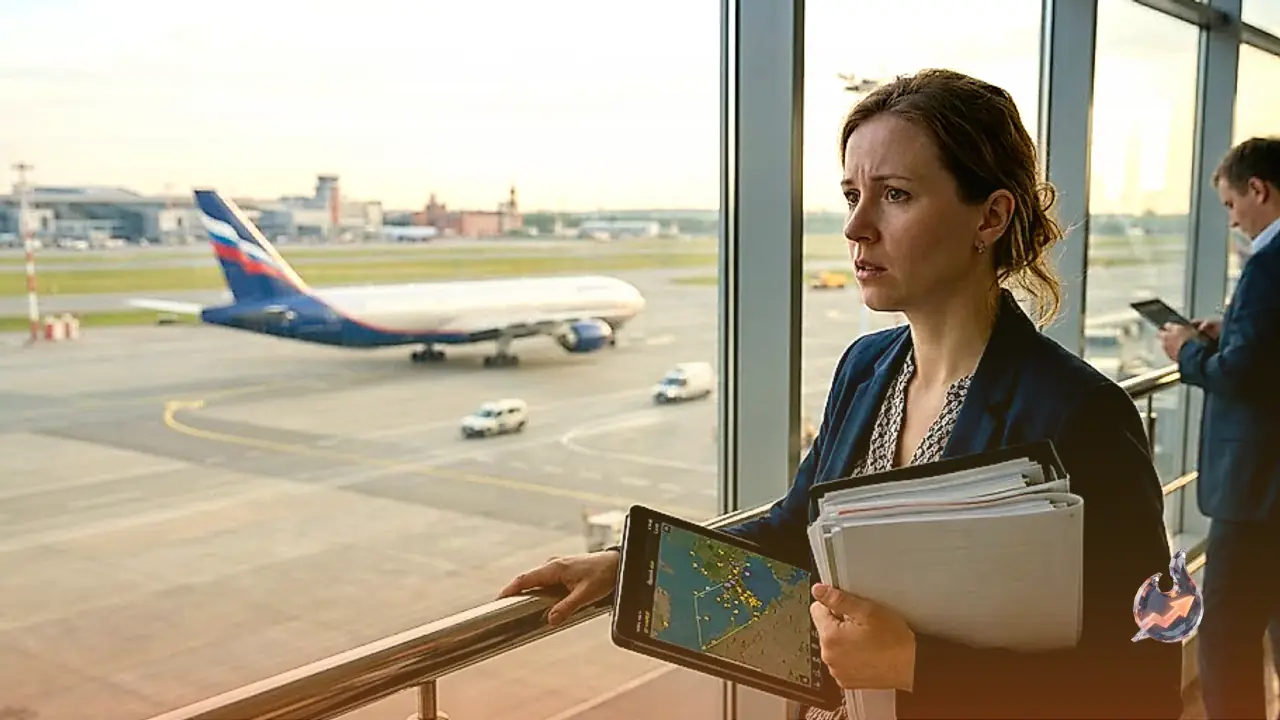

Escalating aerial warfare in Eastern Europe has prompted severe warnings for international commercial aviation as drone operations deep inside Russian territory reach unprecedented intensity. Ukrainian President Volodymyr Zelensky announced during his nightly video address on Tuesday that airspace over Russia is becoming entirely hazardous for civilian travel, effectively moving toward complete operational closure. The warning targets all commercial air carriers continuing to utilize flight paths through Russian territory, as well as marine and aviation insurers and logistics organizations servicing major transit hubs, including international airports in St Petersburg and Moscow. With long-range uncrewed aerial vehicles operating at unprecedented scale across Russian airspace, risks to commercial aircraft, passenger transport, and cargo logistics have escalated rapidly across the region.
Growing Aviation Hazards Across Russian Skies
The operational landscape for commercial flights over Eastern Europe faces significant disruption as Ukrainian military strategy increasingly focuses on striking high-value infrastructure targets within Russian borders. Recent operations have targeted major energy facilities, industrial complexes, and large commercial retail centers located deep inside Russian territory. While emphasizing that Ukrainian military actions are not intended to endanger civilian aviation directly, Ukrainian officials stressed that the sheer volume and operational density of combat drones in the skies over Russia create inherent hazards that airlines and global flight planners cannot afford to ignore.
The situation highlights how the broader armed conflict initiated by Russia is progressively shutting down traditional international aviation corridors. While civilian airspace over Ukraine has remained totally closed to all non-military aircraft since the beginning of the full-scale Russian invasion in February 2022, Russian airspace has continued to handle significant commercial transit traffic, particularly from non-Western carriers. However, the rapid expansion of long-range drone strikes is changing security calculations for flight operators and international aviation safety regulators around the globe.
Risk Intelligence Reports Warn of Airspace Miscalculation
Specialized risk assessment analyses provided to global aviation clients by Osprey Flight Solutions underscore the expanding scope of aerial threats across the region. According to intelligence alerts issued by the aviation risk advisory firm, while the highest concentration of Ukrainian drone and missile strikes remains focused within 300km (186 miles) of the border, daily long-range operations extending much farther inside Russian territory are almost certain to persist throughout the current year. Risk analysts assess that there is a realistic possibility of strike frequency increasing even further in the short term, pushing deeper into Russian domestic airspace.
A primary concern highlighted by security analysts is the heightened probability of radar miscalculation, accidental target misidentification, or air defense errors in areas adjacent to or overlapping the active conflict zone. As military air defense networks within Russia operate on heightened alert to intercept incoming uncrewed aerial vehicles, commercial airliners operating nearby face elevated risks from defensive missile fire or electronic warfare interference, creating volatile conditions for international flight crews.
Divergent Global Airline Routes and Operational Realities
The current disruption in European and Asian flight paths reflects a sharp divide in how international airlines navigate regional airspace. Following the invasion in February 2022, the vast majority of Western commercial air carriers voluntarily avoided or were formally prohibited from entering Russian airspace. In contrast, major commercial airlines based in China, Turkey, and various Gulf states have continued to operate regular routes through Russian corridors, taking advantage of shorter flight paths that yield substantial savings in transit times and jet fuel consumption on long-haul routes connecting Europe and Asia.
However, the mounting hazard of air defense engagements and unannounced drone swarms over Russian cities could force remaining international carriers to re-evaluate their flight corridors. Diverting flights around Russian airspace requires longer circumventing routes, adding thousands of miles to long-haul journeys, increasing fuel costs, extending flight times, and driving up ticket prices for passenger travel between European and Asian commercial hubs.
Moscow Denounces Warnings as Kremlin Pledges Continued Assaults
Responding to the announcements from Kyiv, Russian President Vladimir Putin strongly rejected the warnings regarding airspace safety. Speaking to media representatives at the Shanghai Co-operation Organisation summit held in Kyrgyzstan, Putin characterized the statements as a declaration of state terrorism by the Ukrainian leadership. He affirmed that Russian forces would continue their own escalating military strikes against targets across Ukraine, ruling out near-term diplomatic resolution by stating that negotiations cannot be conducted with entities engaging in terrorist actions.
During his address in Kyrgyzstan, Putin acknowledged that Ukrainian drone strikes had successfully inflicted physical damage on critical infrastructure facilities within Russia, including key energy installations. However, he attempted to downplay the operational impact of these strikes, asserting that Russian industrial repair crews had contained the damage and that only 10% of oil refineries remained in need of restoration work following recent aerial attacks.
Historical Precedents of Civil Aviation Tragedies in Conflict Zones
The heightened anxiety over civilian flight safety in Russian airspace is heavily informed by tragic historical incidents involving commercial airliners in the region. Last year, the United Nations aviation agency formally concluded that Russia was responsible for the destruction of Malaysia Airlines Flight MH17, which was shot down over eastern Ukraine in July 2014. All 298 passengers and crew members on board the Boeing 777 were killed when the civilian airliner was hit by a Russian-made surface-to-air missile. Despite the official findings of international investigators, the Kremlin has consistently denied any involvement or responsibility for the catastrophe.
More recently, in 2024, Putin issued a formal apology to the president of neighboring Azerbaijan following the fatal downing of a commercial passenger aircraft within Russian airspace, an incident that resulted in 38 deaths. At the time of the apology, official statements attributed the tragic incident to an operational accident occurring while Russian military air defense batteries were actively engaged in repelling incoming Ukrainian drone attacks. These historical precedents illustrate the extreme vulnerabilities civil aviation faces when operating over active military combat zones subject to heavy drone and missile saturation.