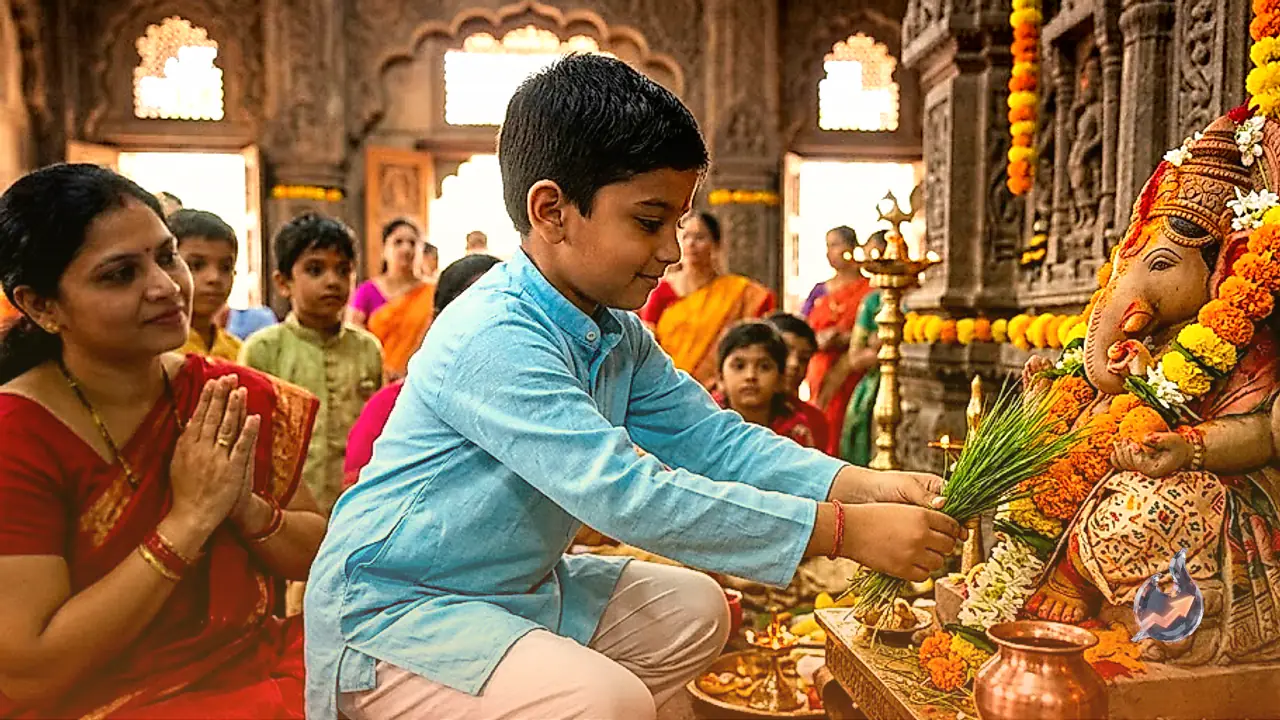
























The sacred festival of Nag Panchami is celebrated with deep devotion and traditional enthusiasm across the country on the fifth day (Panchami tithi) of the bright fortnight in the holy Hindu month of Sawan. On this auspicious day, devotees offer fresh milk, puffed rice, flowers, and fruits to Nag Devta (the Serpent God) to seek divine blessings. According to Vedic traditions, worshipping the Serpent God on Nag Panchami offers swift relief from Kaal Sarp Dosh in one's astrological horoscope. This year, the festival coincides with Sawan Somvar (a Sawan Monday), creating a rare and highly auspicious astrological alignment. Astrologers consider this rare convergence extraordinarily fruitful, as performing joint prayers for Lord Mahadev and Nag Devta on this day brings peace, prosperity, and steady growth to households.
King Janamejaya's Serpent Yajna and the Ancient Legend
The origins of Nag Panchami are rooted in a compelling legend detailed in ancient scriptures. The story centers around King Parikshit of the Kuru dynasty, who was the son of the legendary warrior Abhimanyu. Owing to a curse pronounced by Shamik Rishi, King Parikshit died after being bitten by the formidable serpent Takshak Nag. Overcome with grief and rage upon learning of his father's tragic demise, his son King Janamejaya vowed to wipe out the entire serpent race from the universe. To achieve this, he organized a grand and unprecedented sacrifice known as the Sarpa Satra Mahayajna.
Distinguished sages and scholars assembled at King Janamejaya's sacrificial site to perform the intense rituals. As the priests chanted powerful Vedic mantras, their mystic energy generated an irresistible force that pulled snakes of all kinds from across the earth directly into the sacrificial fire pit. As thousands of serpents perished in the flames, panic gripped the serpent kingdom. Desperate to save his life, Takshak Nag fled to the heavens and sought sanctuary with Devraj Indra, wrapping himself tightly around Indra's celestial throne.
The Intervention of Astika Muni and the Protection of Serpents
Realizing that Takshak Nag had anchored himself to Devraj Indra's throne, the officiating priests intensified their incantations to drag Indra along with his throne and the serpent into the flaming altar. Fear and anxiety swept through Devlok as the cosmic balance was threatened. The deities approached Mata Mansa Devi, seeking a solution to halt the devastating yajna. In response, Mata Mansa Devi dispatched her son, the brilliant young scholar Astika Muni, to King Janamejaya's sacrificial arena.
Astika Muni addressed King Janamejaya with profound wisdom, eloquence, and righteous arguments, winning the king's deep admiration. Pleased by the young scholar's discourse, King Janamejaya granted him any boon of his choice. Instead of seeking personal wealth or power, Astika Muni requested the immediate termination of the Sarpa Satra Mahayajna and total immunity for the surviving serpents. Bound by his royal promise, King Janamejaya halted the sacrifice, preserving the lives of Takshak Nag and the remaining serpent lineage.
Religious Significance and Traditions of Nag Panchami
The date on which Astika Muni successfully stopped the yajna and saved the serpent race was the Panchami tithi of Shukla Paksha in the month of Sawan. To soothe the intense heat and burning sensation suffered by the surviving snakes from the sacrificial fire, Astika Muni gently sprinkled unpasteurized milk and water over them. Moved by this compassionate act, the serpents bestowed a blessing: anyone who performs rituals for Nag Devta and offers milk on this specific day will remain completely protected from snakebites and snake-related fears. This landmark event established the timeless observance of Nag Panchami.
The co-occurrence of Nag Panchami and Sawan Somvar offers a powerful spiritual window. Observing a fast, visiting Shiva temples, performing water abhishekam on the Shivling, and presenting milk, puffed grain, and floral offerings to Nag Devta on this day is believed to eliminate negative planetary influences, including Kaal Sarp Dosh and the afflictions of Rahu and Ketu, bringing spiritual protection and harmony.