
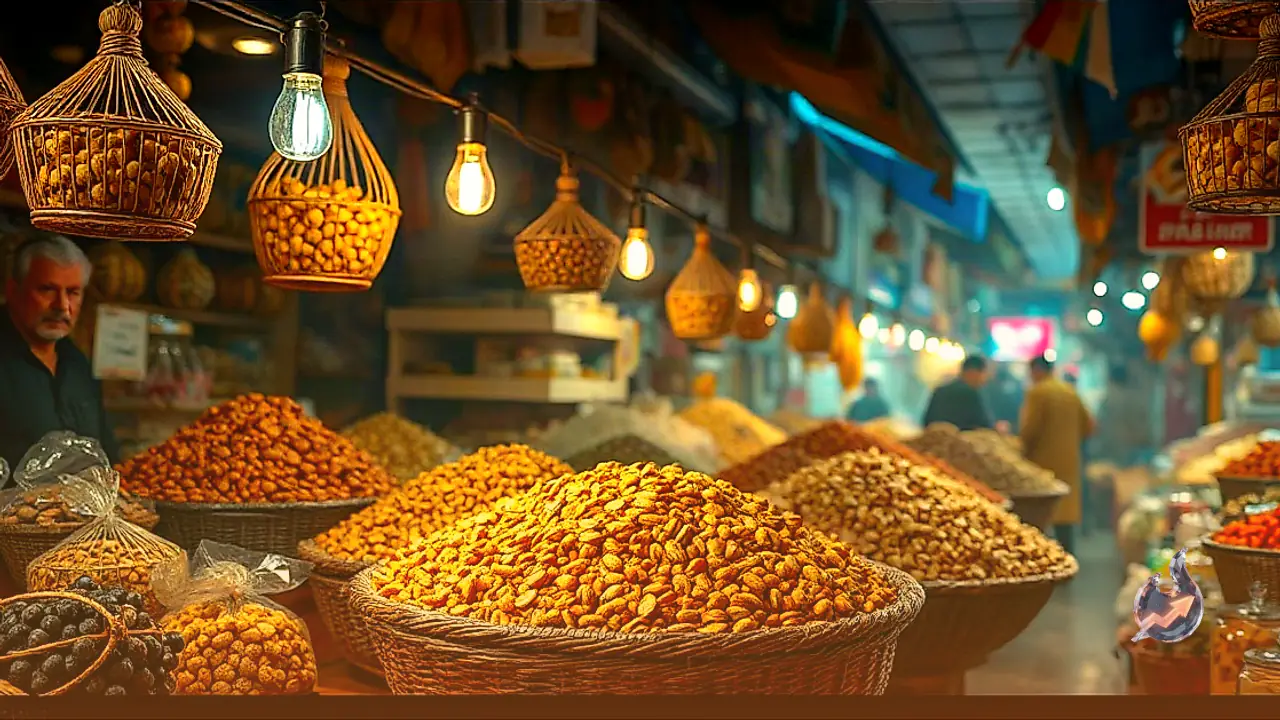






















Khari Baoli in Old Delhi, widely regarded as Asia's largest wholesale market for dry fruits, wears a different look this week. For the past few months, footfall at the market had thinned out considerably as prices of nearly every variety climbed sharply. But with the season's signature winter dry fruits now arriving in bulk, the market has sprung back to life. Buyers who specifically wait for these cold-weather nuts and fruits are flocking to the lanes of Khari Baoli, and foreign tourists in particular have been showing up in noticeably larger numbers.
Dried Apricots Remain the Cheapest Pick
Stalls across the market are currently stocked with dried apricots imported from Afghanistan and Turkey. Rich in beta-carotene, fibre and potassium, dried apricots are a favourite through the winter months. Compared with other dry fruits on sale, apricots are still the most affordable option. A 500-gram pack sells for around Rs 375, while premium varieties of the same fruit are priced anywhere between Rs 500 and Rs 700, with some going even higher. More buyers turn to this fruit every winter as demand keeps climbing.
Chilgoza Stays a Winter Favourite at Rs 5,800 a Kilo
Chilgoza, or pine nuts, is consumed the most during winter even though it remains available in the market all year round. It is considered to have a warm effect on the body, which is why it is commonly mixed into milk, halwa, panjiri and other winter dishes during the cold season. Chilgoza is also a good source of protein along with minerals such as magnesium, copper and manganese, which adds to its appeal as a health food. At Khari Baoli, it is currently priced at around Rs 5,800 per kilogram, placing it among the market's costlier dry fruits.
Brazil Nuts Arrive Early, Prized for Thyroid Health
This year, Brazil nuts have reached the Delhi market earlier than usual, and buyers are picking them up, albeit in limited quantities for now. While Brazil nuts are eaten through winter on their own, they are also often mixed with chilgoza or dried dates. Being an expensive imported dry fruit, Brazil nuts are priced between Rs 3,000 and Rs 4,000 per kilogram in the Delhi market. Their standout nutritional feature is selenium, a powerful antioxidant that is considered particularly useful in managing thyroid-related conditions.
Hazelnuts Bring Vitamin E to the Table
Hazelnuts have also taken over a large share of shelf space in Delhi's dry fruit market and are considered among the best dry fruits to eat in winter. They are available throughout the year but are consumed more heavily during the cold months. Hazelnuts are a good source of vitamin E and monounsaturated fats. In the market, hazelnuts are priced at around Rs 3,000 per kilogram, while shelled hazelnut kernels cost about Rs 2,700 per kilogram.
Macadamia Nuts and the Rest of the Dry Fruit Lineup
At Khari Baoli, macadamia nuts are currently priced at around Rs 2,800 per kilogram. Their biggest nutritional highlight is their monounsaturated fat content, along with fibre, protein, magnesium, copper and antioxidant properties. Macadamia nuts, too, are consumed the most in winter, and are especially popular as a snack. Beyond these specialty imported nuts, the market is also stocked with almonds, cashews, dried dates, raisins and dry grapes known as munakka, each carrying its own separate price point.