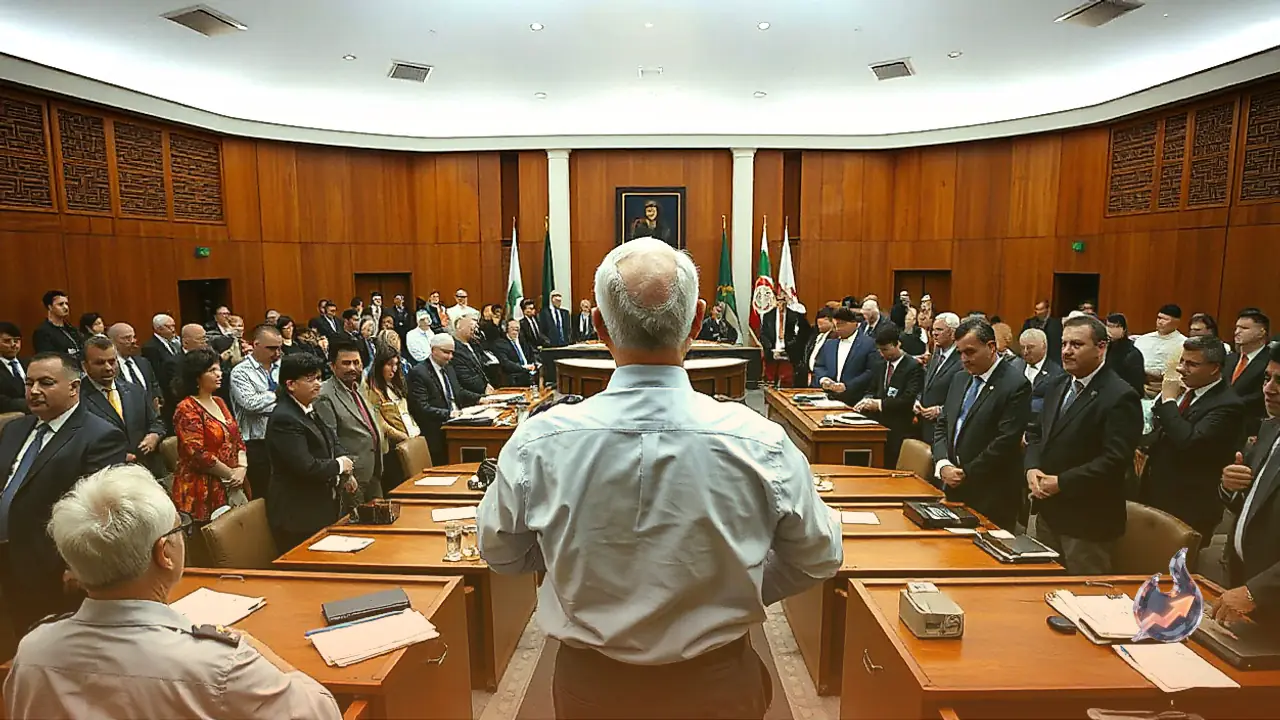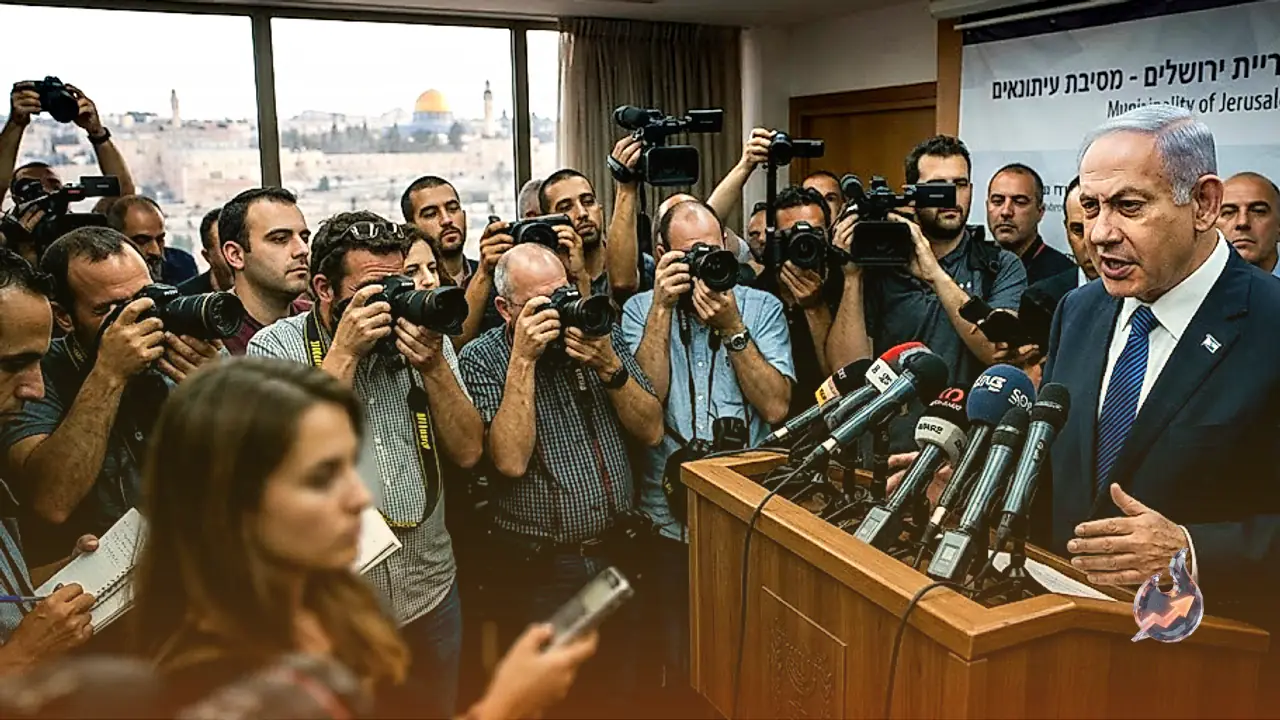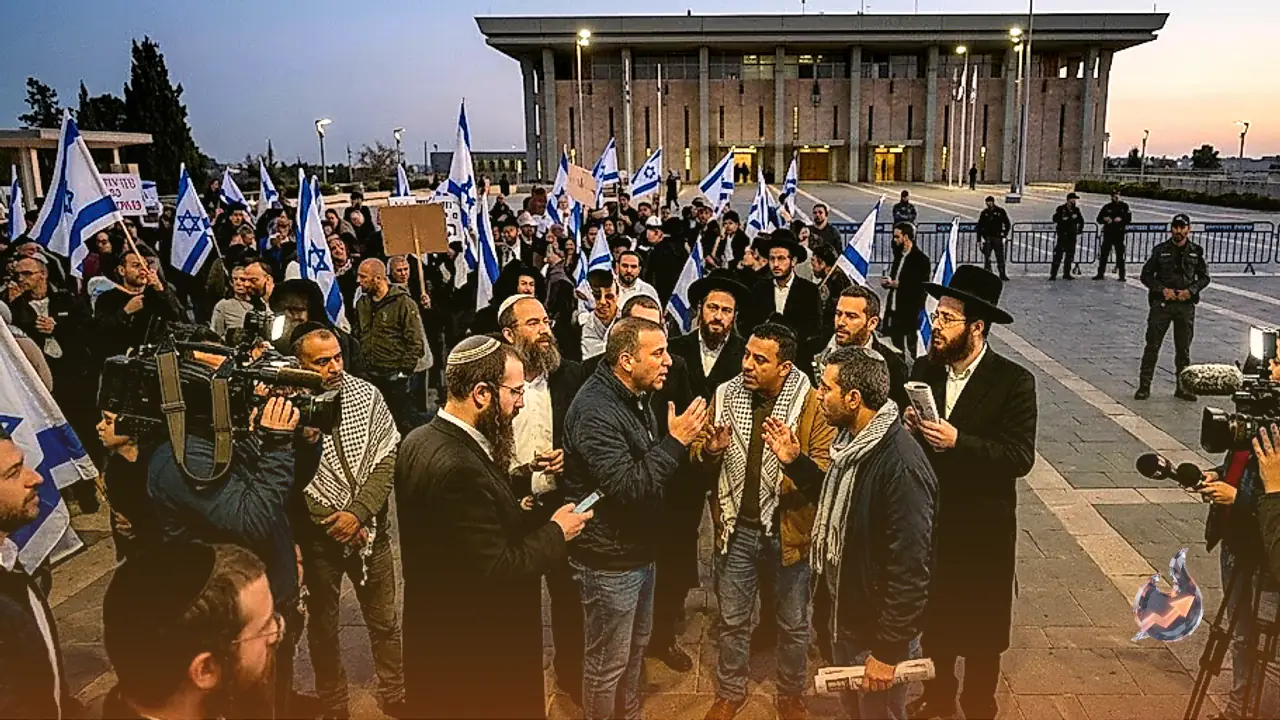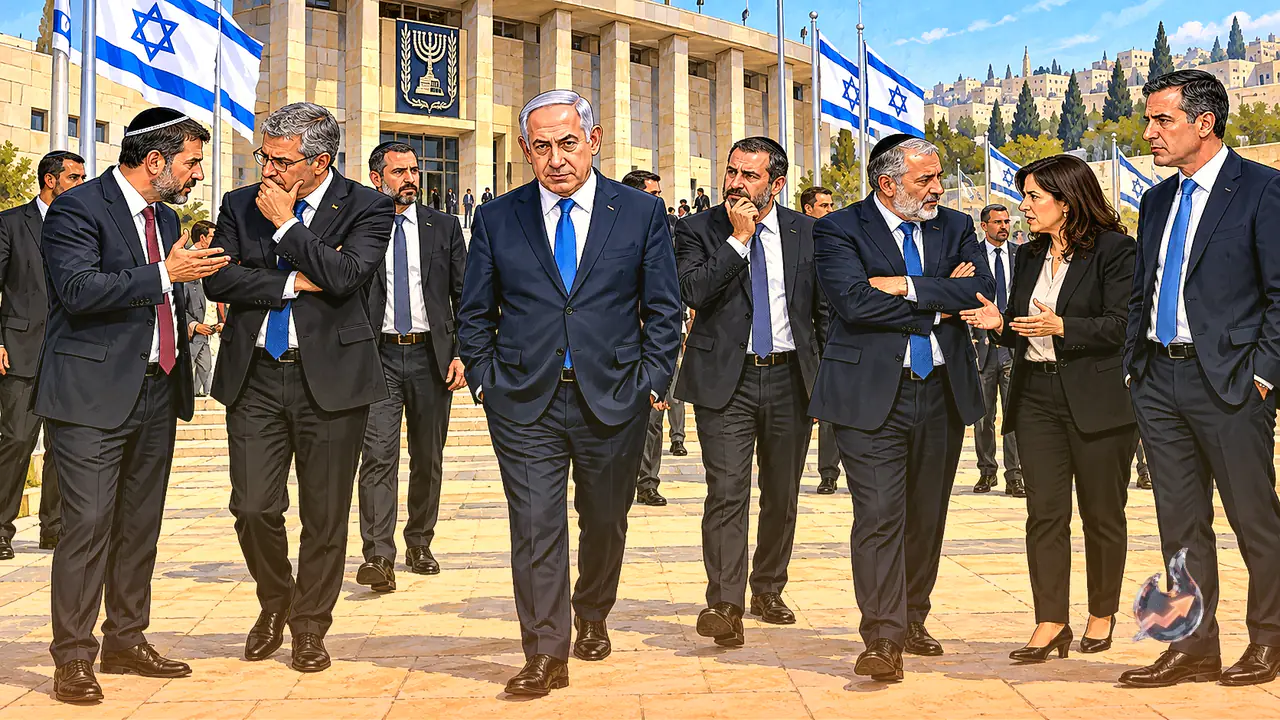




















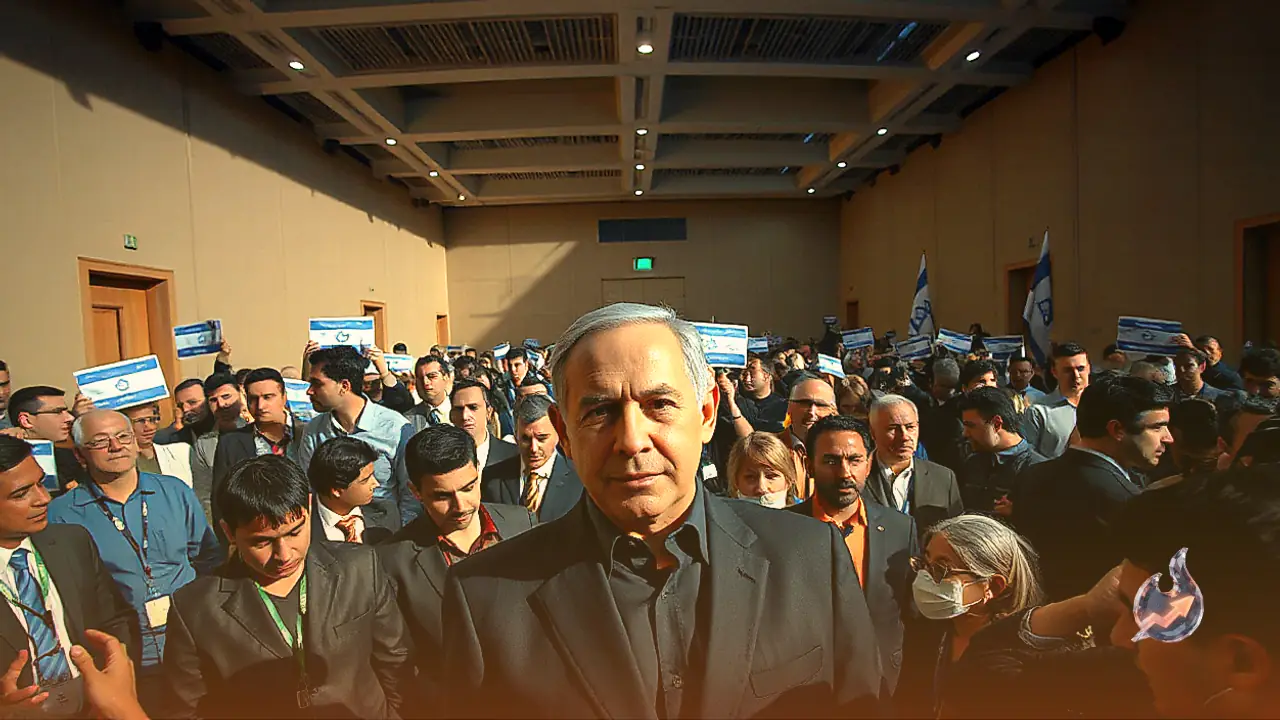

A deep political crisis has gripped Israel following the announcement of final parliamentary election results that saw Prime Minister Benjamin Netanyahu's governing coalition lose its parliamentary majority. In the wake of the setback, Netanyahu's Likud party launched an aggressive offensive, accusing Arab-led political parties of stealing the election through illicit means. The confrontation escalated rapidly after Israel's internal security agency, the Shin Bet, was asked to examine whether Arab factions accepted unauthorized funding from Qatar and Turkey. The development has triggered a fierce denunciation from main opposition leader Gadi Eisenkot and prominent Arab politicians, who accuse Netanyahu of attempting to delegitimize the outcome of a democratic election.
Parliamentary Deadlock and the Arab Parties' Record Feat
The definitive tallies for the 120-seat Knesset revealed that neither major political camp secured an outright governing majority. Netanyahu's right-wing bloc captured 53 seats, falling well short of the 61-seat threshold needed to form an administration. His principal challenger, Gadi Eisenkot, secured 48 seats with his opposition alliance. The balance of power swung dramatically to two Arab party lists, the Joint List and Ra'am, which defied historic trends to secure a record-breaking 19 seats combined.
Arab citizens of Israel, many of whom identify as Palestinian citizens of Israel, account for roughly one-fifth of the nation's total population. Historically, substantial portions of the community boycotted Israeli elections, citing systemic discrimination and arguing that participating in the ballot box merely lent legitimacy to an establishment that treated them as second-class citizens. On Tuesday, however, Arab voter turnout surged significantly, driven by a collective determination to unseat what has been described as the most right-wing coalition government in the nation's history.
Bribery Allegations and International Pushback
The political dispute erupted when the head of the Central Elections Committee asked the Shin Bet security service to investigate serious suspicions concerning foreign interference. Likud subsequently claimed that Arab voters had been effectively bribed to back Arab party lists, pointing toward allegations presented to election officials that Qatari funds had been funneled into Arab communities to artificially inflate voter participation. Likud framed the situation as a political earthquake and an assault on democratic norms designed to topple the right-wing administration.
These assertions drew immediate condemnation from abroad. The Foreign Ministry of Qatar categorically rejected the accusations, describing them as both ridiculous and dangerous. Qatari officials stated that Israeli political figures were pursuing a deliberate disinformation campaign directed against Doha to deflect from domestic political challenges.
Security Agencies and Officials Clarify the Inquiry
Both Arab factions forcefully dismissed Likud's charges, with the Arab-majority Joint List alliance characterizing them as completely groundless. Domestically, institutions moved quickly to qualify the scope of the inquiry. The Shin Bet issued a clarification noting that its ongoing investigative work did not implicate an entire voting community that had lawfully cast ballots. Simultaneously, Dean Livne, acting Director General of the Central Elections Committee, stated on the record that there was no factual basis to substantiate claims of widespread or systematic violations regarding the integrity of the election.
Gadi Eisenkot, having received an official briefing regarding the Shin Bet's steps, stated that it remains far too premature to establish what occurred, or whether any illicit activity took place at all. He squarely charged Netanyahu with orchestrating a coordinated public relations campaign intended solely to strip the election outcome of its legitimacy.
Sami Abu Shehadeh, the chairman of Balad and a leading figure within the Joint List, offered an equally blistering response. He argued that the defeated political camp was fabricating a racist blood libel while dangerously urging internal security agencies to overturn an authentic democratic mandate.
Social Media Rhetoric and High Stakes Campaigning
Netanyahu's rhetoric surrounding the Arab electorate was intense throughout the campaign and peaked on polling day itself. The prime minister dedicated extensive portions of election day to publishing social media warnings, framing substantial Arab voter turnout as an acute national emergency and a literal matter of life or death for the political right. In an effort to mobilize right-wing turnout, he distributed AI-generated visuals depicting crowds of Arab voters gathering at polling stations.
Political observers interpret the ongoing attacks on the Joint List, headed by figures including Yousef Jabareen, and Ra'am as a strategic gambit. By framing Arab parties as compromised by foreign influence, critics argue, Netanyahu aims to raise the political cost of any prospective alliance between Eisenkot and the Arab factions, effectively blocking Eisenkot's only mathematical pathway toward constructing a governing coalition.
The Complex Road Toward Government Formation
Under Israeli constitutional rules, the responsibility of determining the next step falls upon the state president, who must consult with party leaders before mandating the candidate considered best positioned to assemble a 61-seat majority. The selected nominee is granted up to 42 days to finalize an agreement. Should that nominee falter, the mandate transfers to a second chosen figure who receives 28 days. A third contender may subsequently be granted a final 14-day window. In the event that all attempts fail, parliament is dissolved and fresh national elections are triggered.
Given the numbers produced by the ballot, analysts identify only three viable governing arrangements. The first involves a national unity pact uniting Netanyahu and Eisenkot. The second requires Netanyahu to entice defectors from Eisenkot's faction to piece together a narrow right-wing majority. The third possibility centers on Eisenkot assembling an administration supported by the Arab parties.
Historically, Eisenkot alongside all but one member of his political bloc had steadfastly refused to sit in an administration alongside Arab parties. However, intense discussions have emerged regarding whether a pragmatic compromise can be reached. A snap poll administered by Hebrew University indicated that the favored resolution among voters across the opposition bloc is for Eisenkot to establish a minority administration alongside Ra'am, sustained through outside parliamentary support provided by the Joint List.