






















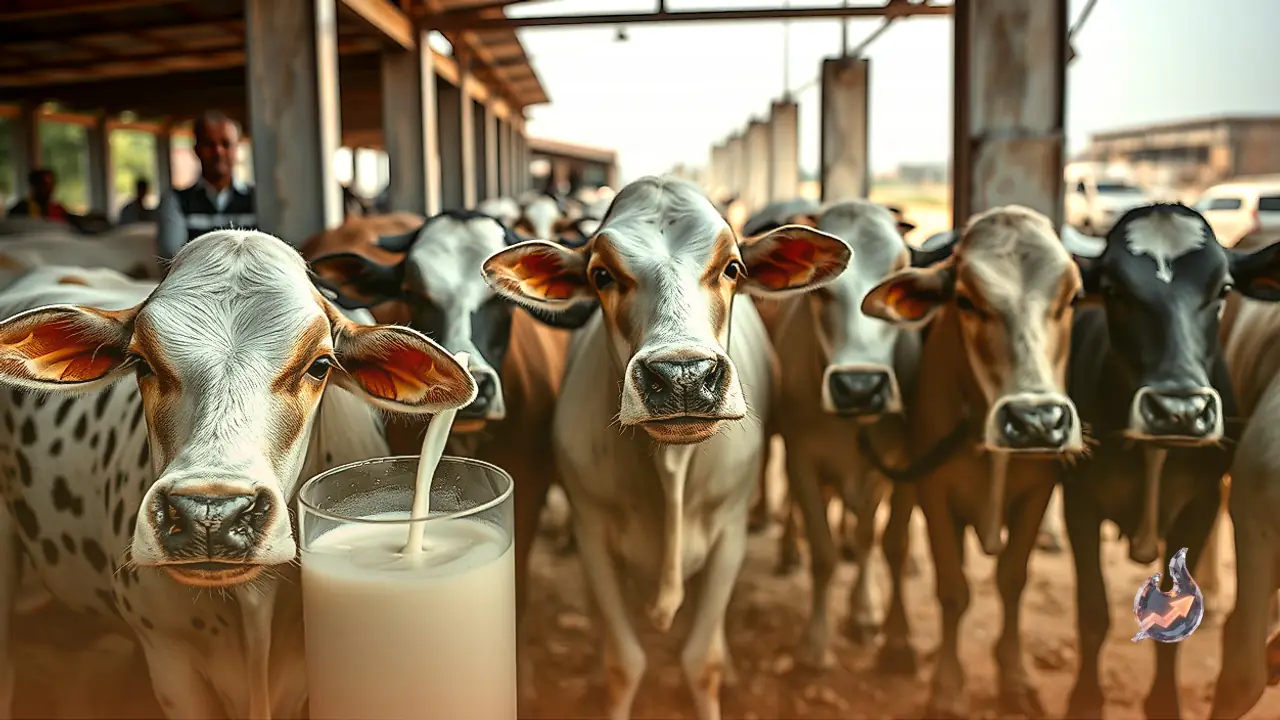

Pouring a glass of milk in the morning rarely triggers any suspicion about invisible microorganisms lurking within the liquid. For many households across towns and villages, raw milk sourced directly from local dairy farms or cattle sheds carries an aura of natural purity and freshness. This perception often leads people to drink it without prior heating or boiling. However, freshness and microbiological safety are two fundamentally different concepts. Without proper thermal treatment, farm-fresh milk can serve as a potent vector for pathogenic bacteria that cannot be detected with the naked eye, turning a daily nutritional habit into a severe health hazard.
Understanding Raw Milk and the Hidden Bacterial Dangers
Raw milk refers to milk that has not undergone standardized thermal treatment such as pasteurization. Even when cattle handlers practice rigorous hygiene during milking, microscopic contaminants from the animal's skin, udder, milking equipment, or surrounding environment can still enter the supply. According to CDC data, unpasteurized milk frequently harbors virulent pathogens including Campylobacter, E. coli, Listeria, Brucella, and Salmonella.
What makes this exposure particularly deceptive is that contaminated milk rarely looks, smells, or tastes spoiled. It retains the standard texture and aroma of fresh dairy, creating a false sense of security. Assuming that milk straight from a cow or buffalo is naturally sterile is a hazardous misconception. The risk escalates drastically for vulnerable groups such as pregnant women, young children, older adults, and individuals with compromised immune systems, whose bodies struggle to counter aggressive systemic infections.
The Threat of Brucellosis and Associated Complications
Among the primary infectious threats linked to raw dairy consumption is brucellosis, triggered by the bacterium Brucella. The CDC notes that humans contract this systemic illness through contact with infected animals or by consuming their unpasteurized dairy derivatives. Raw milk serves as one of the chief transmission pathways for this pathogen.
Patients suffering from brucellosis commonly experience recurrent fever, chronic fatigue, night sweats, severe headaches, and persistent pain across joints and muscle groups. If left untreated or improperly managed, the infection can progress to life-threatening clinical complications, including inflammation of the inner heart lining and valves, known as endocarditis.
How Pasteurization Protects Consumers and FSSAI Protocols in India
Pasteurization represents a precise, scientifically validated thermal method designed to eliminate dangerous microbes while preserving nutritional integrity. Merely warming milk gently on a stove does not equate to pasteurization. The procedure requires heating every particle of the liquid to a specified temperature, holding it there for a predetermined duration, and then cooling it down rapidly to curb bacterial regrowth.
In India, the apex food regulator, FSSAI, prescribes rigorous operational metrics for commercial dairy processors. Under FSSAI standards, pasteurization requires holding every particle of milk at a minimum temperature of 63 degrees Celsius for at least 30 minutes. Alternatively, processors can utilize the high-temperature short-time method by heating the milk to at least 71.5 degrees Celsius for a minimum of 15 seconds. After reaching these parameters, the milk must undergo immediate rapid chilling. The regulatory framework of FSSAI also permits other validated temperature-time combinations that deliver equivalent microbial safety.
Regulatory Restrictions in the United States and Essential Consumer Safeguards
Due to well-documented outbreaks linked to unpasteurized dairy, American health regulators adopted an uncompromising stance decades ago. The FDA banned the interstate sale and distribution of raw milk in 1987. Within individual state borders, however, raw milk commerce remains subject to state-level legislation. As the FDA observes, legal permissions vary considerably from one state to another across the country. Federal public health institutions regard pasteurization as an indispensable safeguard, with the CDC continually advising consumers to purchase only pasteurized milk and processed dairy products.
In India, retail packet milk is governed by FSSAI regulations, making it prudent for consumers to verify labeling details on packaging before purchase. If households obtain unprocessed milk directly from farm vendors without clear pasteurization credentials, drinking it raw is a major medical hazard. Boiling the milk thoroughly at home remains an essential and effective barrier against foodborne pathogens.