





















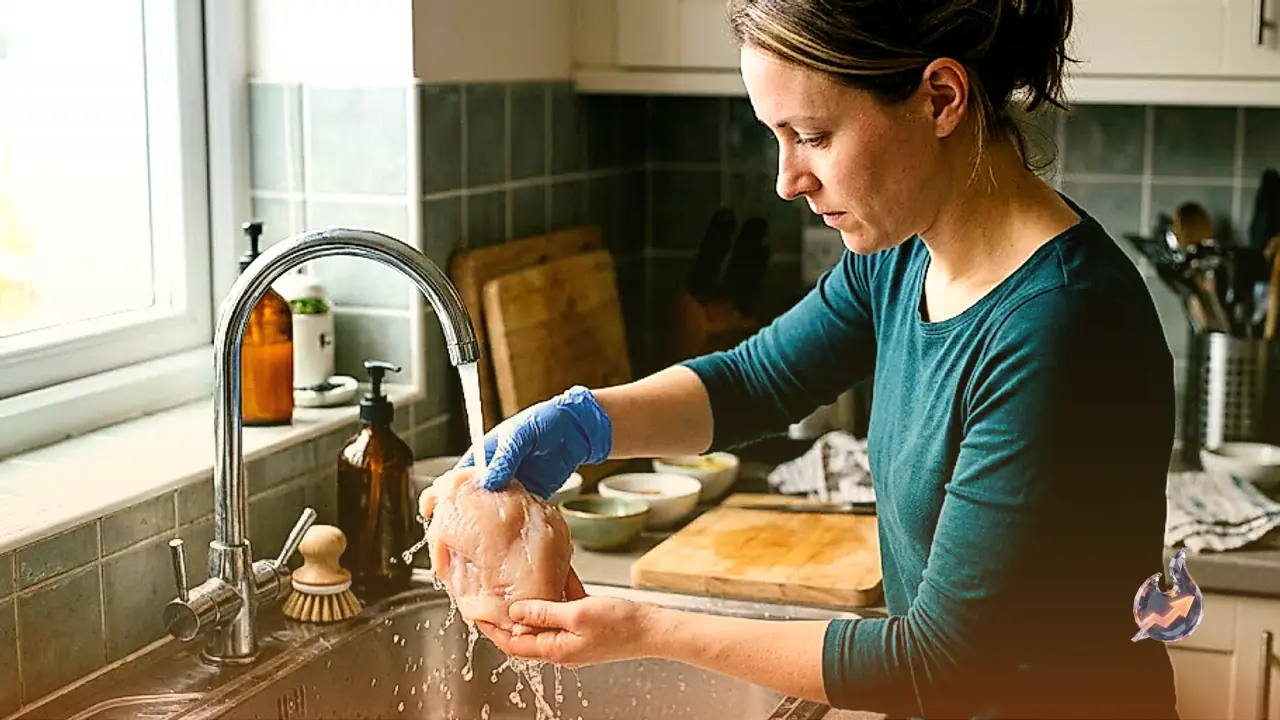

Generations of households have taught us a simple rule: whether dealing with fresh vegetables or fruits, every item brought home must be washed before use. We have followed this habit for centuries without a second thought. However, if you apply this traditional rule to raw chicken, food safety experts warn that it is entirely wrong. Washing raw chicken immediately after bringing it home before cooking can actually turn into a major hazard for your health.
The Hidden Danger of Cross-Contamination
In a report by the Cleveland Clinic, dietitian Beth Czerwony explains that washing raw chicken is not beneficial at all and can instead prove harmful. The underlying reason is that bacteria residing on the surface of the chicken can easily splash onto sinks, kitchen counters, utensils, and other food items via water droplets. In short, washing raw chicken can turn your kitchen into a breeding ground for cross-contamination. When you wash raw chicken in your kitchen sink, water splashes transport bacteria to knives, countertops, and nearby foods. Most importantly, water does not kill bacteria. This raises the obvious question of how chicken should actually be cleaned, and science provides a clear answer.
Why Do Most People Wash Chicken?
The prevailing mindset behind washing chicken stems from the belief that it is not clean until washed. But the reality is that washing does not kill bacteria; instead, it disperses them across the entire kitchen through water splashes, creating the severe danger of cross-contamination. Cross-contamination means the transfer of bacteria from one surface to another. Suppose you wash raw chicken and the contaminated water splashes onto the sink, counter, or a knife. Later, you place salad, fruits, or another ready-to-eat item on that same spot. The bacteria from the chicken can easily transfer to those food items, making cross-contamination one of the leading causes of food poisoning.
Many people soak raw chicken in salted water hoping it will kill the bacteria, but this is a misconception. Soaking may alter the taste of the chicken, but it does not eliminate the pathogens.
The Correct Way to Ensure Safety
The true method to make chicken safe for consumption is cooking it thoroughly to the correct internal temperature of 165°F or approximately 74°C. It is precisely at this high temperature that dangerous bacteria such as Salmonella and Campylobacter are completely destroyed. These are the exact pathogens responsible for food poisoning, severe diarrhea, vomiting, and abdominal cramps.
So the question arises: should store-bought chicken be cooked directly without washing? The answer is that if there is excess moisture or visible blood on the chicken, you can gently pat it dry using a paper towel instead of rinsing it under water. Following this, thorough sanitation of your hands, utensils, and surrounding surfaces is absolutely essential.
Essential Tips for Handling Chicken Safely
Always cook raw chicken thoroughly until it reaches 74°C or 165°F. Furthermore, always keep raw and cooked foods completely separated to prevent any accidental spread of harmful bacteria in the kitchen.