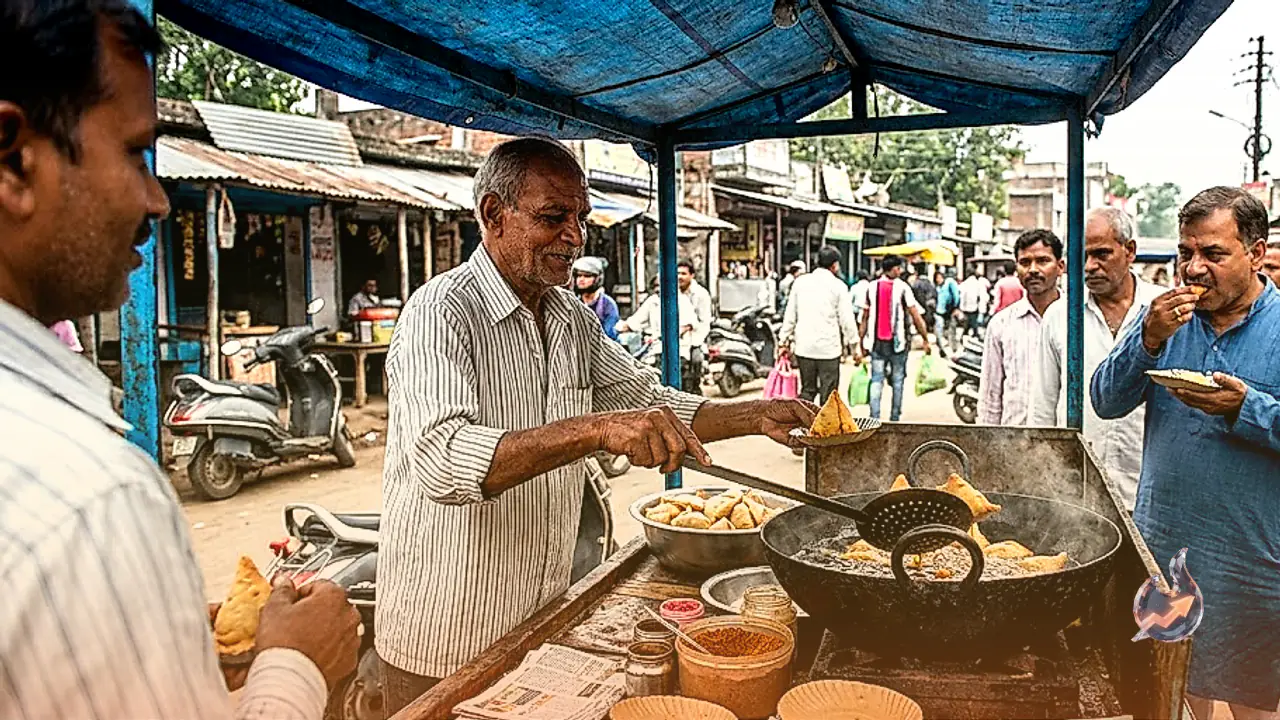





















Every morning at 9 AM, the rich aroma of pure ghee and oil wafts across Mahua Bagh Chauraha in Ghazipur, Uttar Pradesh, signalling the start of a cherished culinary ritual. As fine streams of black gram batter hit the piping hot oil, they quickly transform into intricate, golden Imartis under the skilled hands of the artisan. Today, Sunny Pal manages this iconic sweet shop, upholding a legacy established three generations ago by his grandfather. For local food lovers across the city, a visit to this street stall marks the true beginning of their morning and evening snack routines.
A Three-Generation Culinary Legacy at Mahua Bagh Chauraha
Decades have passed and the surrounding town has evolved, but the foundational rules at Sunny Pal's sweet stall remain strictly unchanged. Operating between 9 AM and 7 PM daily, the kitchen mixes fresh batter twice a day. This ensures that no customer receives stale or leftover sweets, but rather crisp, steaming Imartis straight from the frying vessel. Maintaining this level of discipline day in and day out has preserved the stall's reputation for uncompromising quality across generations.
Mastering Wrist Balance and the Art of Syrup Soaking
Forming the delicate lattice loops of an Imarti requires exceptional wrist balance and years of dedicated practice over hot cauldrons. The artisan skillfully squeezes the urad dal paste into bubbling oil, weaving intricate floral rings with a hollow center. Once cooked to a rich golden-brown hue, a slender wooden skewer is used to lift clusters of fried Imartis directly from the oil into warm sugar syrup. Displayed neatly in broad baskets after their syrup bath, these glistening creations resemble handcrafted sweet bouquets. Demand is so high that 150 to 200 pieces are sold out rapidly every single day.
Understanding the Difference Between Imarti and Jalebi
While casual consumers frequently confuse Imarti with Jalebi, their ingredients, preparation methods, and structural textures are vastly different. Jalebi is crafted from fermented refined flour batter shaped into simple concentric circular loops. In contrast, Imarti relies exclusively on a fine paste of ground urad dal, formed into a complex mesh of floral loops centered around a ring. Available at ₹25 per piece, the distinct crunch, chewiness, and rich flavour profile of this Imarti set it apart from ordinary confectioneries.
Preserving Heritage Taste in the Era of Automated Fast Food
In an age dominated by modern machines and commercial fast-food chains, Sunny Pal's modest street-side counter stands as a testament to traditional Indian craftsmanship. What began with his grandfather has now reached the third generation, serving as a nostalgic connection for the people of Ghazipur. Crowds gather around the shop morning and evening to witness the artistry and savour the freshly fried delicacy. Priced at just ₹25 per piece, this Imarti is far more than a sweet treat; it is an irreplaceable piece of Ghazipur's living culinary culture.