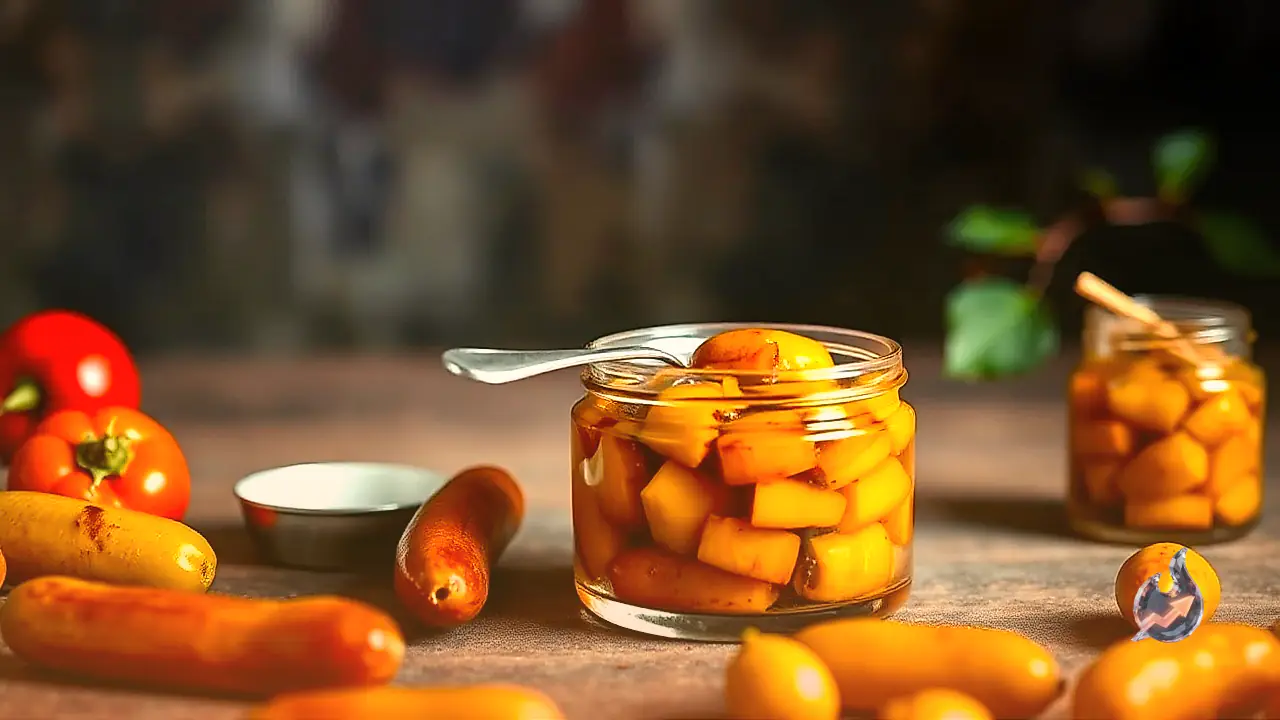



















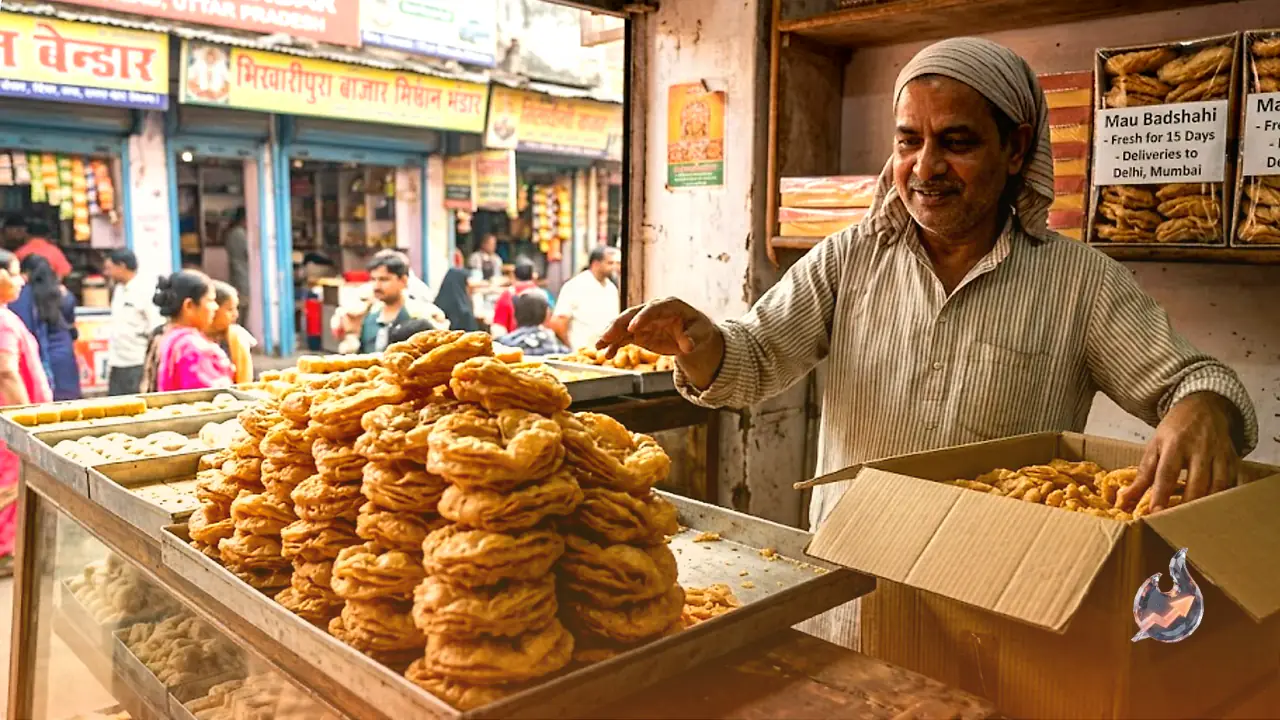

In the Bhikharipura Bazar of Mau district in Uttar Pradesh, a sweet shop called Ankit Sweet House has quietly built a devoted following that now stretches well beyond the neighbourhood, reaching as far as Delhi and Mumbai. The draw is a unique confection called Badshahi: a crispy, mildly sweet treat made from just two basic ingredients that stays perfectly fresh for a remarkable 15 days at room temperature.
A Sweet That Travels Hundreds of Kilometres
Customers who come to Ankit Sweet House arrive from Mau, Azamgarh, Ballia, and Ghazipur, but the shop's reach extends much further. People heading back to Delhi and Mumbai after visiting the region make it a point to stop here, get the Badshahi packed, and carry it home with them. Because the sweet does not spoil for up to 15 days, it arrives at its destination in distant cities still intact and ready to eat. This durability has been the engine behind its growing popularity, transforming a local market sweet into something people actively seek out across multiple states.
Just Two Ingredients
The owner of Ankit Sweet House explains that Badshahi calls for nothing more than maida, which is refined flour, and shakkar, which is sugar. No preservatives, no artificial coloring, and no flavoring agents are added. Yet the resulting sweet manages to deliver a texture that is genuinely satisfying: it eats like a cross between a crispy Indian snack and a traditional sweet, offering both crunch and a gentle sweetness in the same bite. For anyone who wants something light yet indulgent, something that is not too heavy and not too simple, the Badshahi hits precisely the right balance. That quality has made it a first choice for a broad range of customers.
The Making of Badshahi
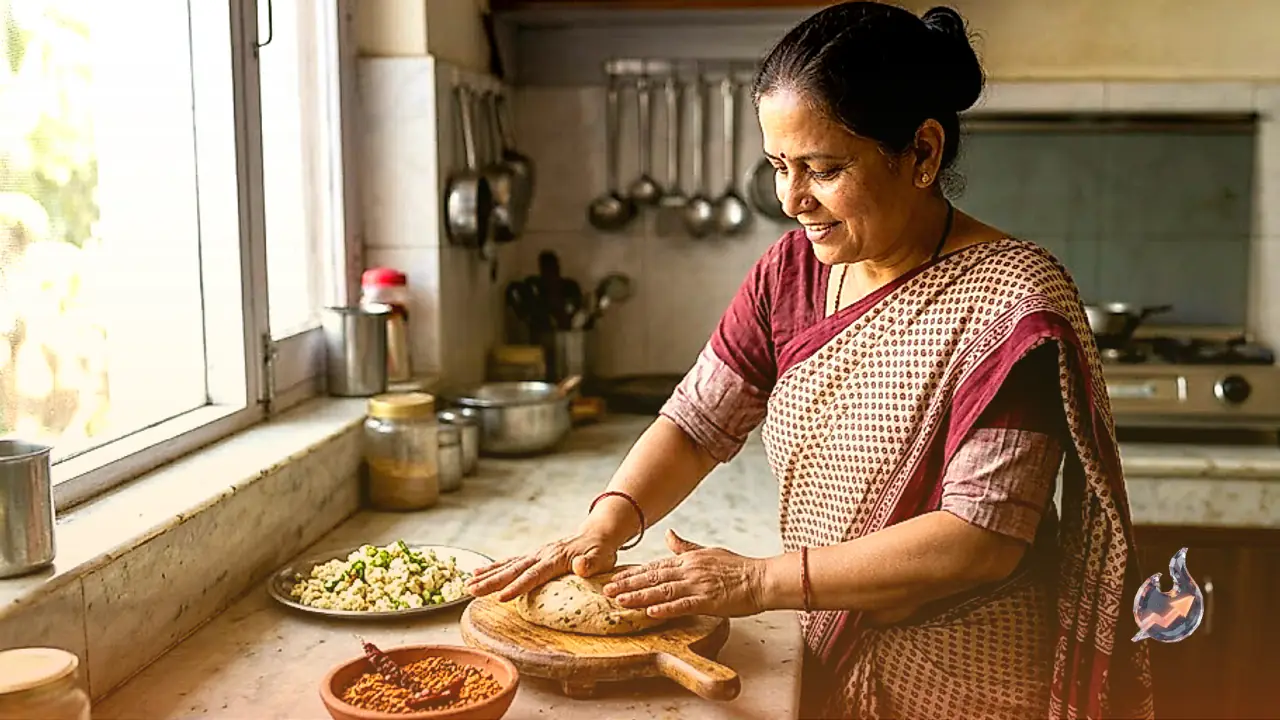
The preparation begins with kneading maida into a smooth dough. A small amount of refined oil is worked into the dough at this stage to keep it supple and to make shaping easier later in the process. Once thoroughly kneaded, the dough is covered and left to rest for one to two hours. During this resting period it rises gradually and becomes soft enough to work with comfortably.
After the dough has risen and reached the right consistency, it is divided into small, evenly sized pieces. Each piece is then shaped entirely by hand into the long, slender form that gives Badshahi its distinctive look and sets it apart visually from other sweets. These shaped pieces are then lowered into a kadhai filled with hot refined oil and deep fried steadily until each piece turns a deep, uniform red. Once that colour is achieved throughout, the pieces are lifted out of the oil and set aside to cool completely.
While the fried pieces cool down, a sugar syrup called chashni is prepared separately. When the syrup is ready and has reached a slightly warm temperature, the cooled Badshahi pieces are submerged in it and left to soak for a period of time. They absorb the syrup slowly and thoroughly. Once fully saturated, the pieces are removed and rested. It is this combination of the simple flour base and the sugar syrup coating that gives Badshahi its extended shelf life of up to 15 days, a quality that most traditional sweets simply cannot match.
A Staple at Weddings and Celebrations
The Badshahi is not limited to everyday purchases. It has also secured a firm place at weddings and other festive occasions in the region. The long freshness window makes it particularly practical for large events, where sweets often need to be prepared days in advance and distributed across many guests. Families who want to offer something genuinely local and reliably durable at their celebrations find the Badshahi to be an ideal choice. It also works well as a gift, since recipients in distant cities do not have to rush through it before it spoils.
Fifteen Days of Freshness Drives Wide Demand
In a country where most freshly made sweets last only two or three days without refrigeration, a confection that holds up for a full 15 days is genuinely exceptional. This staying power sets the Badshahi apart from almost every other mithai available in local markets. People who buy it in Mau and travel to Delhi or Mumbai know they have more than two weeks of enjoyment ahead of them once they reach home. Families based far away can receive it as a packed gift without the usual anxiety about whether it will arrive in good condition. This durability has pushed demand well beyond the original local market into Azamgarh, Ballia, Ghazipur, and the two biggest metros in the country.
Priced at 160 Rupees
The Badshahi is available for 160 rupees. For a sweet that combines a satisfying crispy texture, a clean mild sweetness, and a freshness span of up to two weeks, that price is widely considered very reasonable. The combination of affordability and durability has helped the sweet earn admirers far beyond its home district. Ankit Sweet House in Bhikharipura Bazar continues to see steady and growing demand, and the Badshahi has become something of an identity marker for Mau itself: a small-town confection that has quietly found its way into the kitchens and celebrations of people living across some of India's largest and most distant cities.