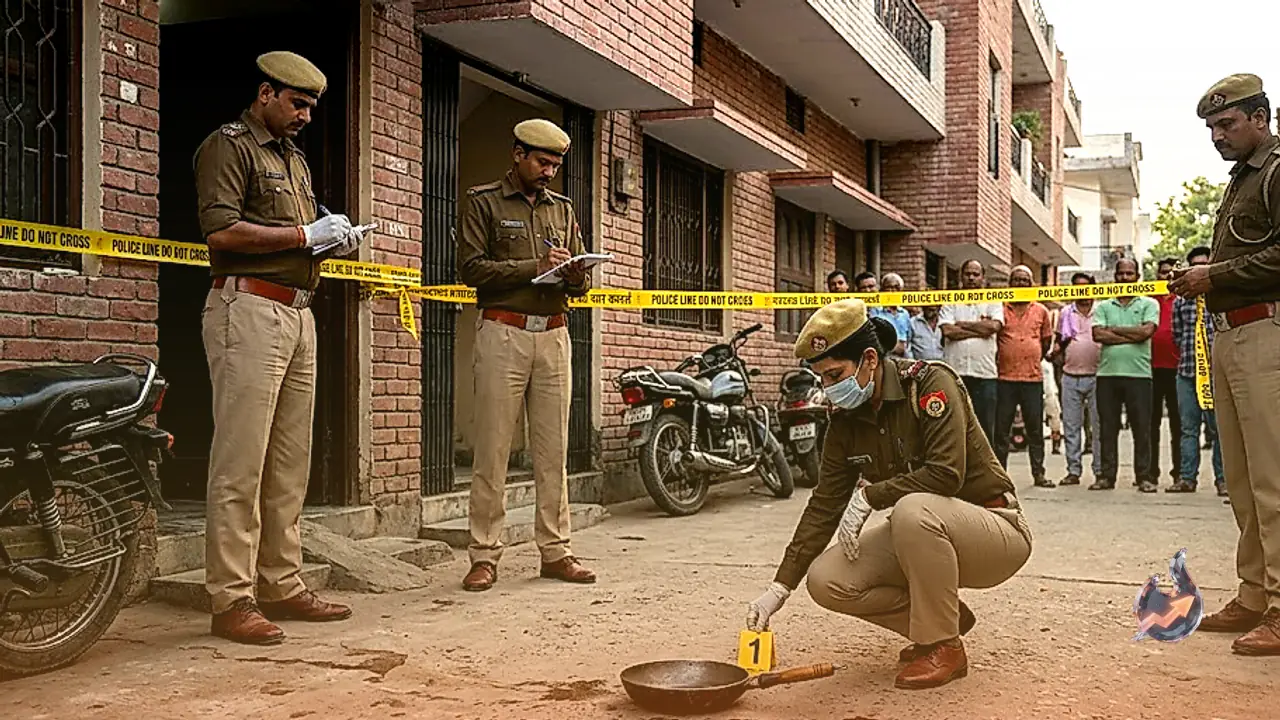























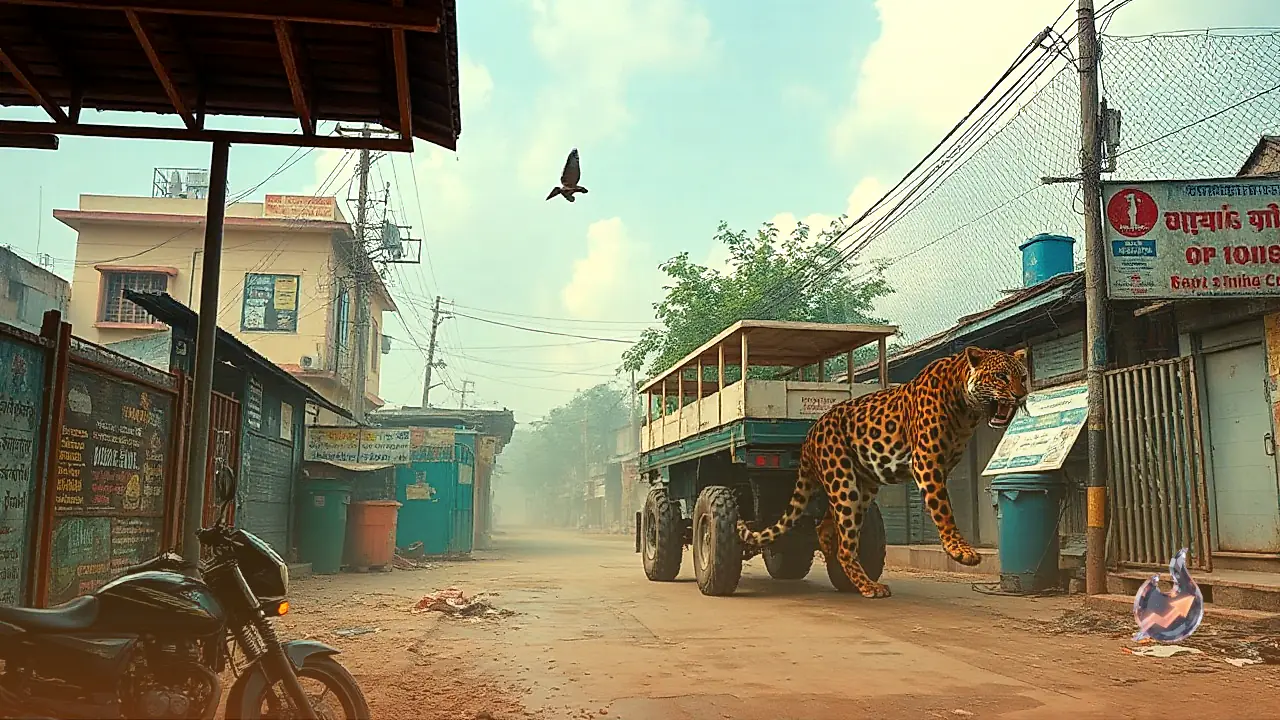

Escalating leopard activity across rural regions of Moradabad district in Uttar Pradesh has severely disrupted daily life and spread fear among agrarian communities. From Thakurdwara to Dilari and Bhagatpur, frequent sightings and violent encounters have created widespread panic. During the month of August, at least five major leopard incidents have been recorded in the district. Tragically, one woman working in an agricultural field lost her life, while several farmers were left severely injured. In response to the crisis, the forest department launched an extensive search and rescue operation, successfully trapping three leopards to date.
Fatal Attack in Thakurdwara and High-Tech Rescue in Lalapur Pipalsana
The most fatal incident occurred in Lalapur Pipalsana village under Thakurdwara tehsil, where a resident named Santosh Devi was working in her field a few days ago. A leopard lurking in the dense vegetation launched a sudden attack, inflicting fatal injuries that led to her immediate death. The incident shocked the local populace and triggered urgent demands for official intervention.
Following the tragedy, forest department personnel deployed specialized rescue equipment across Lalapur Pipalsana and nearby locations, setting up approximately 20 rescue cages. To track the elusive big cat hidden inside tall sugarcane crops, thermal drone cameras and tranquilizing teams were mobilized. As a result of this intensive operation, forest officials managed to capture two leopards from the Lalapur Pipalsana belt.
Two Farmers Mauled in a Single Day at Malakpur Semli in Dilari
The terror has been equally severe in Malakpur Semli village within Dilari block, where two farmers were attacked on the very same day, August 12. The first attack took place in the morning hours when 22-year-old Pushpendra was applying fertilizer to his crops. A leopard emerged from adjacent sugarcane fields, clawed his neck, and attempted to drag him into the crop cover. Pushpendra raised an alarm, forcing the animal to retreat. Given the severity of his injuries, he was rushed for emergency treatment and subsequently referred to a higher medical center.
Later that evening around 7:00 PM, 52-year-old farmer Tasleem faced a similar fate while crossing the Ramganga river. The big cat pounced on him from behind, targeting his neck. Tasleem suffered critical wounds and was hospitalized for urgent medical care. These attacks follow a previous incident in the same village where farmer Pawan Kumar was mauled, leaving agricultural workers terrified of stepping into their fields.
Capture of Leopard Cub in Ballia and Livestock Loss in Chandpur Gularia
In Ballia village under Thakurdwara, forest personnel achieved another breakthrough on August 10 at around 5:00 AM when a leopard cub entered one of the deployed cages. However, villagers remain anxious about the potential presence of adult leopards in the area. Earlier on August 7, in nearby Chandpur Gularia Mustafapur village, a leopard killed a horse and dragged the carcass deep into a sugarcane field.
Concerns were also raised in Rampur Balbhadra village under Bhagatpur block, where leopard sightings were confirmed in early August. Out of the three leopards captured across Moradabad district so far, two were trapped in the Lalapur Pipalsana region, while the third was the cub retrieved from Ballia village.
Villagers Guard Villages with Sticks as Regional Threat Expands
Local residents of Lalapur Pipalsana, including Manoj Kumar, Sandeep, and Arpit Kumar, expressed their deep anxiety over the ongoing threat. They noted that even though forest department teams remain stationed inside the village to carry out rescue efforts, fear continues to dominate daily life. Farmers now venture out only in groups, carrying wooden sticks (lathi-danda) for personal safety.
The issue of human-leopard conflict extends beyond Moradabad. Adjoining districts in western Uttar Pradesh, including Bijnor, Amroha, and Rampur, have also reported increased big cat movements in rural areas. Joint patrol teams from the police and forest departments continue to monitor high-risk zones, placing additional cages to secure the region.