

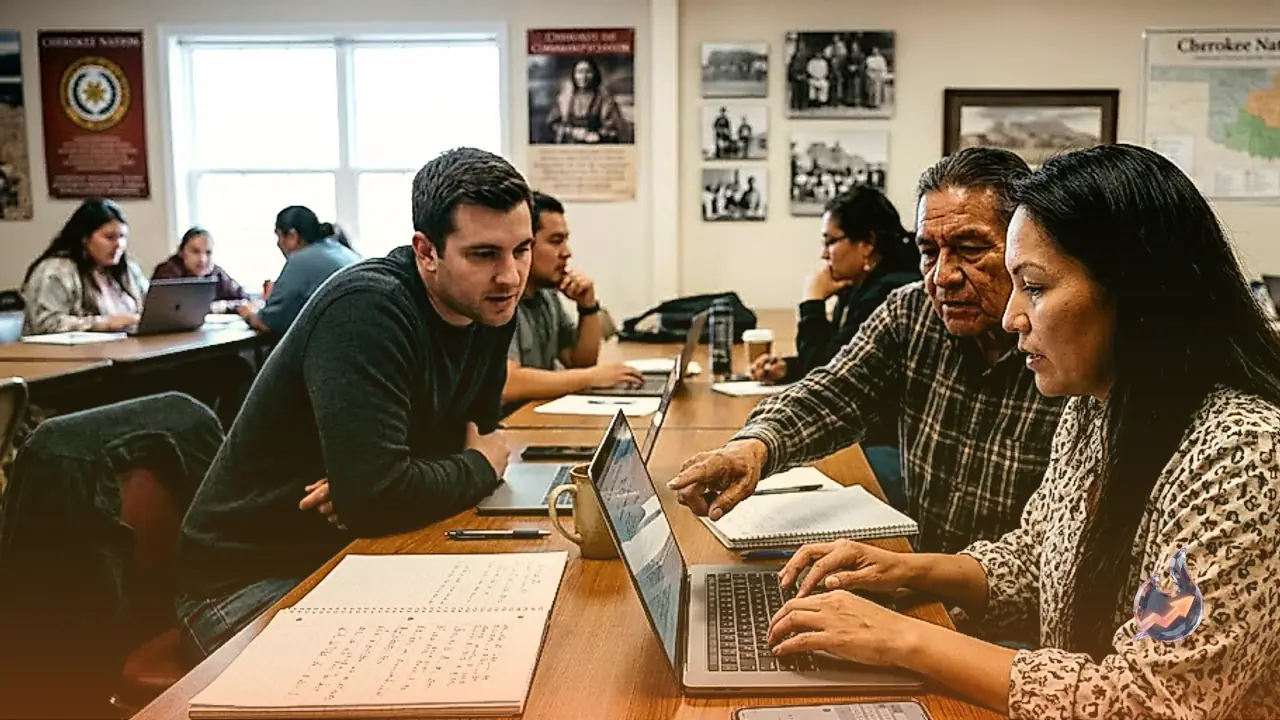


















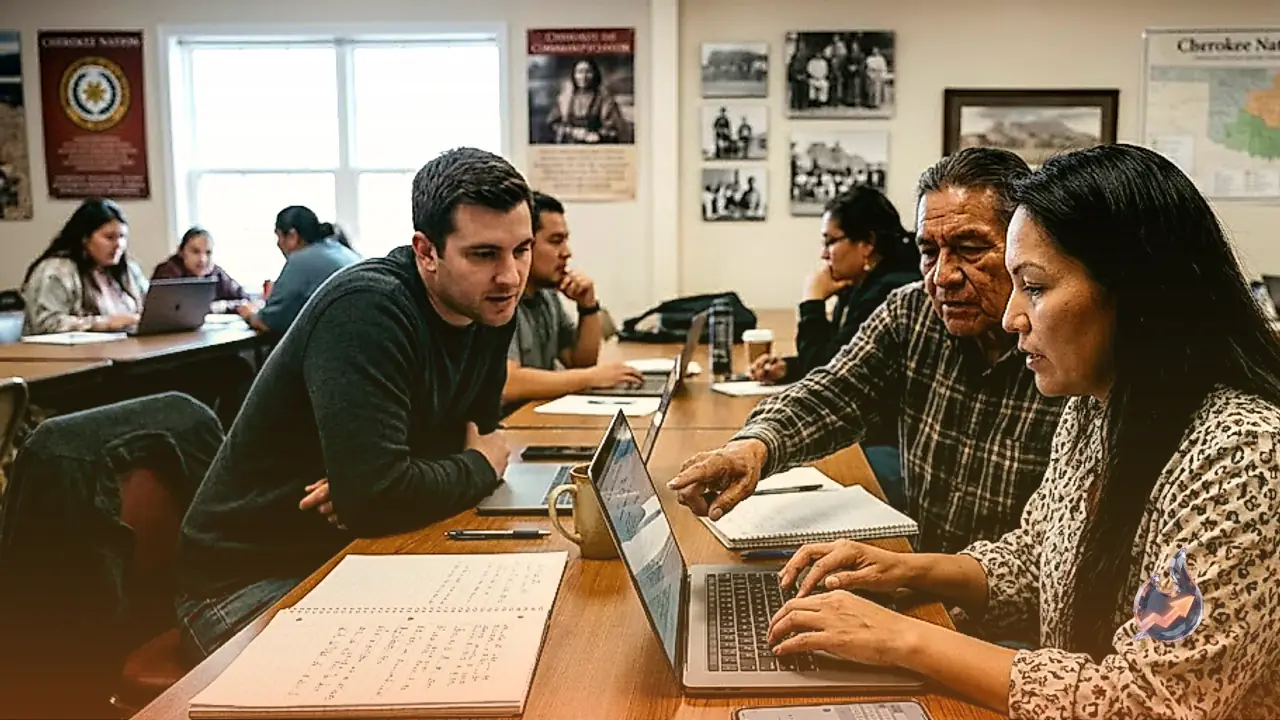

Young speakers are hearing their mother tongue in ways previous generations never experienced, marking a major shift in how indigenous languages are preserved. Hoskin Jr., principal chief of the Cherokee Nation, notes that the community has moved far beyond rote classroom instruction into a space where children can witness the kind of creativity that sparks imagination and literacy.
The Urgent Mission to Save Endangered Languages
With only about 1,500 active speakers remaining and most aged over 70, the Cherokee Nation faces the rapid loss of its elders. This demographic reality drives intense efforts to train second-generation speakers, including a baby immersion program designed to ensure infants learn Cherokee as their very first words.
Past historical trials, including the Age of Discovery, colonization, geographic and economic displacement, and boarding schools, pale in comparison to the digital math the community faces today. This creates an everyday urgency to find collaborative partners capable of accelerating language preservation efforts.
Apple and the Evolution of iOS Keyboard Support
Apple serves as one of the primary catalysts in this digital preservation work. The Cherokee Nation has collaborated with the iPhone manufacturer for years, making Cherokee the first Native American language incorporated into iOS back in 2010. Today, Apple supports over 200 languages and language variants on its iOS keyboard, adding options like Haitian Creole and Nez Perce in iOS 26, followed by Indigenous additions like Blackfoot, Comanche, and Northern East Cree in iOS 27.
The core objective is meeting young people where they spend much of their time: phone screens. Accessibility remains vital for revitalization, though Apple emphasizes that the integration involves complex, multi-year research rather than simple word translations, relying heavily on community expertise.
The Foundation at Unicode
The journey of a digital language script begins well before reaching Cupertino, starting instead with Unicode. Best known for standardizing smartphone emojis, the organization also oversees time zone localization, currency nomenclature, and measurement standards.
Every smartphone character must first exist as a recognized entry within the Unicode Standard. Unicode CEO Toral Cowieson highlights that everything starts with characters and scripts, with the standard now encompassing more than 157,000 characters.
Cowieson describes Unicode as a digital Switzerland, a neutral consortium where competitors like Apple, Microsoft, and Google sit alongside linguists and volunteers. With a lean team of four full-time employees reported earlier this year, the proposal, verification, and encoding process for a language can take anywhere from three to five years.
Fonts, Orthography, and Technical Hurdles
Once a script receives encoding, tech platforms must build font support to prevent characters from rendering as empty tofu boxes. Next comes orthography, establishing writing rules. When formal systems are absent due to historical lack of keyboard support, communities often rely on ad hoc substitutions.
For example, the glottal stop sound in the throat, akin to the break in 'uh-oh', often lacks dedicated keys in standard layouts, leading cultures to use question marks as substitutes. Apple collaborates directly with communities to establish accurate digital representations for these unique sounds.
Custom Layouts and Modern Innovations
While some communities adapt physical layouts like Osage directly into software, others require bespoke solutions. The Nez Perce language, or Nimipuutímt, lacks capital letters entirely; instead of traditional Shift toggles, Apple repurposed the key to reveal an accented secondary layer for faster typing.
Similarly, the Cherokee language utilizes a syllabary where characters combine consonants and vowels. Apple introduced adaptive vowel keys on the bottom row that dynamically change based on the typed consonant, representing an ongoing refinement rather than a static project.
Sovereignty, Data Ownership, and Historical Caution
Digitizing indigenous languages comes with caution due to historical exploitation. Genner Llanes-Ortiz, a Maya scholar at Bishop's University, points out that indigenous groups are protective of their linguistic materials due to past knowledge extraction.
Māori communities, for instance, have previously rejected corporate proposals to commercialize their language. Echoing these sentiments, Apple software engineer Chirasree Mandal emphasizes data sovereignty, noting that the company avoids siloing user data and focuses entirely on accurate linguistic representation.
The Role of Google and Generative AI
Google maintains a parallel history of integrating lesser-known and Indigenous languages like Manx and Māori into its platforms. The company notes it is exploring how generative AI might simplify coding and research for new scripts, though direct participation from native speakers remains essential.
For young Cherokee speakers, typing names in syllabary on social media serves as a badge of honor and empowerment. However, Hoskin Jr. warns that this progress remains vulnerable to broader political rhetoric in the US that often overlooks Native American history.
The Race Against Time
The ultimate adversary in language preservation remains the passage of time and human fragility. For communities fighting to keep their ancestral tongues alive, every single day carries immense weight in the mission to secure future generations.