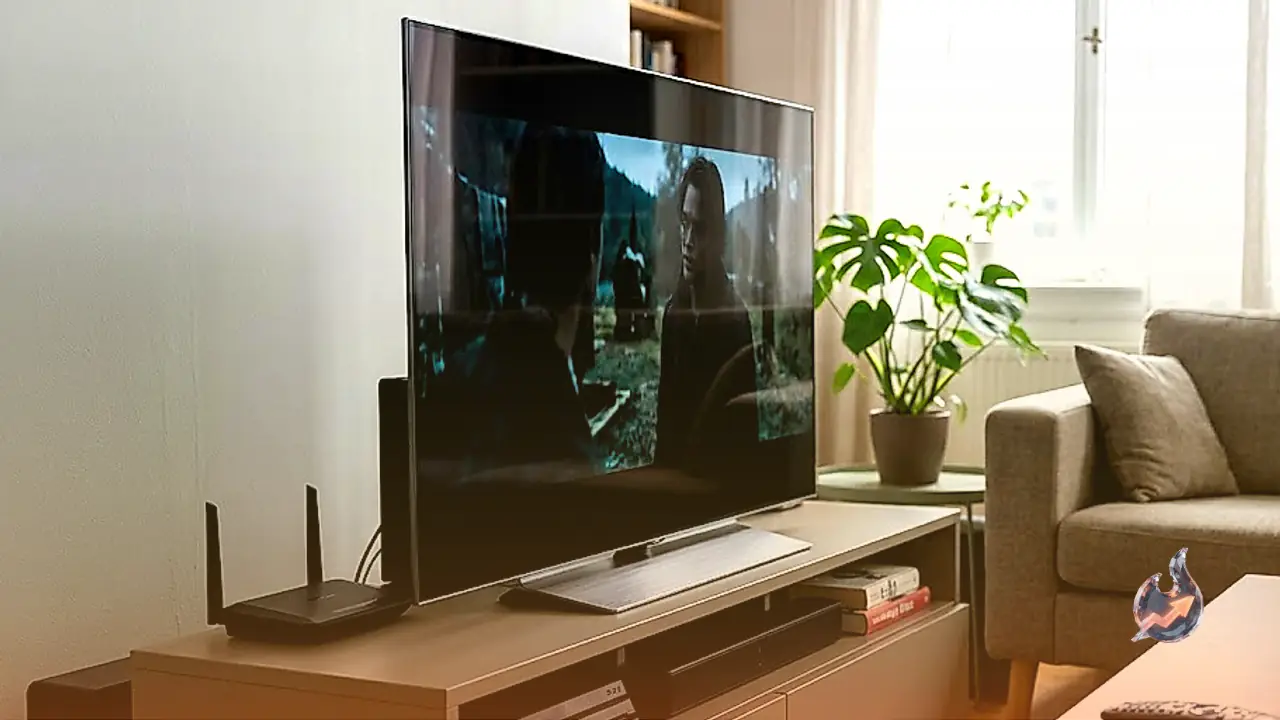


















Hisense has introduced a compelling mid-range addition to its 2026 television lineup, designed to bring advanced backlight and panel technologies down to a more accessible tier. Positioned directly between the higher-end Hisense UR9SG and the more entry-level Hisense U7SG, the new Hisense UR8SG (referred to as the Hisense UR8) marks the brand's most affordable entry point for RGB Mini LED panel technology. This refined backlight architecture is specifically engineered to expand overall color volume beyond what standard Mini LED setups can achieve. To complement the backlight, the TV features Hisense's new Obsidian panel coating, created to reduce distracting reflections in brightly lit environments while preserving deep black levels better than conventional glossy screen treatments. On the connectivity front, the display is equipped with four full-bandwidth HDMI 2.1 ports capable of delivering up to 4K resolution at 180Hz or 1080p at 330Hz, alongside variable refresh rate (VRR) support to eliminate screen tearing. Running on the Google TV 14 smart platform, it offers immediate access to an extensive catalog of streaming applications. The television is offered in 55, 65, 75, 85, and 100-inch screen sizes.
When evaluated across everyday scenarios, the Hisense UR8SG proves to be a highly adaptable television. It performs admirably in well-lit living spaces, generating enough raw luminance to cut through heavy ambient daylight while keeping colors punchy and vivid. Conversely, it transitions smoothly into dark-room movie viewing, leveraging its local dimming and solid contrast ratio to deliver convincing black levels. Beyond traditional video consumption, the unit serves as an exceptionally capable gaming display, providing high refresh rates, low input lag, and modern sync options that appeal to both console owners and PC enthusiasts, despite some minor motion blur in fast-moving titles.
Dark Room Performance and Home Theater Capabilities
For home theater enthusiasts who prefer watching content in dimmed or completely dark environments, the Hisense UR8SG delivers an immersive visual experience. Its full-array local dimming system works effectively to deepen black levels, giving nighttime scenes substantial depth and dimensional contrast. Fueled by the RGB Mini LED backlight, colors across cinematic content appear rich, saturated, and impactful. However, out-of-the-box color accuracy in standard picture modes is relatively uncalibrated, exhibiting a distinctly warm, reddish bias. Movie purists aiming for exact director-intended accuracy will benefit from a proper display calibration.
HDR performance is a strong point for cinematic playback. Small specular highlights and bright elements burst off the screen with impressive punch, giving HDR movies a wide dynamic range and realistic sparkle. Motion handling during standard cinematic frame rates remains consistent, though viewers watching high-octane action sequences may observe slight blurring during fast camera movements. For seamless audio-visual setup integration, the panel supports all major HDR and surround sound formats, including Dolby Vision, ensuring broad hardware and content compatibility.
Bright Room Suitability and Sports Viewing
In brightly lit living rooms, the Hisense UR8SG excels at maintaining a clear, readable image. Its high peak SDR brightness easily overcomes ambient glare during daytime viewing of sports broadcasts, news, or reality television. However, when direct light sources directly face the display screen, subtle reflections can become visible during darker cinematic scenes. Reassuringly, general ambient room light does not significantly degrade overall image quality or raise black levels, keeping colors saturated and dark areas stable even with lights turned on.
Sports fans will find plenty to like about the display's daylight performance and video processing. The television's high brightness prevents sunny stadium shots from looking washed out. Furthermore, its internal image processing engine does a commendable job upscaling low-quality feeds, removing blocky compression artifacts and noise from cable channels or compressed streaming video. The primary drawbacks for sports enthusiasts are moderate color artifacts that can appear around rapidly moving athletes or balls, along with slight motion blur. Additionally, because the display utilizes a VA-type panel, off-angle viewing is restricted; image quality and color saturation diminish when viewed from wide side angles.
Gaming Performance and Refresh Rate Options
Gaming is one of the standout areas for the Hisense UR8SG. The inclusion of four HDMI 2.1 ports provides immense flexibility for modern setups. Console gamers can take advantage of 4K gameplay at up to 180Hz, while PC gamers can opt for high-frame-rate 1080p gaming at up to 330Hz. Variable Refresh Rate (VRR) support effectively eliminates screen tearing, and input lag remains exceptionally low, ensuring responsive control during competitive play.
Crucially, enabling the TV's dedicated Game Mode causes virtually no degradation in overall image quality, maintaining the same contrast and brightness as standard picture modes. While fast-moving objects in 60Hz games can exhibit moderate motion blur, boosting frame rates above 60Hz significantly cleans up motion clarity. The display's strong native contrast and vibrant peak highlights make modern games look visually striking.
Luminance, Contrast, and Color Accuracy Analysis
From a technical standpoint, the Hisense UR8SG's highlight performance is driven by its exceptional peak brightness. In SDR, the panel produces ample luminance to push past daylight reflections in bright rooms. In HDR, highlights and bright scene elements pop with energy, resulting in a lively, punchy presentation. The underlying VA panel provides a solid native contrast ratio, preventing complex dark scenes from looking washed out or gray even when local dimming algorithms are taxed.
However, the display exhibits a few technical limitations. Noticeable haloing or blooming can occur around small, bright objects and text subtitles set against dark backgrounds. Regarding color production, while the RGB Mini LED backlight achieves incredible color volume, out-of-the-box SDR color accuracy is poor, leaning visibly warm and overly yellow-red. HDR factory accuracy is marginally better but still retains a noticeable red tint. Furthermore, the RGB Mini LED structure occasionally causes color crosstalk, where pure white areas take on a subtle color tint from adjacent bright, colorful elements.
Motion Control and Image Processing Capabilities
Motion handling across movies, television series, and broadcast sports is generally solid. The TV shows no micro-judder, and most standard frame-rate content plays back judder-free. Pans across wide landscapes can sometimes display mild motion stutter, though applying a light amount of motion interpolation effectively smooths out panning shots. Response times are decent, though fast action sequences can introduce subtle motion blur and color artifacts around quick movements.
On the processing side, the television performs well across various resolution sources. Its upscaling engine handles standard definition content and DVDs cleanly without introducing excess softness or artificial ringing. The processor also excels at smoothing out low-bitrate artifacts in heavily compressed streaming clips, such as YouTube videos. Mild color banding can be observed in specific smooth gradient transitions, but it remains unobtrusive during regular viewing. Finally, while PQ EOTF tracking in HDR mode is accurate for brightness levels, shadow detail can occasionally appear slightly raised, marginally reducing black depth in specific scenes. Overall, the Hisense UR8SG establishes itself as a feature-packed contender in the upper mid-range TV market.