























Spirit Airlines is moving forward with a plan to sell its extensive digital records to Google, a proposal that has triggered immediate backlash and a formal legal challenge from the labor union representing thousands of affected workers. In an official statement regarding the transaction, a Google spokesperson emphasized that the incoming data can be helpful in improving company products and artificial intelligence models, while noting that the acquisition will not encompass customer information or personal datasets from individuals. The winning bid, which edged out a competing seven-and-a-half-million-dollar proposal from AI data and training firm Mercor, still requires final approval from a presiding judge before it can proceed.
Union Fails Legal Objection Over Sensitive Employee Files
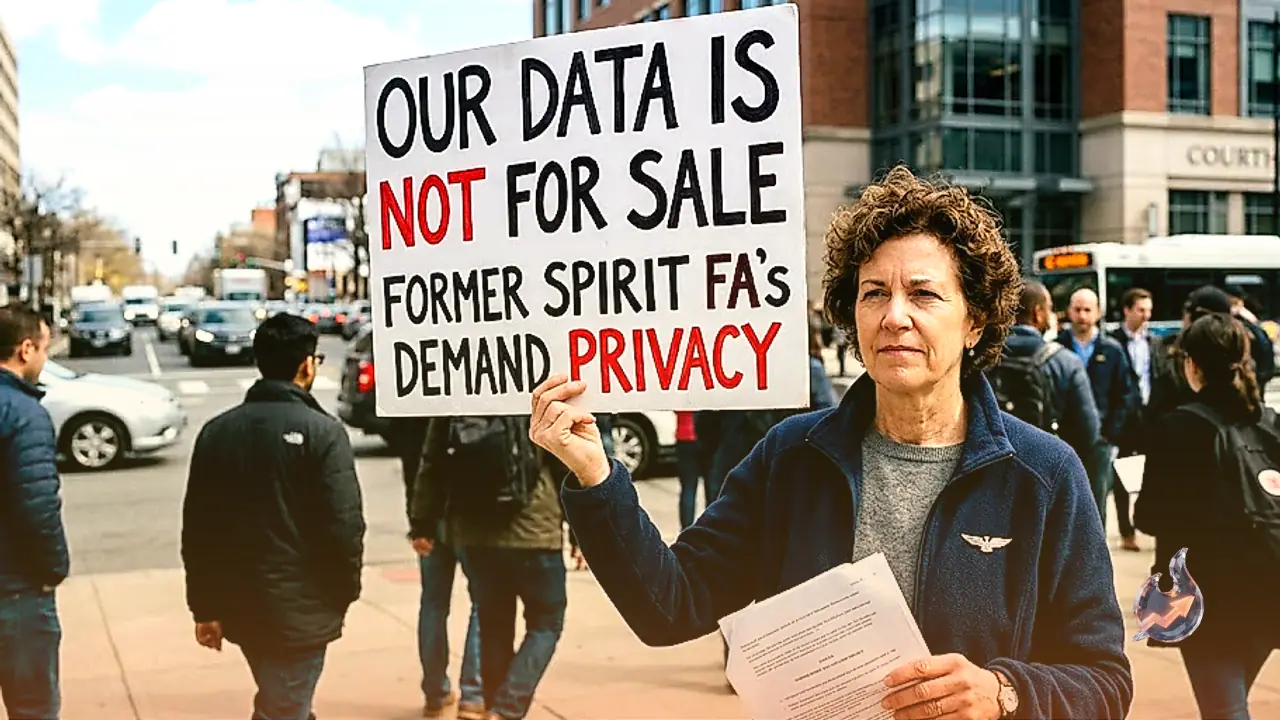
Former flight attendants from the airline are working to ensure that the transaction does not go through smoothly. Just days after the court announced the successful bid by Google, the labor union representing fifty-five hundred former Spirit Airlines flight attendants formally filed an objection against the sale. Legal representatives for the Association of Flight Attendants argue that the transfer encompasses an enormous volume of confidential employee information. They contend that even Google promised safeguards cannot adequately prevent privacy violations for workers who spent decades at the company without ever imagining their personal records would be commercialized to train artificial intelligence platforms.
Sara Nelson, the president of the union, sharply criticized the arrangement in a written statement, calling the move entirely outrageous and asserting that employee information has no business being sold. This legal intervention introduces an entirely new battleground in the broader data wars as frontier labs and technology giants scramble for training materials to power their next-generation systems.
The Gap Between Consumer and Worker Data Protections
The unfolding dispute highlights a glaring disconnect between legal protections afforded to everyday consumers and those available to workers. Legal experts point out that this case marks the very first public clash between organized labor and corporate entities over the monetization of worker data for machine learning purposes. Seema Patel, a law professor at the University of California College of the Law in San Francisco who specializes in labor and technology, notes that there is currently no legal boundary separating the data a worker generates on the job from their own private information, observing that companies are having a field day under the current legal framework.
Over the past few months, specialized startups have generated millions by acquiring and reselling the digital remnants of defunct businesses, including legacy chat logs, internal code repositories, and cloud storage drives, to AI developers. Simultaneously, egocentric data collection initiatives are rapidly expanding as corporations record human workers performing everyday tasks like cooking meals and operating factory equipment to automate future labor.
Massive Volume of Corporate and Personal Records Included
According to official court filings, the proposed transaction encompasses more than one million time-card records, over one hundred seventy-five thousand employee files, nearly one hundred fifty thousand tax forms, extensive employment contracts, and ongoing litigation records. The inventory also includes eighty thousand corporate email accounts, seventeen million individually owned cloud storage items, over twenty million shared files, and half a billion messaging records.
The legal documents outline a mechanism where the buyer would utilize an approved third-party entity to strip the dataset of obvious identifiers that link records directly to specific individuals. A court hearing regarding the contested data sale has currently been postponed to September ninth.
Flight Attendants Voice Deep Privacy Concerns
One former flight attendant, speaking on the condition of anonymity due to ongoing job searches, described the potential transaction as deeply troubling. While acknowledging that the sale of consumer records has become commonplace, the worker admitted it never crossed their mind that a company would be bold enough to commercialize private employee data for machine learning development.
The employee noted that their email accounts and cloud storage items contained highly sensitive personal, medical, and insurance documentation detailing everything from personal health struggles and domestic incidents to confidential union negotiations. The worker expressed a widespread consensus among colleagues of feeling profoundly violated by the arrangement.
Broader Legal Implications for Artificial Intelligence Training
In its formal court objection, the union argues that attempting to deidentify complex employee datasets does not equal true confidentiality, particularly because advanced AI systems can easily relink private details across disparate sources even in the absence of explicit names. Ari Ezra Waldman, a law professor at the University of California Irvine who studies privacy and technology, explains that in an environment where massive financial investments are flowing into large language models, any digital text becomes fair game for profit generation unless strict legal boundaries are established.
Professor Patel adds that the fact that flight attendants are leading this labor fight serves as a powerful reminder that all workers generate valuable digital footprints, emphasizing that modern artificial intelligence has unlocked the capability to process diverse categories of information on an unprecedented scale.
Unpaid Wages and Continued Financial Demands
Alongside the privacy dispute, the union has taken separate legal action within the bankruptcy proceedings to demand approximately sixty-eight million dollars in outstanding wages, healthcare benefits, and unpaid vacation time. Describing the situation as an additional insult, the former flight attendant remarked that waiting for missing compensation while the airline profits off private employee records feels like another slap in the face.