























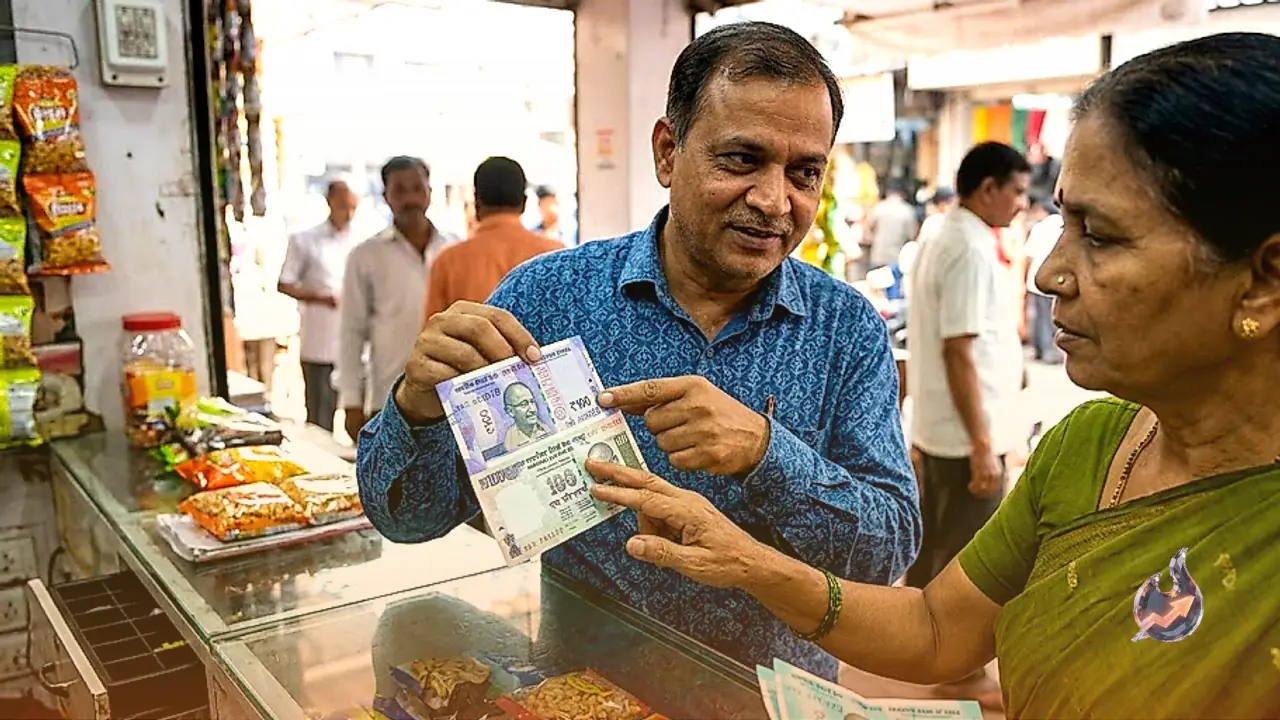

Fake currency keeps turning up in everyday cash transactions across the country, which is exactly why knowing the difference between a genuine note and a counterfeit one matters to anyone who handles cash, not just bank staff. To make that easier, the Reserve Bank of India has packed a set of advanced security markers into the newer Mahatma Gandhi Series banknotes, and it recommends a simple three-step check called the "See, Tilt and Feel" method to verify whether a note, particularly the widely circulated Rs. 50 and Rs. 100 denominations, is real.
How the "See, Tilt and Feel" Check Works
The method breaks down exactly as its name suggests. "See" covers the features that are visible simply by looking at the note under normal or backlit conditions, things like the see-through register, the portrait and the micro lettering. "Tilt" refers to features such as the security thread and certain watermarks that only reveal themselves, or change in appearance, when the note is angled against the light. "Feel" covers the raised, textured printing that a finger can detect by touch, which is also what makes these notes usable by visually impaired people. Running through all three checks on a single note gives a reasonably reliable read on whether it is genuine.
Security Features Built Into the Rs. 50 Note
The Rs. 50 note in the Mahatma Gandhi (New) Series carries a Fluorescent Blue base colour and measures 66 mm by 135 mm. Held up to the light, a see-through register shows the denomination numeral "50", printed so that the two halves visible from either side of the note align perfectly; the same figure also appears written out in Devanagari. At the centre of the note is the well-known portrait of Mahatma Gandhi, and running along the design is micro lettering spelling out "RBI", "भारत", "INDIA" and "50", detailed enough that it is very hard for a poor-quality counterfeit to reproduce convincingly.
Woven directly into the paper is a windowed, de-metalised security thread, a thin polymer-metal strip carrying the inscriptions "भारत" and "RBI". Tilting the note brings out a Mahatma Gandhi watermark along with a separate electrotype watermark showing "50". The Ashoka Pillar emblem sits on the right-hand side of the note, and the serial number panels are printed with numerals that increase in size from left to right so they are easy to read quickly. Flip the note over and it shows the year it was printed, a Swachh Bharat logo with its slogan, and a language panel listing the denomination in multiple Indian languages. The reverse side is also where the note carries its cultural centrepiece, a depiction of Hampi complete with its stone chariot motif.
Security Features Built Into the Rs. 100 Note
The Rs. 100 note in the same series is printed on a Lavender base and is a touch bigger, at 66 mm by 142 mm. It shares several design elements with the Rs. 50 note: a see-through register carrying the denomination numeral "100", the same figure written in Devanagari, Mahatma Gandhi's portrait at the centre, and micro lettering reading "RBI", "भारत", "INDIA" and "100".
What sets the Rs. 100 note apart is its colour-shifting security thread. The inscriptions "भारत" and "RBI" printed on this thread change colour from green to blue the instant the note is tilted, which is the clearest real-world demonstration of the "Tilt" step in the RBI's method. As with the Rs. 50 note, a Mahatma Gandhi watermark and an electrotype "100" watermark sit near the Ashoka Pillar emblem. For visually impaired users, the note also carries raised intaglio printing on the portrait, the RBI seal and the identification mark, plus raised bleed lines close to the edges that can be felt with a fingertip, covering the "Feel" step. The serial number panels again use numerals that grow in size, and the reverse carries the year of printing, the Swachh Bharat logo and a language panel. The defining image on the back of the note is Rani ki Vav, the stepwell monument, marking it out as the note's own piece of cultural heritage.
What to Do If a Note Looks Suspicious
Anyone who ends up holding a note they suspect is counterfeit is advised not to try passing it on to someone else, but instead to take it to the nearest bank branch for verification. Banks are required to follow the RBI's own guidelines whenever they handle a note that has been flagged as a suspected fake. People who want to understand these security features in more depth can also turn to the RBI's Paisa Bolta Hai initiative, which exists specifically to build public awareness around genuine banknote features.