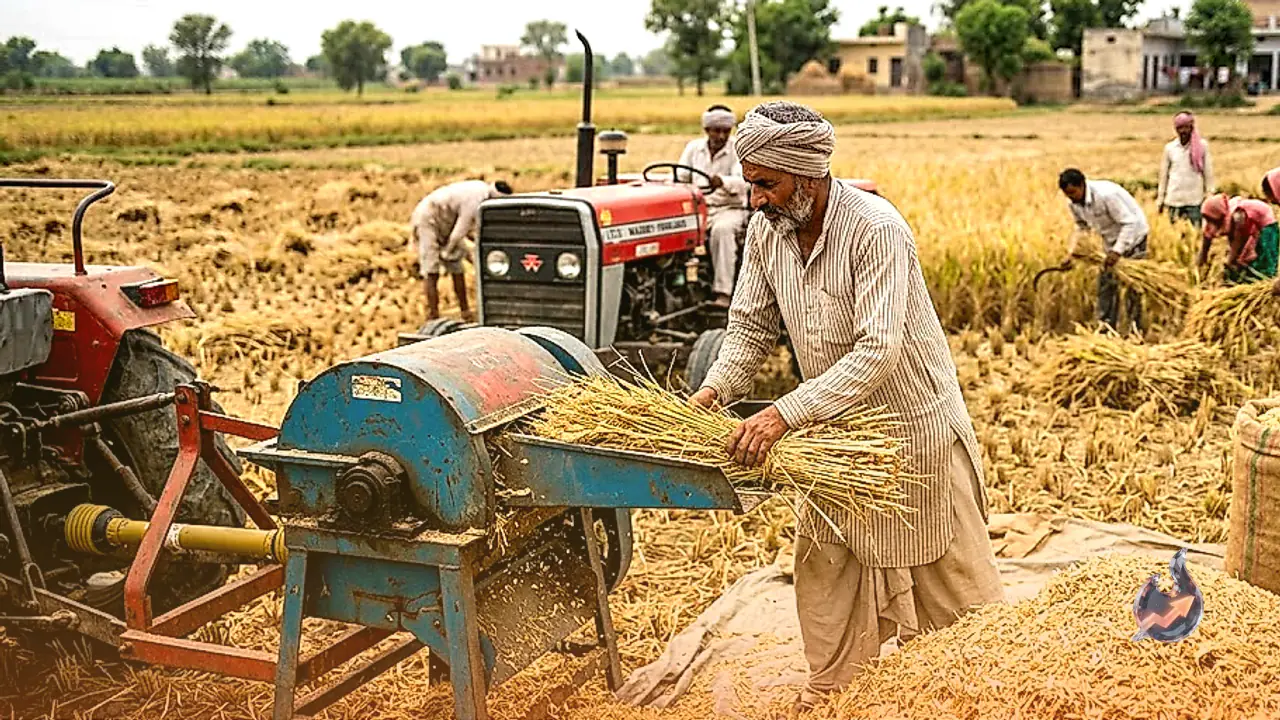
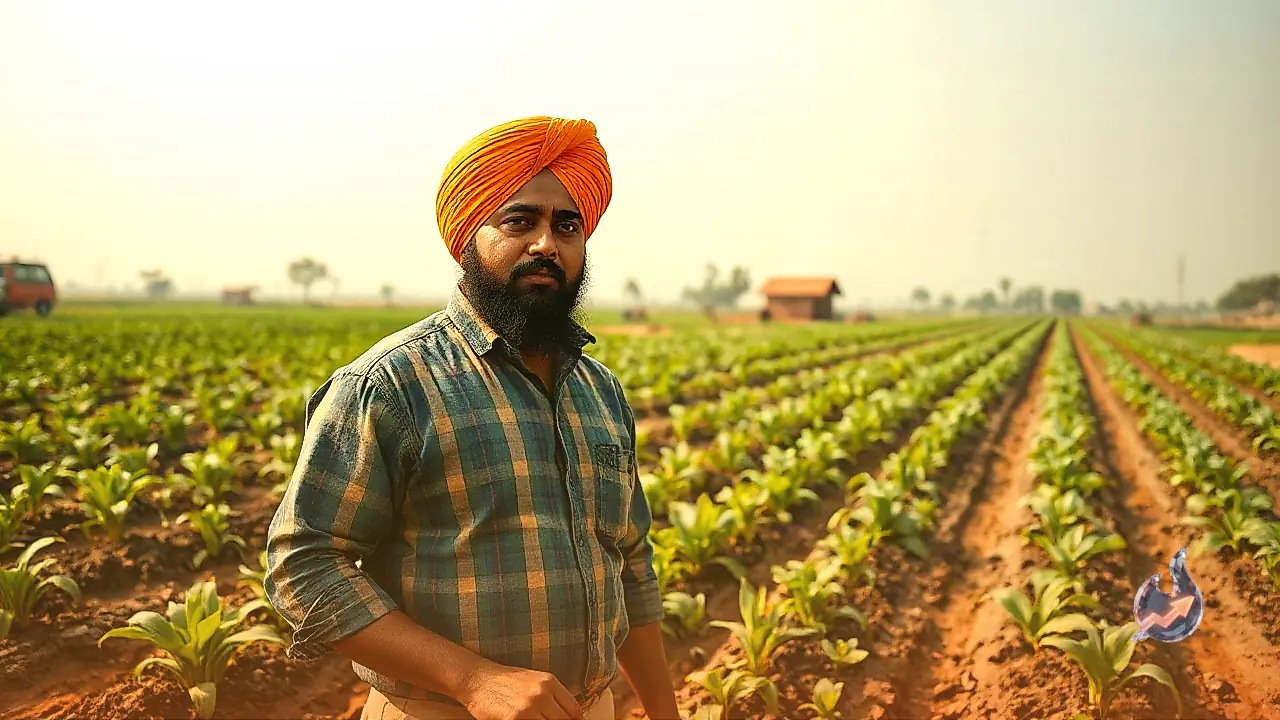



















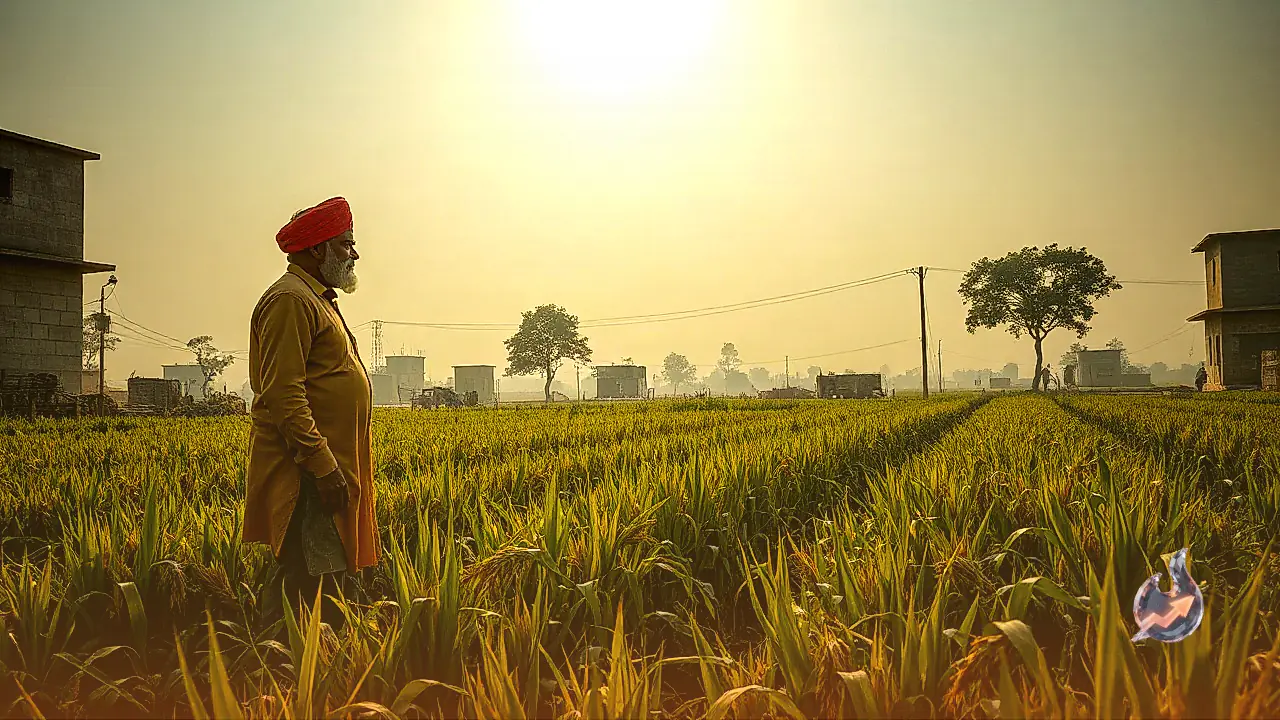

Paddy harvesting is in full swing across the agricultural belts of Faridabad. At a time when the vast majority of growers are switching to modern combine harvesters to slash operational timelines and reduce expenditures, Kunwarpal, a progressive farmer from Deeg village, continues to champion traditional manual harvesting. Managing a substantial 25 acres of paddy cultivation this season, Kunwarpal has brought in skilled agricultural laborers from Bihar to harvest the entire standing crop using sickles and age-old threshing techniques. Even though manual reaping involves substantially higher expenses compared to automated harvesters, he maintains this practice year after year, driven not merely by nostalgia, but by tangible benefits concerning grain quality, crop damage reduction, and field preparation.
The Practical Logic Behind Choosing Manual Labor Over Machines
Modern mechanization offers unmatched speed in today's fields. A combine harvester can cut, thresh, and clean an entire acre of standing paddy within thirty minutes to an hour. In stark contrast, harvesting an acre by hand requires a large team of workers and takes substantially more time to complete. Furthermore, the financial outlay required for manual labor is considerably higher. Yet, Kunwarpal consistently chooses manual labor over mechanical harvesters. Based on his years of hands-on farming experience, manual harvesting minimizes post-harvest losses and ensures that the integrity of the grain remains uncompromised, proving that haste often comes at the expense of agricultural quality.
Breaking Down the Cost Disparity Between Hand and Machine
The financial figures highlight a clear difference in direct operating expenses between the two methods. According to Kunwarpal, engaging farm laborers for manual harvesting costs roughly 7,000 to 8,000 rupees per acre. On the other hand, hiring a combine harvester completes the same one-acre task for approximately 3,000 rupees. On paper, choosing automated harvesters yields an immediate, direct saving of around 4,000 to 5,000 rupees per acre alongside significant time savings. However, Kunwarpal points out that focusing solely on upfront operational savings obscures the broader economics of crop valuation and wholesale market realization.
Avoiding Green Grain Damage and Enhancing Kernel Quality
A primary drawback of combine harvesters, according to Kunwarpal, lies in their indiscriminate speed. As the heavy machine moves rapidly across the field, it cuts both fully ripe heads and immature green grains simultaneously, mixing under-ripened kernels into the harvested lot. Manual harvesting avoids this critical flaw. Field laborers assess the maturity of the crop as they work, cutting the plants with care. Once reaped, the paddy is left to dry and mature evenly in the field before threshing begins. The laborers subsequently separate the grains by beating the bundles against hard surfaces, an established method that dislodges only fully developed kernels. This extra curing time and careful handling yield clean, unbroken, and premium-grade grain with negligible moisture inconsistencies.
Recovering Expenses Through Higher Market Premiums
Despite absorbing an additional expense of up to 4,000 rupees per acre, the economics work out in the farmer's favor at the wholesale market. Kunwarpal explains that paddy harvested and threshed by hand carries superior luster, uniform dryness, and zero mechanical breakage. When brought to the agricultural produce market, this superior quality commands immediate attention from grain traders. Hand-harvested paddy consistently fetches up to 200 rupees more per quintal compared to machine-harvested grain. This price premium across substantial yields comfortably offsets the elevated labor bills, ultimately leaving the farmer with higher net profitability.
Quality Cattle Fodder and Seamless Field Preparation
The advantages of manual harvesting extend well beyond the grain sack into post-harvest land management. Laborers cut paddy stalks close to the soil surface, leaving behind long, undamaged straw that serves as nutritious dry fodder for livestock. In contrast, machines leave behind uneven, chopped stubble that often creates disposal challenges. With the stalks cleanly removed, the soil remains in prime condition for the upcoming rabi sowing season. Plowing and bed preparation can commence immediately without the need for additional stubble management measures. These combined benefits in grain quality, cattle feed, and soil readiness explain why Kunwarpal continues to entrust his 25 acres to skilled farm labor rather than industrial machines.