















Across the length and breadth of India, citizens and public institutions joined together to commemorate the 151st birth anniversary of Sardar Vallabhbhai Patel, observed nationwide as Rashtriya Ekta Diwas. The annual commemoration honours the towering legacy of the country's first Deputy Prime Minister and Home Minister, whose administrative genius and resolute determination successfully integrated hundreds of scattered princely territories into a unified, sovereign democratic nation. Across government departments, educational hubs, and civic establishments, individuals administered the solemn national integration pledge, reaffirming their collective commitment to preserve the sovereignty, harmony, and security of the country.
National Leaders Offer Floral Tributes at Patel Chowk in New Delhi
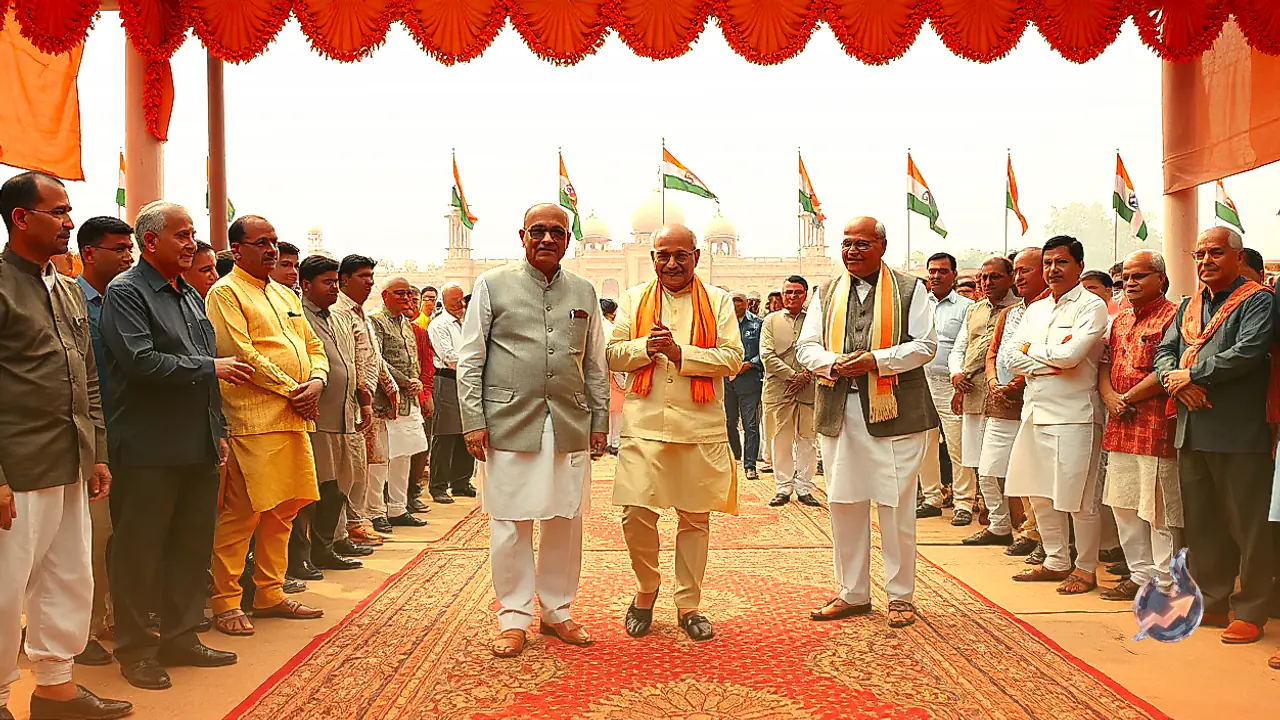
The capital city witnessed solemn commemorative ceremonies, led by President Droupadi Murmu and Vice-President CP Radhakrishnan, who placed wreaths before the statue of Sardar Patel situated at Sardar Patel Chowk. Union Home Minister Amit Shah also attended the ceremonial assembly, joining the constitutional dignitaries in honouring the founding father's extraordinary public service. Meanwhile, elaborate ceremonial arrangements were established at the world's tallest monument, the Statue of Unity in Kevadia, Gujarat, situated along the banks of the Narmada River, where Prime Minister Narendra Modi was scheduled to pay tribute in person.
Prime Minister Underscores Patel's Vision as a Blueprint for Modern India
Remembering the freedom struggle luminary, Prime Minister Narendra Modi shared a tribute on social media platform X. The Prime Minister hailed Sardar Patel as the supreme architect of undivided India, highlighting his wholehearted devotion toward establishing an economically capable and self-reliant society. He articulated that Patel's profound sacrifices continue to serve as a deep reservoir of inspiration as India advances towards becoming a developed and resilient global power.
Home Minister Amit Shah Recalls the Historic Integration of Princely States
Following the floral ceremonies in New Delhi, Union Home Minister Amit Shah addressed the gathering, noting that observing Sardar Patel's birth anniversary as Rashtriya Ekta Diwas became an institutional nationwide practice under the leadership of Prime Minister Narendra Modi. He reflected that Sardar Patel not only redirected the historical trajectory of the subcontinent but also physically shaped its geopolitical boundaries.
The Home Minister underscored that stitching together 562 independent princely states at the dawn of independence stood among the most extraordinary diplomatic feats in world history. Patel’s administrative brilliance, political clarity, and unwavering willpower unified the country geographically, administratively, and culturally into a formidable, indivisible republic, thereby permanently thwarting threats of fragmentation.
Vice-President Emphasises Enduring Legacy of Unity and Dedication
Paying homage through a statement on X, Vice-President CP Radhakrishnan described Patel's remarkable journey as an everlasting testament to the strength of national unity, steadfast resolve, and selfless devotion. He noted that the grateful country recalls the visionary statesman's monumental achievements in nation-building, adding that his enduring principles continue to guide the nation along the path of solidarity and steady progress.
The Complex Diplomatic Mission Behind India's Territorial Consolidation
Born on October 31, 1875, Sardar Patel rose from humble beginnings to establish himself as an accomplished barrister before immersing himself fully in the freedom movement under the leadership of Mahatma Gandhi. Upon achieving independence in 1947, the newly partitioned country faced immense administrative hurdles, as British colonial treaties left hundreds of princely territories with ambiguous constitutional options.
Assuming charge of the newly created Ministry of States alongside his role as Home Minister, Patel worked tirelessly with senior civil servant VP Menon to negotiate accessions. Employing a masterful blend of persuasion, constitutional guarantees, and unyielding administrative strength, he persuaded monarchs and regional chieftains that democratic accession served the collective welfare of their people. This decisive triumph over territorial division cemented his reputation as the Iron Man of India, whose founding vision remains the cornerstone of modern Indian nationhood.