

















A transformative shift is unfolding across Haryana's energy landscape, promising households and businesses in Gurugram and Nuh the freedom to pick their preferred electricity provider. In an order issued on October 19, the Haryana Electricity Regulatory Commission (HERC) granted a parallel power distribution license to Eleven Power Private Limited. This administrative decision breaks the longstanding monopoly of the state discom in two economically pivotal districts, establishing a competitive framework. However, the ruling has swiftly triggered strong political friction, with the state government vowing to challenge the regulator's judgment before higher authorities.
A Quarter-Century Authorization for Parallel Distribution
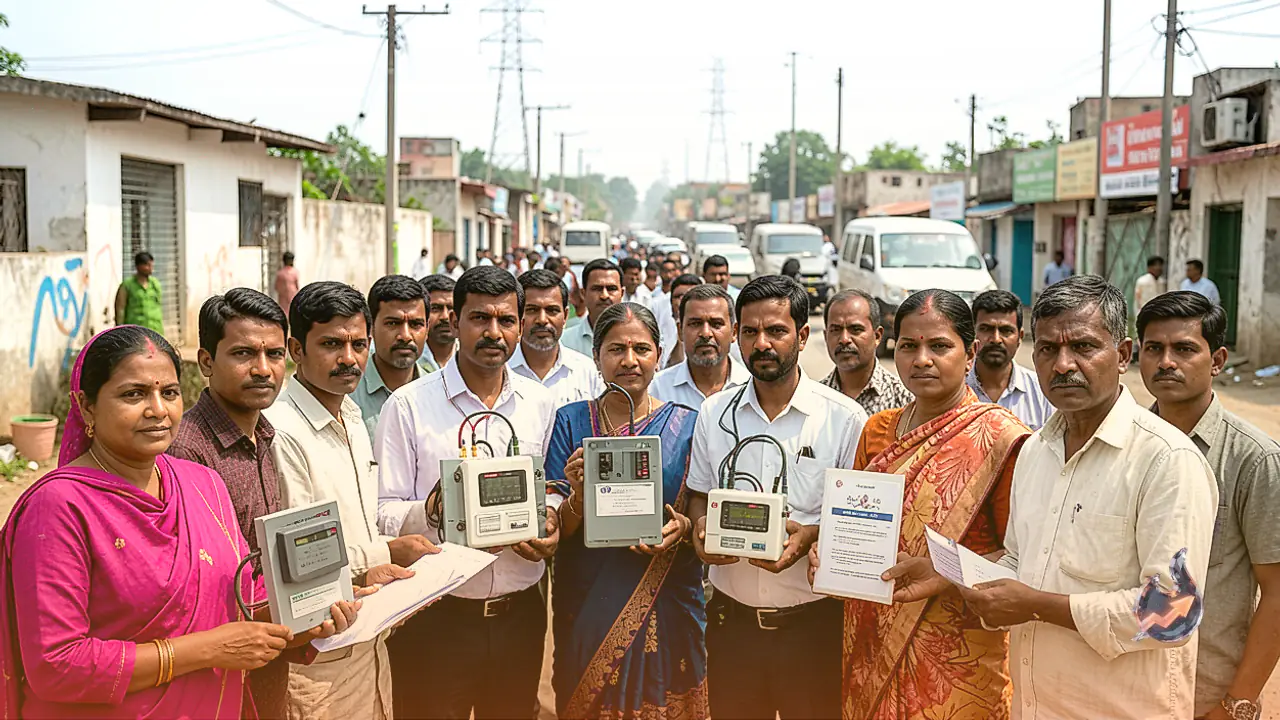
Exercising powers outlined under Section 14 of the Electricity Act, 2003, the regulatory body sanctioned the private company's operations across both districts for an extensive span of 25 years. Through this arrangement, upwards of 8.30 lakh consumers are slated to gain gradual access to an open market where they can switch between utility providers. The licensee stated that this parallel setup will not displace the current state network. Consumers do not have to initiate any changes immediately, as the incumbent state utility will proceed with unhindered supplies to all existing accounts.
To support this expansive undertaking, Eleven Power plans to inject capital expenditure amounting to 4,717 crore rupees over the next five years to construct its own dedicated distribution infrastructure. The firm anticipates commencing electricity deliveries to local end-users during the financial year 2027-28. Operating parallel distribution licenses is not entirely new to India, with major metropolitan hubs such as Mumbai already running identical models that allow multiple licensees to operate within shared geographical borders.
Rising Consumption Across Thriving Industrial Corridors
The operational zone encompassing Gurugram, Manesar, Sohna, and Nuh has been witnessing rapid urbanization, expanding residential clusters, and sprawling industrial complexes that demand massive power volumes. Regulatory projections highlight that power sales in these licensed corridors will rise sharply over the coming years. Official calculations indicate that aggregate annual electricity consumption will jump from roughly 12,220 crore units recorded in financial year 2024-25 to an estimated 18,224 crore units by financial year 2030-31, establishing the rationale for augmented network capacity.
Energy Minister Anil Vij Signals Legal Fight
Unwilling to let the regulatory directive go unchallenged, Haryana Energy Minister Anil Vij promptly voiced his administration's opposition. Vij confirmed that the state government intends to contest the order in court, taking to social media platform X to express his stance: “The government will appeal in the Appellate Tribunal for Electricity (APTEL) against the Haryana Electricity Regulatory Commission's order granting a parallel distribution license to Eleven Power Private Limited in Gurugram and Nuh.”
The minister had raised red flags regarding parallel distribution proposals as early as August, underscoring that the executive branch fundamentally opposed opening Gurugram and Nuh to private competitors. At that juncture, Vij pointed out that the corporate applicant bypassed the state energy department entirely, directly petitioning the autonomous regulatory commission. When the regulator solicited inputs from the state administration, the government registered vehement objections against every aspect of the proposal. At present, state-owned utility Dakshin Haryana Bijli Vitran Nigam (DHBVN) remains the sole distributor servicing power requirements in these regions.
Opposition Raises Concerns Over Public Utilities
The regulatory determination has also provoked sharp criticism from the political opposition. Sampat Singh, former minister and patron of the Indian National Lok Dal (INLD), condemned the concession, describing it as an unprecedented blow to public energy management. Emphasizing the broader socioeconomic stakes, Singh remarked, “This is an irreparable blow to Haryana's public power sector, farmers, rural consumers, and the poor.”
The veteran political leader noted that this marks the inaugural instance where two parallel electricity distributors are permitted to operate simultaneously within a single jurisdiction in Haryana. Historically, energy delivery in any designated territory remained exclusively within the domain of state-run undertakings or an assigned private concessionaire, avoiding overlapping competition. Singh further emphasized that Gurugram generates a dominant chunk of DHBVN's operational earnings while recording the lowest transmission losses. Granting a private competitor entry into the state utility's most lucrative profit engine could severely destabilize the fiscal viability of the public power enterprise.