






















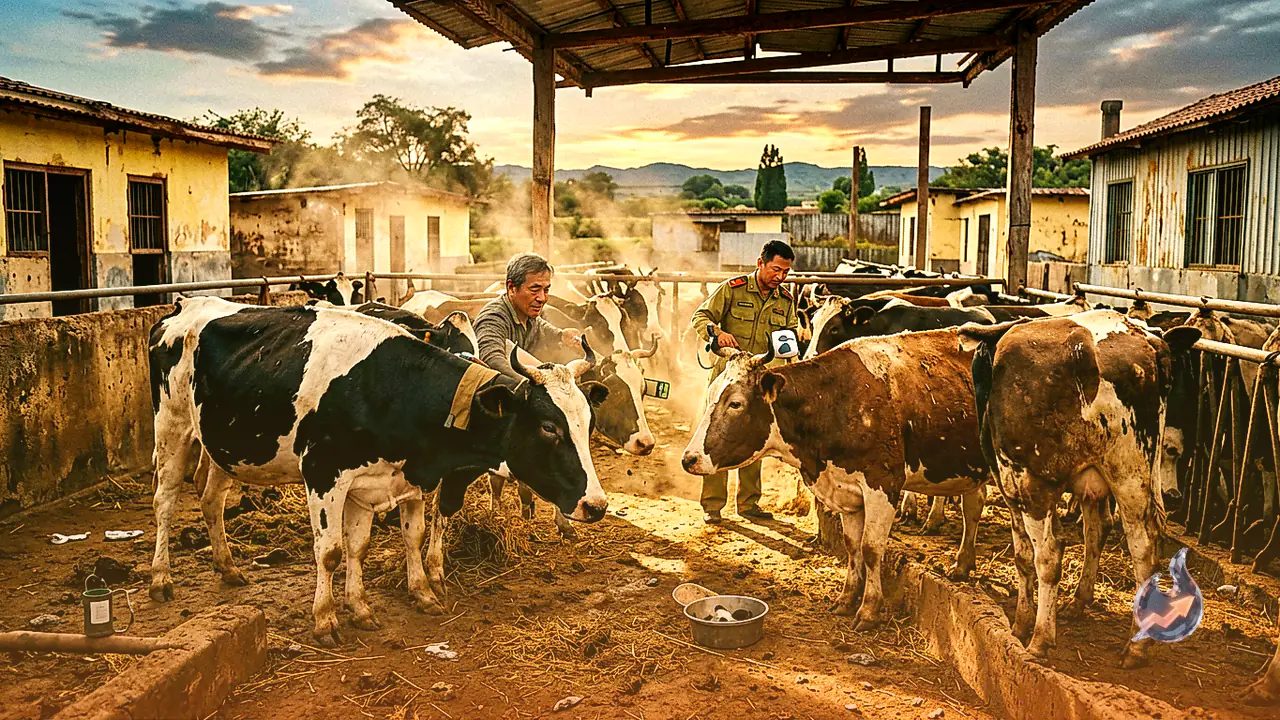

Following the recent rainy period, cattle rearers in Haryana's Ambala district are facing renewed anxiety as cases of Lumpy Skin Disease have re-emerged among livestock. The infection was recently detected in several cattle housed at a shelter in the Narayangarh area, triggering prompt action from local veterinary authorities. Because this contagious viral illness directly threatens cattle health and reduces milk production in dairy animals, the Animal Husbandry Department has intensified monitoring to facilitate the recovery of affected animals. Officials have issued a strict alert urging livestock owners to remain vigilant and immediately isolate any animal exhibiting symptoms from the healthy herd to curb further transmission.
Lumpy Skin Disease Outbreak at Narayangarh Shelter Raises Dairy Concerns
The confirmation of Lumpy Skin Disease symptoms among cattle at the Narayangarh shelter has put the local veterinary team on high alert. The period following monsoon rainfall creates conditions conducive to the rapid propagation of viral infections among livestock. The disease manifests through circular rings and firm nodules forming across the animal's skin. Infected dairy cattle frequently suffer from appetite loss and a marked decline in milk output, dealing a significant financial blow to farmers who rely on daily dairy yields.
Why Transmission Risk Persists Despite Vaccinating 60,000 Cattle
Dr. Sudesh Kumar, SDO of the Ambala Animal Husbandry Department, stated that preventive measures were initiated well ahead of the monsoon season. In early July, the department executed a large-scale vaccination drive across the district, administering vaccines to approximately 60,000 cattle. As per established veterinary protocols, the vaccine is administered only to cattle older than four months, while younger calves are excluded. However, Dr. Sudesh Kumar emphasized that vaccination does not eliminate the need for strict precautionary measures. Even vaccinated animals can contract the illness if exposed to direct contact with heavily infected stock.
Key Symptoms and Health Impacts on Livestock Health
According to Dr. Sudesh Kumar, the initial manifestation of Lumpy Skin Disease involves a high fever that typically persists for four to five days. Following the fever stage, distinct circular lumps, rings, and nodules appear across the animal's skin. In severe instances, these skin nodules can rupture into open wounds. Animals with compromised immune systems face a heightened risk of severe complications, and the infection can prove fatal if left unmanaged.
Lack of Targeted Antiviral Treatment and Mandatory Isolation Protocols
Because Lumpy Skin Disease is a viral infection, no specific antiviral medication exists to directly destroy the pathogen, making early detection and prevention essential. Dr. Sudesh Kumar advised that any animal showing signs of infection must be quarantined immediately in a separate shed. Dedicated feed and water containers must be used, and leftover fodder from an infected animal should never be offered to healthy stock, as this serves as a primary vector for viral spread. Furthermore, handlers attending to infected cattle or visiting affected areas must thoroughly wash their hands and feet before coming into contact with healthy livestock.