





















When monsoon evenings call for something warm and spicy, the traditional urad dal kachori from Ambala offers a satisfying change from the usual snack. Unlike the potato kachori sold widely in the market, this version is stuffed entirely with a spiced urad dal (split black gram) filling instead of potatoes. In Ambala households, mothers have long prepared this dish for their children, and local resident Bindra says it can be made at home without much difficulty.
Soaking and grinding the dal
According to Bindra, the process begins the night before, when about 250 grams of split urad dal is soaked in water and left overnight. By morning, once the grains have swelled up properly, they are rinsed once in clean water. The soaked dal is then transferred to a mixer grinder and blended until it turns into a smooth, thick paste. This paste later forms the base of the spiced stuffing that goes inside the kachori.
Preparing the spiced filling
Once the paste is ready, a little oil is heated in a pan and tempered with cumin seeds. Two finely chopped onions are then added, along with one or two chopped green chillies, and the mixture is sautéed until the onions turn light golden. At this stage, turmeric, salt, red chilli powder, coriander powder and garam masala are added according to taste and cooked well, so that the raw smell of the spices disappears and the filling develops a deeper flavour. The ground urad dal paste is then folded into the pan and cooked on low heat until the dal and spices come together fully. The finished mixture is set aside to cool slightly before it is used for stuffing.
Kneading the dough
While the filling cools, the dough for the kachori is prepared separately. About half a kilogram of flour is taken and mixed with salt to taste, with a little carom seeds (ajwain) added for extra flavour if desired. Water is then used to knead the flour into a dough that is neither too stiff nor too soft. Once kneaded to the right consistency, the dough is left to rest for a while before it is divided into small portions for shaping the kachoris.
Stuffing and shaping
Once the dal mixture has cooled a little, finely chopped coriander leaves are mixed in to add freshness to the filling. Small portions of dough are then rolled out lightly by hand, and a spoonful of the prepared urad dal stuffing is placed at the centre of each. The edges are gathered and sealed to enclose the filling completely before being shaped into a round ball. Bindra explains that each ball is then rolled out gently with a rolling pin, taking care not to let the stuffing spill out. The kachoris can be rolled into a larger, puri-like size or kept smaller, depending on preference.
Frying to a golden finish
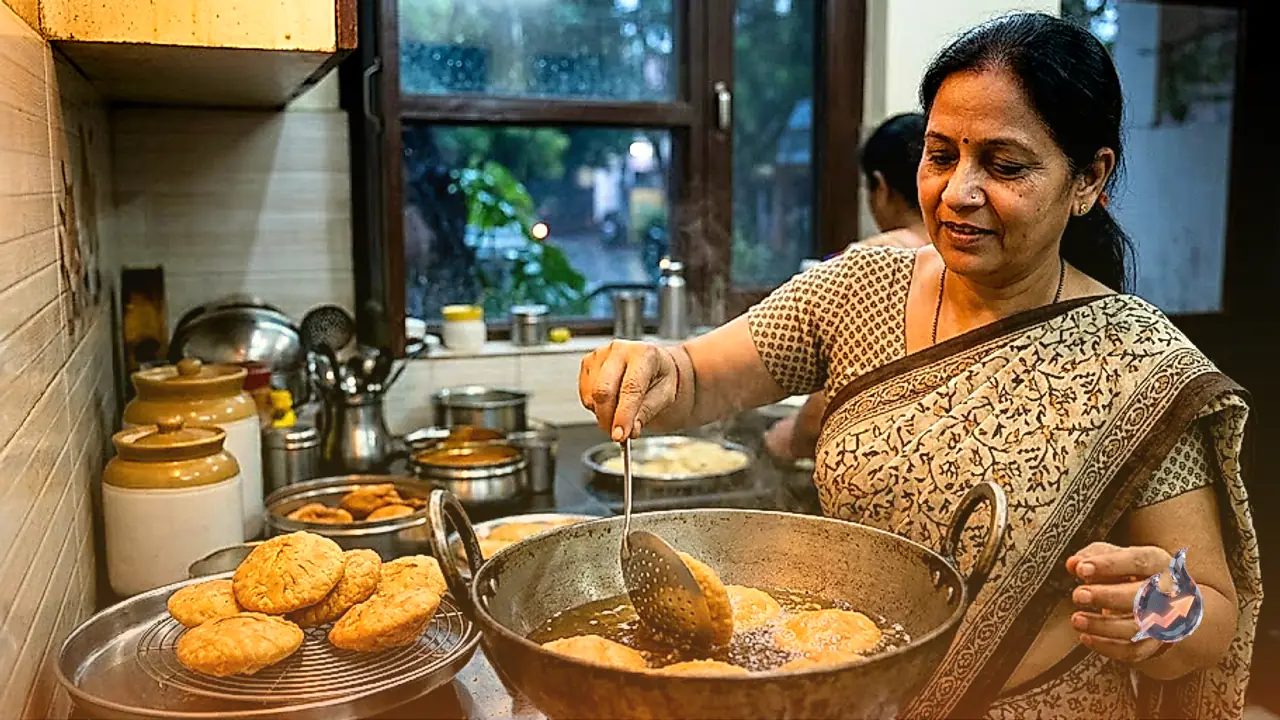
Once shaped, the kachoris are ready to be fried. A generous amount of refined or mustard oil is heated in a kadhai until fully hot, and the kachoris are slid in one at a time. Frying them on medium heat is considered ideal, as it allows the outer layer to turn crisp while the stuffing inside heats through evenly. Once the kachoris turn a golden colour, they are removed from the oil. This completes the preparation of hot, freshly fried urad dal kachoris.
How it is best served
Bindra says the kachoris taste best when served with a chutney made of coriander, mint and green chillies, which adds an extra layer of flavour to the dish. During the cool, rainy season, they can be enjoyed as a breakfast item or as an evening snack alongside tea. Because the filling uses spiced urad dal instead of potatoes, the flavour stands apart from the more common kachori varieties found elsewhere. Children in particular tend to enjoy this homemade version, and compared with kachoris bought from the market, it can turn out to be a tastier, more wholesome choice.