



















When blood circulation to the brain gets abruptly disrupted during an acute stroke, every passing second directly dictates a patient's survival and long-term functional recovery. If an individual suddenly experiences poor bodily balance, impaired vision, facial weakness on one side, or slurred speech, these manifestations indicate an urgent neurological crisis rather than routine weakness. Across households, families often misread these warning signs as minor exhaustion or harmless dizziness, causing catastrophic delays in seeking critical emergency evaluation. According to Dr. Sanjay Pandey, Head of the Neurology Department at Amrita Hospital, Faridabad, modern medical interventions can still be pursued up to 24 hours after symptom onset, but receiving timely care as early as possible dramatically improves the likelihood of a successful clinical outcome.
The Value of the Golden Window and Early Arrival
Time remains the single most critical asset when attempting to rescue oxygen-deprived brain tissue. Dr. Sanjay Pandey explains that transporting a suspected stroke patient to a hospital within the first 3 hours provides the most favorable prognosis. While treatment pathways can still be explored if an individual arrives within a 24-hour window, the initial three hours represent the decisive window to halt cellular damage before neurological deficits turn permanent. Families must accurately identify initial manifestations and act immediately without hesitating or waiting for symptoms to fade. Because millions of vulnerable neurons perish rapidly each minute a cerebral artery remains occluded, every minute saved preserves cognitive and physical independence.
Addressing Blood Clots With Mechanical Thrombectomy and Thrombolytic Drugs
In many acute stroke episodes, an obstructive blood clot forms inside the cerebral vasculature, choking downstream blood flow. Physicians deploy CT angiography to precisely confirm the vascular blockage. Whenever imaging verifies an LVO, or Large Vessel Occlusion indicating a blockage in a major brain artery, neuro-interventional teams can mechanically extract the clot using specialized equipment. This targeted intervention is known as mechanical thrombectomy. Furthermore, when patients arrive within established eligibility criteria, medical teams administer specialized clot-dissolving medications to melt the obstruction and reopen arterial channels, an emergency procedure known as thrombolytic therapy.
Spotting Warning Signals Using the B-FAST Framework
A widespread lack of public awareness remains the primary hurdle causing Indian patients to reach critical care centers dangerously late. Dr. Sanjay Pandey highlights the B-FAST acronym as an effective mnemonic for early identification. In this framework, B denotes sudden loss of balance, E represents vision problems or difficulty seeing, F stands for facial muscle weakness or uneven drooping, A signifies weakness or numbness in an arm, S refers to slurred or disturbed speech, and T highlights time, emphasizing urgent action. Observing any of these warning signs demands immediate transport to an emergency department where qualified patients can receive prompt thrombolytic therapy from stroke specialists.
Diagnostic Imaging and Healthcare Infrastructure Realities
Emergency medical teams rely primarily on CT scans and MRI imaging to evaluate the exact extent of acute cerebral damage. CT scans are widely accessible across most clinical centers, allowing doctors to quickly rule out hemorrhages and initiate emergency medical protocols. While advanced multi-specialty centers use MRI for detailed soft-tissue assessments, a baseline CT scan is often entirely sufficient to launch immediate life-saving treatments.
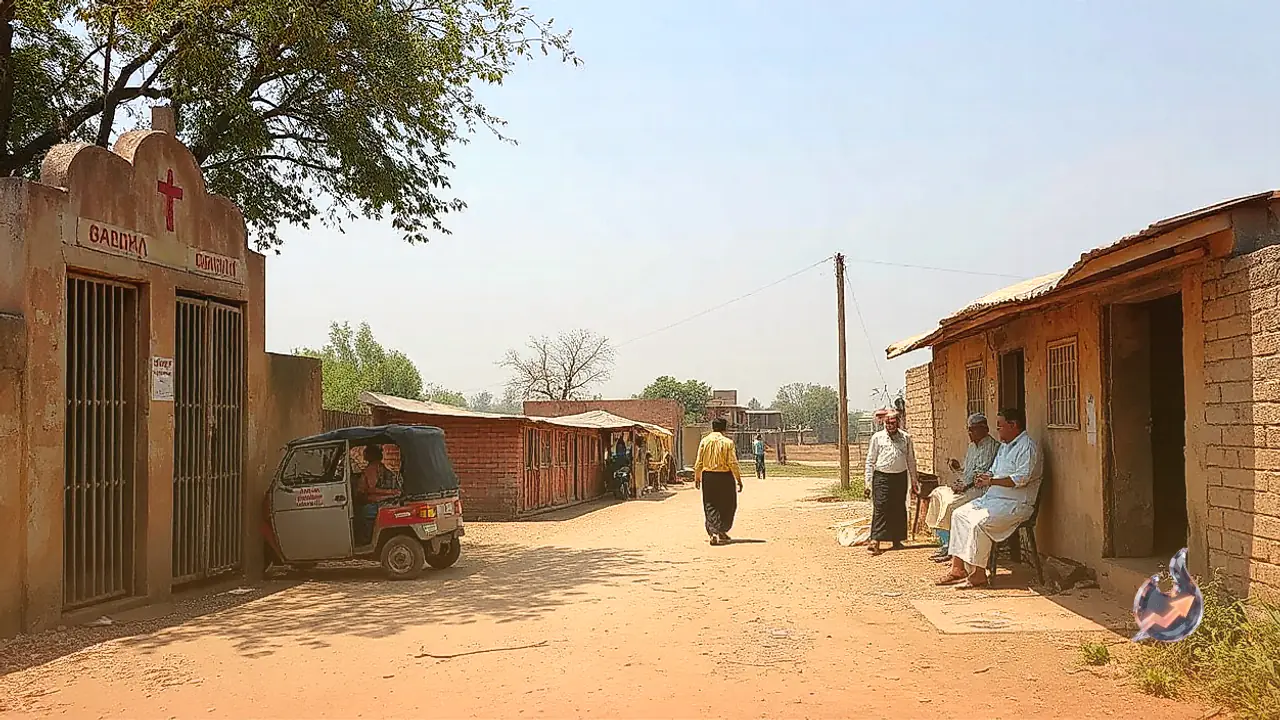
Significant barriers still prevent many stroke patients from obtaining modern medical treatment in a timely manner. Unlike a cardiac arrest or heart attack, an ischemic stroke does not trigger excruciating chest pain, leading individuals to dismiss the condition as non-threatening. Additionally, deep structural shortages persist outside major urban hubs. Rural and remote belts, particularly across northern India, suffer from an acute shortage of specialized neurologists alongside limited access to operational CT scans and MRI machines, leaving vulnerable patients unable to access high-level stroke care during the most critical hours.