














In a deeply painful medical tragedy, 15-year-old Tanvi from Kota, Rajasthan, passed away during the early hours of Tuesday, 1 September 2026, at All India Institute of Medical Sciences (AIIMS), New Delhi. Tanvi had been undergoing continuous medical care at the premier institute's cardiology department since the tender age of two, spending 13 years navigating a complex congenital cardiac condition. Her passing has raised poignant questions regarding why corrective heart surgery could not be performed over her more than a decade-long treatment journey. In response, AIIMS Director Dr. Nikhil Tandon has formally constituted a high-level medical inquiry committee to thoroughly examine the complete clinical sequence, surgical feasibility assessments, and the precise circumstances leading to the teenager's demise.
Initial Medical Diagnosis in 2012 and Complex Congenital Defect
Tanvi's medical history at AIIMS New Delhi commenced on 10 October 2012, when her family brought her to the Cardiology Outpatient Department (OPD) as a two-year-old child presenting with severe cardiac distress. Comprehensive diagnostic evaluations conducted by pediatric cardiologists revealed that she was suffering from Ventricular Septal Defect (VSD) associated with Pulmonary Atresia. This critical congenital cardiac malformation is characterized by a structural hole in the septum separating the heart's lower ventricles, combined with complete blockage or absence of the pulmonary valve and artery that carries deoxygenated blood from the heart to the lungs. Consequently, blood flow to the lungs for oxygenation was severely compromised. Following the initial diagnosis, her case was promptly referred to the specialized cardiac surgery team to assess whether surgical correction could rebuild a functional cardiovascular pathway.
Advanced Diagnostics and Inoperability Ruling (2013 to 2017)
Throughout 2013, the clinical team at AIIMS subjected the young patient to a battery of sophisticated diagnostic procedures to evaluate the precise vascular architecture of her heart and pulmonary arteries. These investigations included high-resolution CT angiography, conventional cardiac angiography, and cardiac catheterization. Through these detailed scans, cardiologists and cardiac surgeons evaluated the size, structure, and viability of her pulmonary arterial bed. Following years of meticulous clinical monitoring and interdisciplinary review, the primary treating team arrived at a definitive conclusion in 2017. They determined that due to the extreme structural complexity of her cardiac anatomy and underdeveloped pulmonary vessels, corrective open-heart surgery was anatomically unfeasible and carried an unacceptably high risk of fatal surgical complications. As a result, the medical board advised conservative medical management alongside regular outpatient follow-ups. The treating specialists thoroughly counselled the family regarding the clinical findings, non-surgical treatment strategy, and long-term prognosis of the condition.
Long-term Follow-up and Multiple Specialist Second Opinions
According to the official detailed account released by AIIMS, Tanvi's family remained in consistent contact with the institute over the subsequent years. Seeking every possible opportunity for a curative surgical intervention, the family sought additional expert consultations within the hospital. Just last year, they consulted the Head of the Department of Cardiothoracic and Vascular Surgery (CTVS) at AIIMS. After re-evaluating her complete diagnostic records and clinical history, the CTVS department head re-confirmed that surgical reconstruction remained unviable and re-iterated the recommendation for continued medical management. Seeking further clarity, the family subsequently sought another second opinion from a senior cardiothoracic surgeon at the institute, who similarly concurred with the non-surgical medical approach. The consensus across multiple senior specialists reinforced that operative intervention posed life-threatening risks compared to medical maintenance.
Acute Deterioration in August 2026 and Heart-Lung Transplant Evaluation
While continuing on prescribed pharmacological therapy, Tanvi experienced a severe deterioration in her health status in August 2026. Facing acute respiratory discomfort and worsening systemic hypoxia, her family rushed her back to AIIMS, where she was admitted on 24 August 2026. Given the severe progression of her end-stage cardiac condition and the impossibility of conventional corrective surgery, the medical team initiated evaluations for a dual Heart-Lung Transplantation. Specialists began conducting comprehensive pre-transplant workups, organ compatibility assessments, and multi-organ function tests to determine her eligibility for placement on the emergency national organ transplant registry.
Emergency Collapse on 1 September 2026 and Resuscitation Efforts
While under close inpatient observation during the transplant workup, Tanvi's clinical condition deteriorated catastrophically during the early hours of 1 September 2026. Clinical logs record that at approximately 2:50 AM, the patient complained of sudden profound fatigue and extreme physical weakness. Shortly thereafter, she developed severe central cyanosis, manifesting as deep blue discoloration of her skin and mucous membranes, as her blood oxygen saturation plummeted to a dangerous level of approximately 48 percent. The attending medical team immediately responded by placing her on high-flow oxygen support at approximately 3:30 AM. Despite maximum oxygen therapy, the severe desaturation triggered a profound hypoxic spell, which rapidly culminated in cardiac arrest. The emergency cardiac resuscitation team initiated immediate Cardiopulmonary Resuscitation (CPR) and administered advanced cardiac life support protocols. Despite continuous, intensive resuscitation efforts by the medical staff, her heartbeat could not be restored, and she was pronounced dead at 5:06 AM.
Post-Mortem Evaluation, Director's Panel, and Official AIIMS Statement
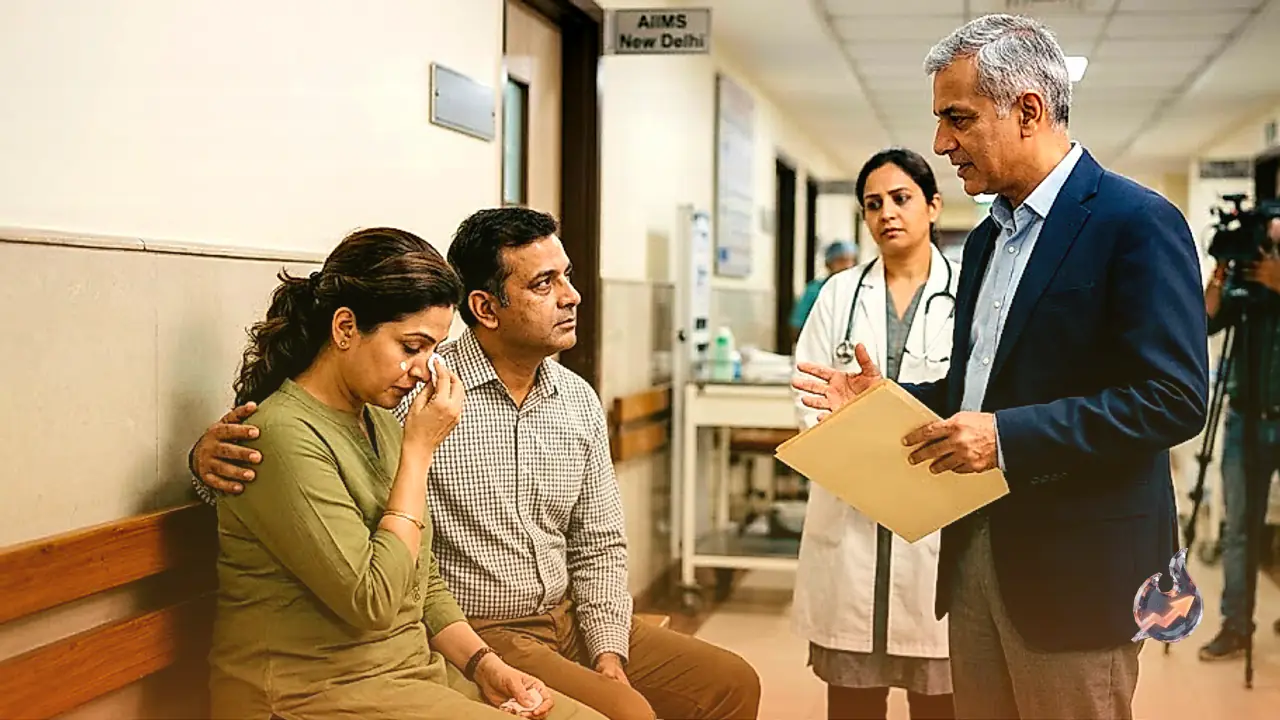
Following her death, post-mortem procedures were initiated to determine the precise pathological factors contributing to the final collapse. AIIMS Director Dr. Nikhil Tandon emphasized that the institute takes the family's grief and legitimate questions with utmost seriousness. The high-level inquiry committee appointed by the Director will conduct a comprehensive audit of the entire 13-year medical record, diagnostic findings, treatment decisions, specialist opinions, and the exact sequence of events during her final emergency admission. AIIMS management assured full institutional cooperation with the committee, noting that formal administrative or clinical measures will be guided by the panel's findings and post-mortem results. Expressing profound condolences to the bereaved family, AIIMS reaffirmed its unwavering commitment to patient safety, clinical transparency, evidence-based decision making, and institutional accountability, stating that it will await the final findings of the inquiry panel and post-mortem report before releasing conclusive determinations.