
























In today's fast-paced lifestyle, mobile phones along with earbuds and headphones have seamlessly integrated into our daily routines. Whether commuting, working out at the gym, or trying to pass the time during a busy workday, people keep earbuds plugged into their ears for hours on end. Many individuals listen to music at excessively high volumes and often fail to take them off even while going to sleep at night. While this habit appears entirely harmless and ordinary at first glance, it gradually inflicts severe damage on a person's hearing capabilities. Experiencing a persistent ringing sensation, buzzing noises, or faint whistling sounds inside the ears are critical warning signs that should never be ignored. This growing health risk has become a particularly alarming concern among young people and children.
Hearing Loss Can Become Permanent and Progressive
During a detailed discussion, Dr. Aparna Mahajan, senior consultant and ENT specialist at Amrita Hospital located in Faridabad, addressed several key questions regarding ear health and the surging popularity of continuous headphone use. She explains that hearing loss caused by excessive noise exposure from earbuds, earphones, or headphones is both permanent and progressive in nature. In the early stages, an affected individual might fail to notice any underlying issues, but the resulting hearing degradation eventually leads to a permanent reduction in auditory capacity. Taking proper safety precautions and seeking immediate medical consultation with an ENT specialist upon noticing the earliest unusual sounds is extremely vital.
Understanding Safe Volume Levels and Listening Rules
The expert points out that playing mobile audio at one hundred percent volume on speaker mode while keeping the device at a safe distance does not create any health complications. However, using direct-contact devices like headphones, earphones, or earbuds requires a much higher level of caution and discipline. Listening to audio at maximum volume or reaching one hundred decibels through earphones can permanently damage auditory nerves. Medical guidelines generally recommend the sixty-sixty rule, which advises keeping volume levels around sixty decibels and limiting listening sessions to sixty minutes at a time. Anyone continuously listening for an hour should take a mandatory break of ten to fifteen minutes to give their ears adequate rest rather than listening without interruption.
Recognizing Ringing Sounds As Warning Indicators
Medical science refers to the internal sensation of whistling or buzzing inside the ears as tinnitus. If an individual begins experiencing such unusual sounds, it serves as a direct indicator that internal auditory damage has already commenced. Should someone experience a persistent whistling sound inside their ears that lasts for one to two hours, they must get their ears examined immediately and consult a qualified ENT specialist without delay.
The Severe Dangers of Sleeping With Earbuds
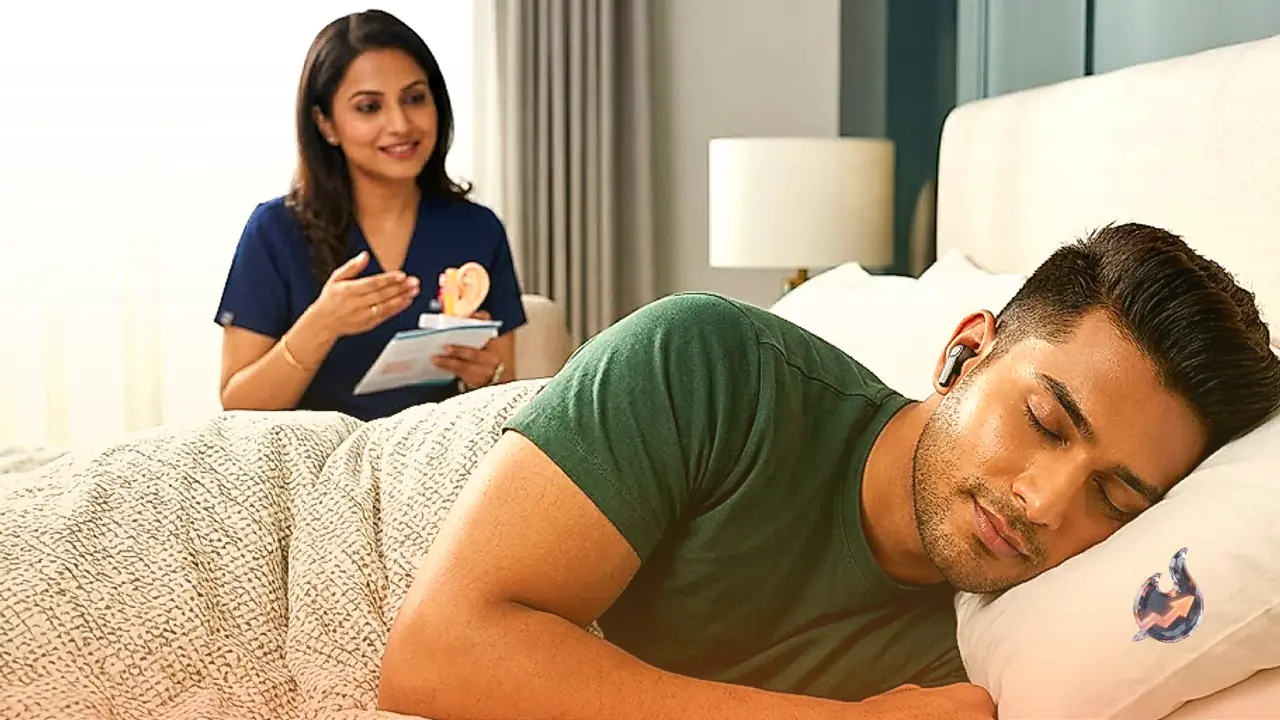
Dr. Aparna Mahajan explicitly warns that wearing earbuds while falling asleep is a profoundly harmful practice. Sleeping with these devices plugged in prevents the natural clearance of earwax, causing it to accumulate deep inside the ear canal over time. Another major hazard is the prolonged, uninterrupted exposure to noise over extended periods. Since a sleeping person remains completely unaware of the playing volume and the exact duration of audio exposure, this reckless habit can easily result in permanent auditory impairment.
Protecting Children From Headphone Hazards
During the COVID-19 pandemic, medical professionals witnessed a surge in pediatric cases where children suffered from persistent ear ringing and early signs of hearing loss. With online classes forcing children to rely heavily on headphones, doctors launched extensive awareness campaigns to guide parents. Experts strongly advised parents to keep earphones, earbuds, and headphones away from children and let them listen through phone speaker modes instead. Unchecked usage during childhood can compound into severe hearing complications during adulthood, making it crucial to keep volume levels well below sixty and limit usage duration with frequent breaks.