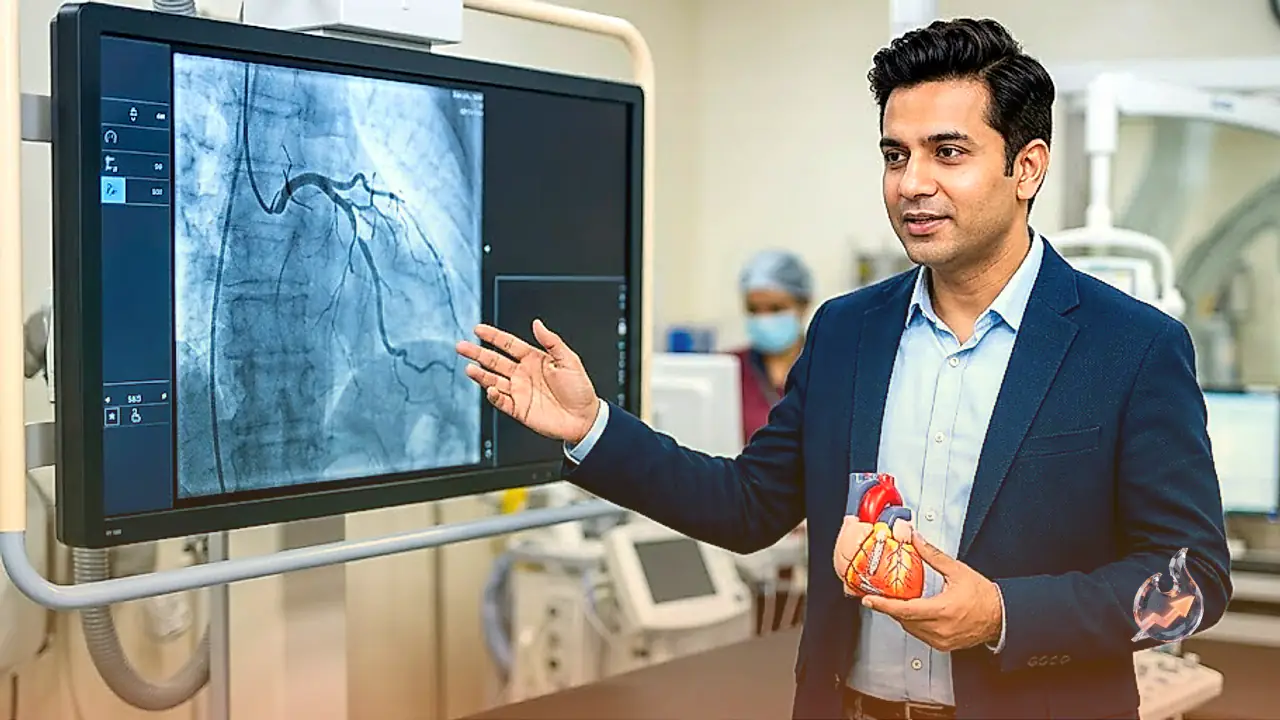
























Many patients mistakenly assume that the moment an angiography reveals any degree of arterial blockage, putting in a stent becomes an absolute necessity. However, Dr. Dibanshu Gupta, an interventional cardiologist at Sarvodaya Hospital in Jalandhar, points out that simply spotting a blockage on a screen and needing a stent to treat it are two entirely different medical scenarios. Experts emphasize understanding exactly how much blockage warrants a stent procedure and when angioplasty acts as a literal lifesaver during a heart attack.
Not Every Blockage Demands a Stent
Placing a stent is never a universal requirement for every single plaque buildup found inside an artery. The decision to implant a medical stent is never made solely by looking at the percentage of obstruction. Doctors instead evaluate a combination of vital factors, including the severity of symptoms a patient experiences, the exact anatomical location and seriousness of the blockage, the extent to which blood flow has dropped, and the overall clinical condition of the patient before formulating a treatment plan.
When Stents Save Lives During a Heart Attack
In acute coronary artery occlusion events, where an artery suddenly shuts completely or during a major severe heart attack, a stent can genuinely save a life. The sooner a blocked vessel is reopened, the lesser the permanent damage inflicted on the heart muscle. Completing this intervention within ninety minutes of reaching a hospital facility is widely regarded as the wisest clinical decision, significantly improving patient survival rates.
Chest Pain Does Not Always Mean Immediate Stenting
Every instance of discomfort or pain in the chest does not instantly call for a stent procedure. Nevertheless, persistent or escalating chest pain, unstable blood pressure, irregular heartbeats, early signs of heart weakness, or blood test indicators suggesting potential cardiac injury make prompt medical evaluation non-negotiable. Hesitating during these critical scenarios can prove fatal.
The Location of the Blockage Matters
The anatomical site of the obstruction is equally critical in deciding the intervention. Significant narrowing in the left main coronary artery, multiple blockages across various vessels simultaneously, or a diminished pumping capacity of the heart often necessitates restoring blood flow urgently. For certain patients, bypass surgery turns out to be a much more appropriate medical alternative than a stent.
Lifestyle Changes Remain Essential
Cardiovascular treatment does not end simply with the installation of a stent. Quitting smoking, consuming a diet rich in fresh fruits and vegetables, exercising regularly, keeping body weight under control, and reducing stress are indispensable habits. Additionally, cholesterol-lowering medications, blood thinners, blood pressure management drugs, and anti-anginal medications form a crucial core of ongoing cardiac care.