




















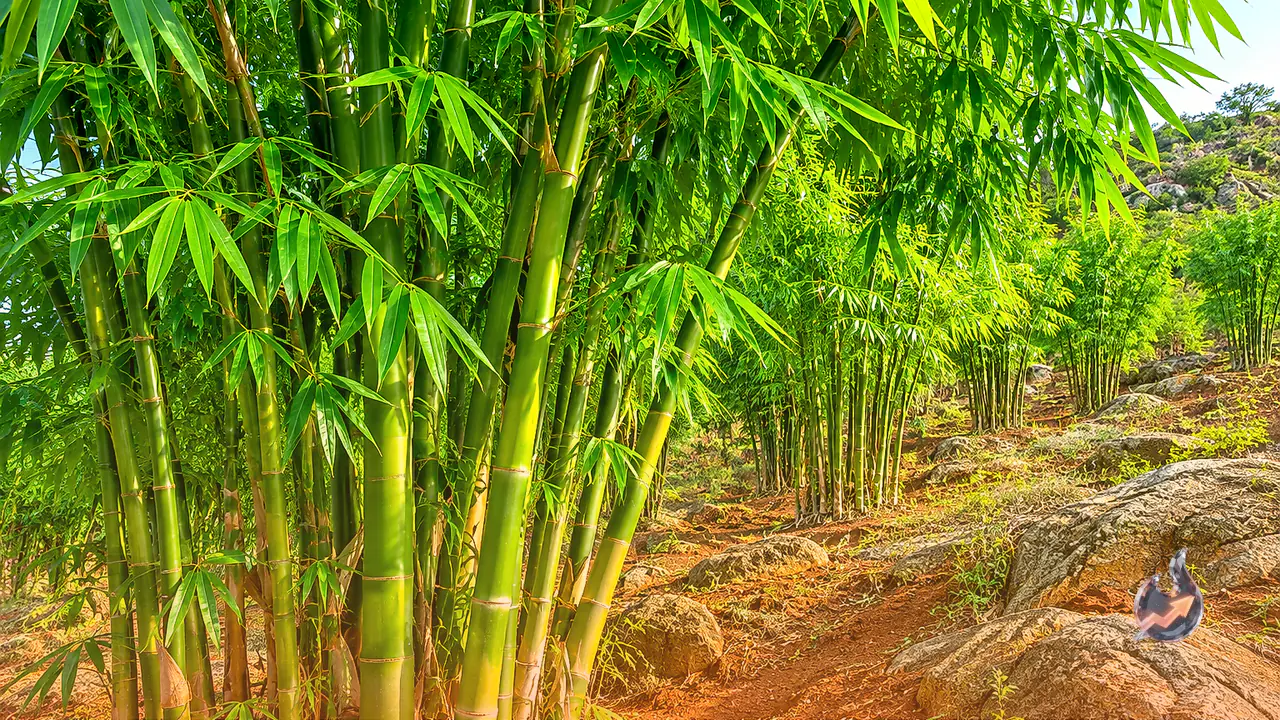

If you are a farmer looking to significantly boost your agricultural income, bamboo cultivation can turn out to be a highly lucrative alternative for you. The most remarkable aspect of this farming is that it frees growers from the relentless efforts and recurring expenses associated with the continuous irrigation and fertilization required for paddy and vegetable crops. Once bamboo saplings are planted in the soil, they mature over a few years to become a reliable and steady source of income.
The soil composition and geographical terrain of Jharkhand are considered exceptionally favorable for growing bamboo. The state features numerous rugged and hilly tracts where ordinary crop cultivation poses continuous challenges. Bamboo thrives effortlessly even in these uneven landscapes. Because of this adaptability, agricultural experts are strongly encouraging farmers to incorporate bamboo cultivation alongside their conventional farming practices to maximize the utility of their land.
Deoghar agriculture expert Vakil Yadav explains that the soil and topography of Jharkhand provide an ideal environment for bamboo farming. There are numerous regions throughout the state where the ground is not level, causing farmers significant distress when attempting traditional agriculture. Such landowners can successfully utilize these challenging plots for bamboo cultivation to unlock an additional stream of revenue.
A standout characteristic of bamboo farming is that once the initial planting phase is complete, there is no ongoing requirement to spend heavily on fertilizers and frequent irrigation. While young saplings need careful monitoring and adequate watering during their early stages of growth, established plants demand comparatively minimal maintenance. Within a few years, the bamboo matures into a marketable product that farmers can sell for profit.
Rising Demand for Value-Added Bamboo Products
According to Vakil Yadav, the demand for bamboo is not restricted to Jharkhand or Bihar alone, but spans nationwide with high consumption rates. Previously, bamboo was primarily utilized for building houses, constructing thatched roofs, making ladders, baskets, and supporting agricultural tasks. Today, however, its applications have expanded into manufacturing a wide variety of modern goods.
Through innovative bamboo crafts, artisans are now creating sophisticated furniture, decorative showpieces, bottles, and even complete housing structures. The market demand for these value-added bamboo creations is experiencing continuous growth. Consequently, bamboo has evolved far beyond a mere construction material, emerging as a powerful financial asset and livelihood driver for rural producers.
Earning Between 50 Thousand and One Lakh Rupees Per Acre
Agricultural specialists point out that a farmer cultivating bamboo across a single acre of land can potentially generate an annual income ranging from 50 thousand to one lakh rupees, depending on selecting the right species, maintaining optimal plant density, providing proper care, and navigating market channels. However, achieving this financial milestone requires farmers to initially identify the most suitable variety and establish reliable market linkages.
Since bamboo takes a few years to fully mature, it should not be viewed as a quick-yield crop. Nevertheless, for farmers possessing idle land that currently yields no returns, this represents a brilliant long-term investment opportunity. For cultivators in Deoghar and surrounding regions, adopting bamboo farming can open rewarding new pathways toward financial prosperity and stability.