























Agricultural experts state that cultivating strawberries becomes significantly more profitable when farmers incorporate water-soluble fertilizers into their routine. The 19:19:19 NPK fertilizer proves particularly valuable for this purpose, containing equal proportions of nitrogen, phosphorus, and potassium. Nitrogen helps stimulate plant growth during early stages, while phosphorus supports root development, and potassium enhances fruit quality while strengthening the overall plant structure. Because this fertilizer dissolves completely in water, it can be administered directly through irrigation systems, making the delivery of essential nutrients much more efficient for the crops.
Plant Management And Variety Selection
Achieving optimal yields requires proper plant management and correct spacing across the field. Farmers should maintain a distance of 20 to 25 centimeters between individual plants and 80 to 100 centimeters between consecutive rows. This specific arrangement provides plants with adequate space for unhindered growth. Furthermore, it simplifies daily farm tasks such as weeding, irrigation, and fruit inspection. Growers can select suitable varieties such as Chandler and Pusa Early, keeping local climatic conditions and prevailing market demand in mind during the selection process.
Fruit Production Within Sixty Days
A notable advantage of strawberry farming is that proper care allows plants to begin bearing fruit in approximately 50 to 60 days following transplantation. Providing essential nutrients to the crops at designated intervals during this growth phase is crucial. Balanced fertilizer management combined with regular watering noticeably improves both the size and quality of the harvest. Farmers typically continue harvesting production from this crop until the month of March, making continuous monitoring throughout the entire crop cycle essential for success.
Mulching Benefits And Safe Packaging
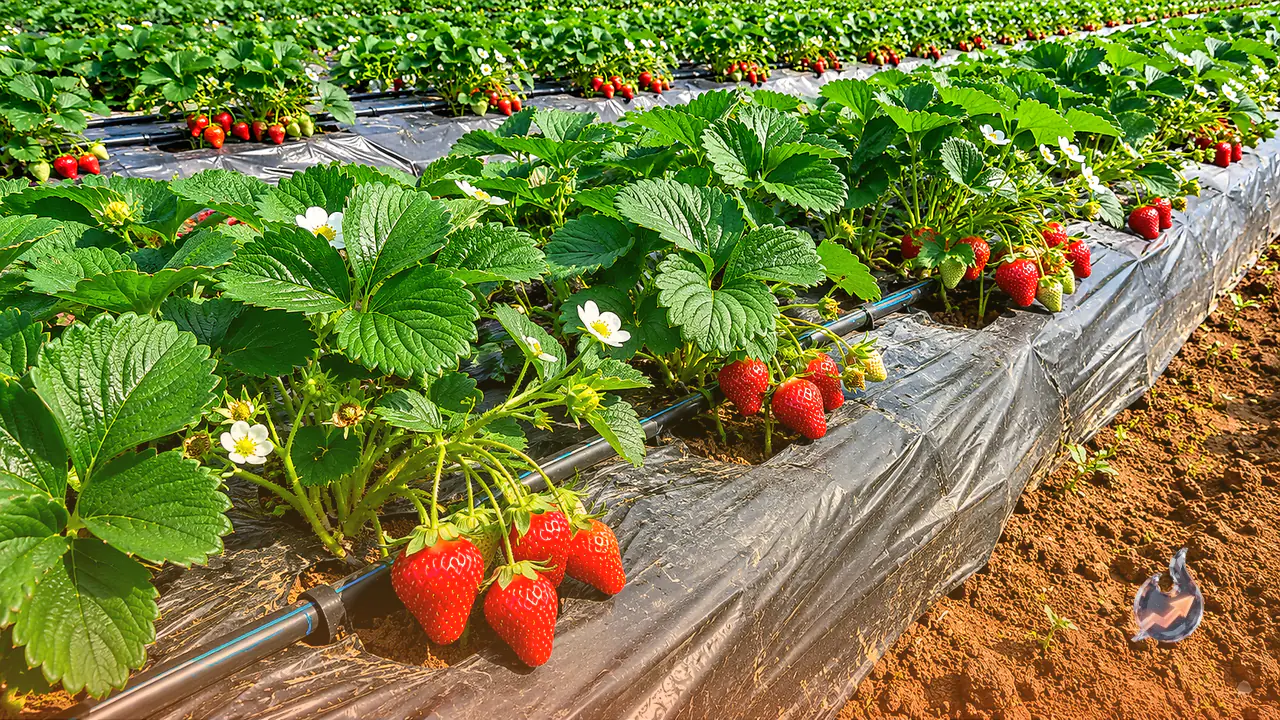
Mulching, which involves covering the soil surface with plastic sheets, is considered an indispensable practice in strawberry cultivation. This technique prevents fruits from coming into direct contact with the soil, thereby minimizing the risk of spoilage and damage. Additionally, it helps suppress weed growth and preserves vital moisture within the soil. Once harvesting is complete, special attention must be directed toward packaging. Because strawberry fruits are exceptionally delicate, they require ventilation-friendly and properly sized boxes during transit to prevent crushing and bruising.