


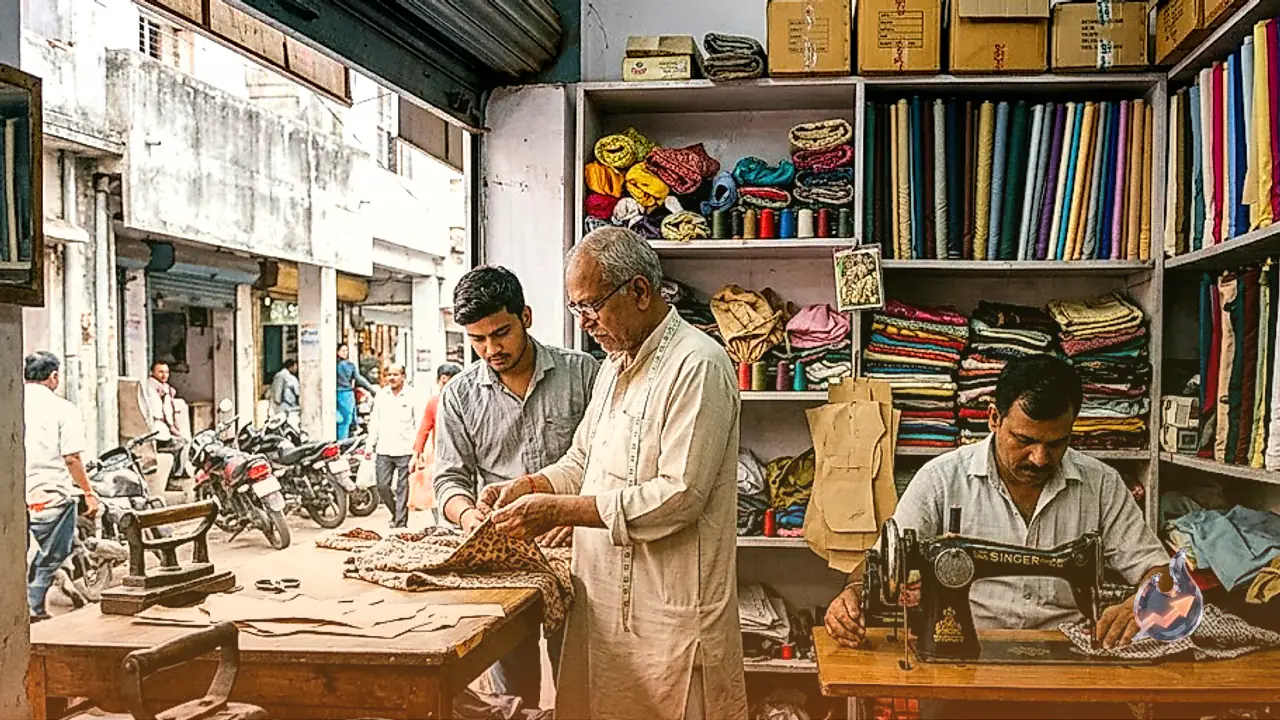

In the historic locality of Rohini within Jharkhand's Deoghar district, a modest tailoring establishment founded nearly two decades before Indian independence continues to operate without interruption. Over the past eight decades, retail clothing habits have shifted dramatically as factory-made, ready-to-wear garments came to dominate modern fashion choices. Despite the nationwide decline of traditional bespoke tailoring, this specific shop established in 1930 continues to enjoy unwavering patron loyalty. People from surrounding villages and rural pockets travel regularly to place their stitching orders here. Beyond its standing as a century-old institution, the workshop is renowned for its rapid turnaround, delivering fully tailored apparel within a matter of hours while conventional tailors often take days or weeks to fulfill an order.
Colonial Origins and Two-Rupee Stitching Charges
The enterprise was originally established in 1930 by the father of the current artisan, Mohammad Wajid. During that era of British colonial administration, British residents lived just a short distance from the premises, and Wajid's father regularly tailored uniforms and everyday garments for them. The financial economics of tailoring in that era stood in sharp contrast to contemporary rates. Crafting a complete pair of shirt and trousers cost merely two rupees, while stitching a blouse was priced at just two annas. Over the passing decades, currency denominations evolved, inflation climbed, and tailoring fees rose proportionally, yet the sewing machines in the shop never stopped humming. Following the father's passing, Wajid's elder brother took over operations before Mohammad Wajid himself assumed control of the family trade.
Patronage of Rohini State Royals and Expanded Reach
When Mohammad Wajid took direct charge of the tailoring counter, the shop counted local royalty among its regular clientele, including the ruler of Rohini State, commonly known as Ghatwal Saheb. Prominent dignitaries and ordinary villagers stood alongside each other to have their outfits measured and stitched on the premises. Over time, word of the tailor's swift craft spread well past the boundaries of Rohini into adjacent farming hamlets. Even today, patrons from outlying rural settlements continue to visit the shop in large numbers. Remuneration has naturally mirrored inflation: the shirt and trousers combination that once cost two rupees to stitch now commands approximately 550 rupees. While fabrics, trends, and pricing structures underwent total transformations, the underlying commitment to manual tailoring remained firm.
Third Generation Carries the Craft into the Ready-Made Era
The day-to-day management of the establishment has now transitioned to Mohammad Wajid's son, marking three unbroken generations of family dedication to the trade. The business started with the grandfather laying the foundations under colonial rule, grew under the stewardship of the sons, and now advances under the great-grandchildren's generation. Even as contemporary consumers lean heavily toward off-the-rack garments that require no waiting, this workshop continues to sustain high customer footfall. A key driver behind this ongoing success is the promise of quick delivery, as the tailors complete garments within a few hours of measurement. Spanning close to a century of continuous activity, the shop stands as a working testament to ancestral craftsmanship surviving the pressures of modern industrial fashion.