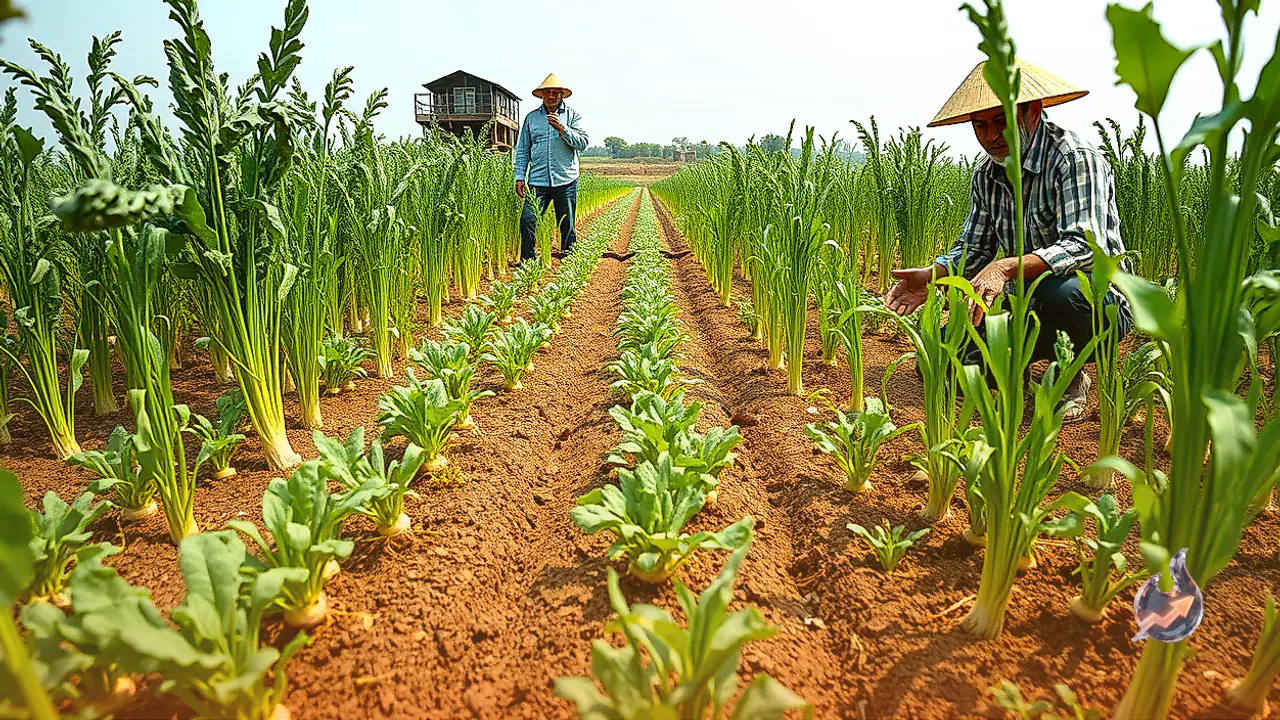

























Nutrient management remains a decisive factor for farmers cultivating paddy during the Kharif season. In an effort to secure higher production, fields often receive excessive nitrogen applications while vital components such as potash get neglected. Maintaining a harmonious equilibrium of essential nutrients is fundamental for robust vegetative growth and healthy grain development.
The Value of a Balanced Nutrient Formulation
Crop nutrition demands steady proportioning from the seedling stage through grain maturity. Agricultural scientist Dr. Pramod Kumar from the Regional Research Centre, Chianki highlights the necessity of using balanced quantities of nitrogen, phosphorus, and potassium. Standard agricultural guidance recommends maintaining a proportion of four parts nitrogen to two parts phosphorus and one part potassium.
Potassium serves an indispensable function by reinforcing the structural strength of the plant. A sturdy stalk ensures that grain formation proceeds smoothly, allowing kernels to fill out properly and resist physical damage.
Risks Linked to Excessive Urea and Deficient Potash
Hoping for quick gains, several cultivators apply disproportionately heavy volumes of urea to their fields. Consequently, the intake of phosphorus and potash drops well below recommended standards. When potash levels fall short, crops fail to receive well-rounded nutrition, leaving the plant system fragile.
This imbalance directly undermines plant vigor and vegetative stability. Weakened stalks and unbalanced foliage invite higher infestations of insect pests and fungal diseases, ultimately leading to disappointing grain quality and yield losses.
Techniques for Staggered Nitrogen Applications
Administering the entire quota of nitrogen in a single application is inefficient and should be avoided in favor of split doses. The initial application, covering roughly one-third of the total nitrogen allocation, works best within 15 to 20 days post-transplantation. A second round should follow between day 30 and day 35, while the third round is advised between day 40 and day 50.
Adjustments can be made based on local crop conditions and field-specific advisory inputs. Staggering the doses ensures that root systems absorb the fertilizer progressively as vegetative growth accelerates.
Panicle Formation Stage and Optimal Application Hours
Managing nutrients is vital not only during field transplantation but also during the critical panicle initiation phase. Even in a 90-day crop cycle, targeted fertilizer applications can be calibrated to support the emergence of grain panicles.
The timing of field broadcasting also requires careful attention. Spreading fertilizer early in the morning when dew settles on the foliage must be avoided. Granules adhering to damp leaves can cause foliar scorching or tissue injury. Undertaking the application during the afternoon hours is considered a much safer practice.