





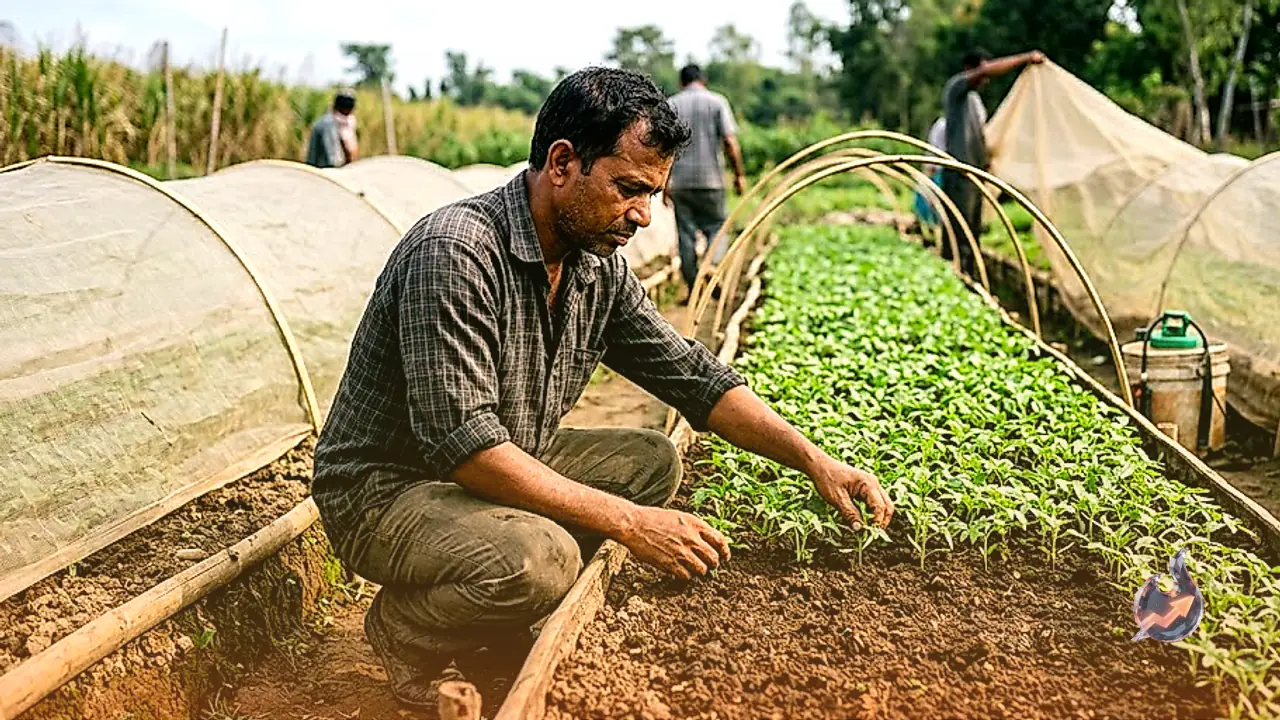
















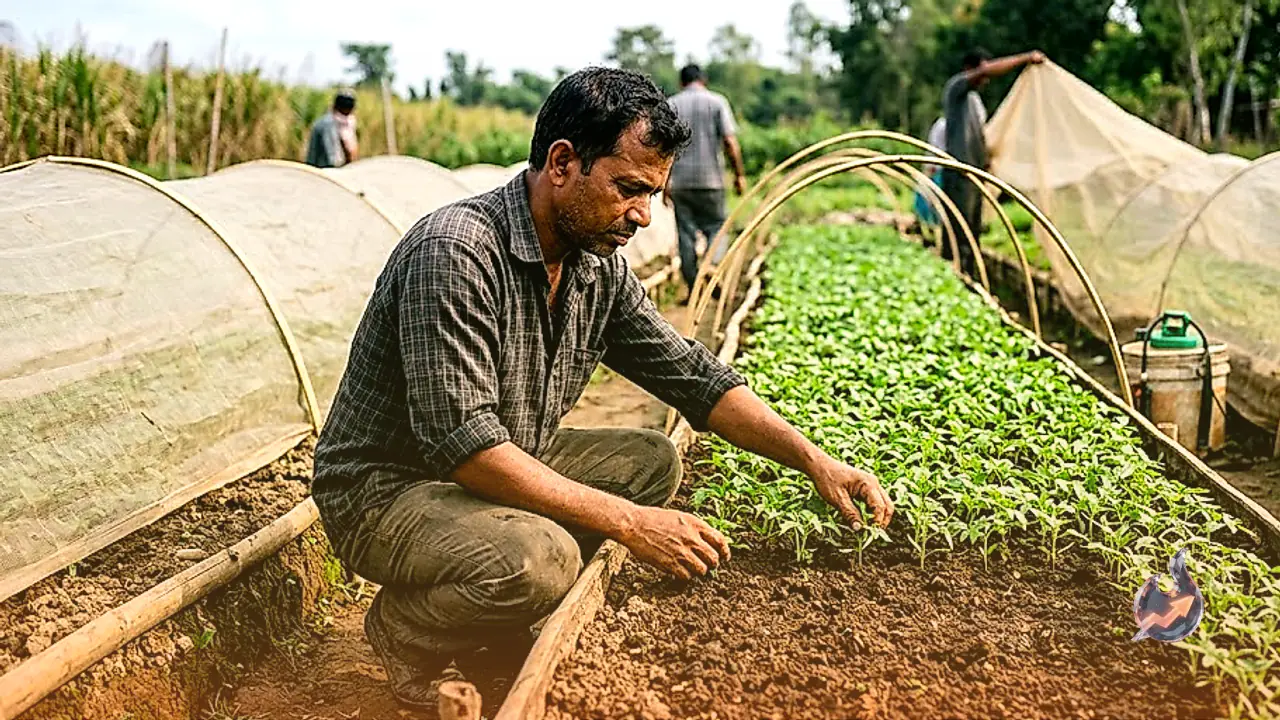

Farmers taking up tomato cultivation during the month of October need to prioritize foundational nursery hygiene and continuous plant monitoring. Dr. Sushma Saroj has outlined that safeguarding crops against pathogenetic outbreaks begins right from the nursery phase. Seedlings face their greatest initial danger from collar rot or damping-off, a problem rooted in fungal or bacterial pathogens that easily propagate through contaminated soil or seeds. Addressing these early vulnerabilities is vital for securing healthy vegetative growth and preventing severe losses.
Elevated Nursery Beds and Effective Drainage
To shield delicate sprouts from soil-borne decay, nursery beds should be prepared roughly 15 cm above ground level. According to Dr. Sushma Saroj, raising the seedbeds ensures that excess irrigation water drains away freely instead of pooling around fragile roots. Maintaining an effective drainage layout throughout the plot prevents waterlogging, which substantially suppresses the spread and multiplication of destructive bacteria and fungi. Stagnant moisture in the root zone remains the chief catalyst for early seedling collapse.
Seed Treatment Ratios and Transplanting Protocols
Treating seeds prior to sowing stands as an indispensable preventive step against fungal contamination. Agricultural recommendations suggest utilizing fungicides such as Captan, Thiram, or Carbendazim. For every 1 kilogram of tomato seed, approximately 2 to 2.5 grams of the chosen formulation should be uniformly applied. Once the treated seedlings mature sufficiently for transplantation into the main field, growers must ensure adequate spacing between rows and individual plants, followed by persistent monitoring of plant establishment.
Managing Blight and Bacterial Spot Outbreaks
As the vegetative cycle advances, tomato plants can encounter early blight, late blight, and distinct leaf spots. To curb these destructive conditions, spraying a tank mix of Mancozeb and Metalaxyl at a concentration of 2 grams per liter of water safeguards the standing crop. Another prevalent challenge involves leaf spots that start as brown marks and later split into open fissures, characteristic of bacterial spot disease. To limit its spread, farmers must physically pick off affected leaves and fruits, remove them from the field, and destroy them completely.
Preventing water stagnation is critical to checking bacterial multiplication. Overhead irrigation should be strictly avoided because water droplets and splashing readily transport bacterial cells to unaffected foliage. At the earliest manifestation of this disorder, an application of Copper Oxychloride at 0.2 to 0.3 percent helps suppress further deterioration.
Tackling Leaf Curl Disorder and Whitefly Vectors
Leaf curl disorder inflicts noticeable damage by causing foliage to curl either upwards or downwards, shrinking in size and stunting overall vine growth. Curbing this disorder requires targeting the whitefly population, which acts as the primary vector transmitting the underlying viral agent. Timely sprays of biological formulations help reduce whitefly activity and curb disease pressure. Regular field walkthroughs from the initial seedling emergence through the full field stage allow growers to detect anomalies quickly and take decisive curative action.