


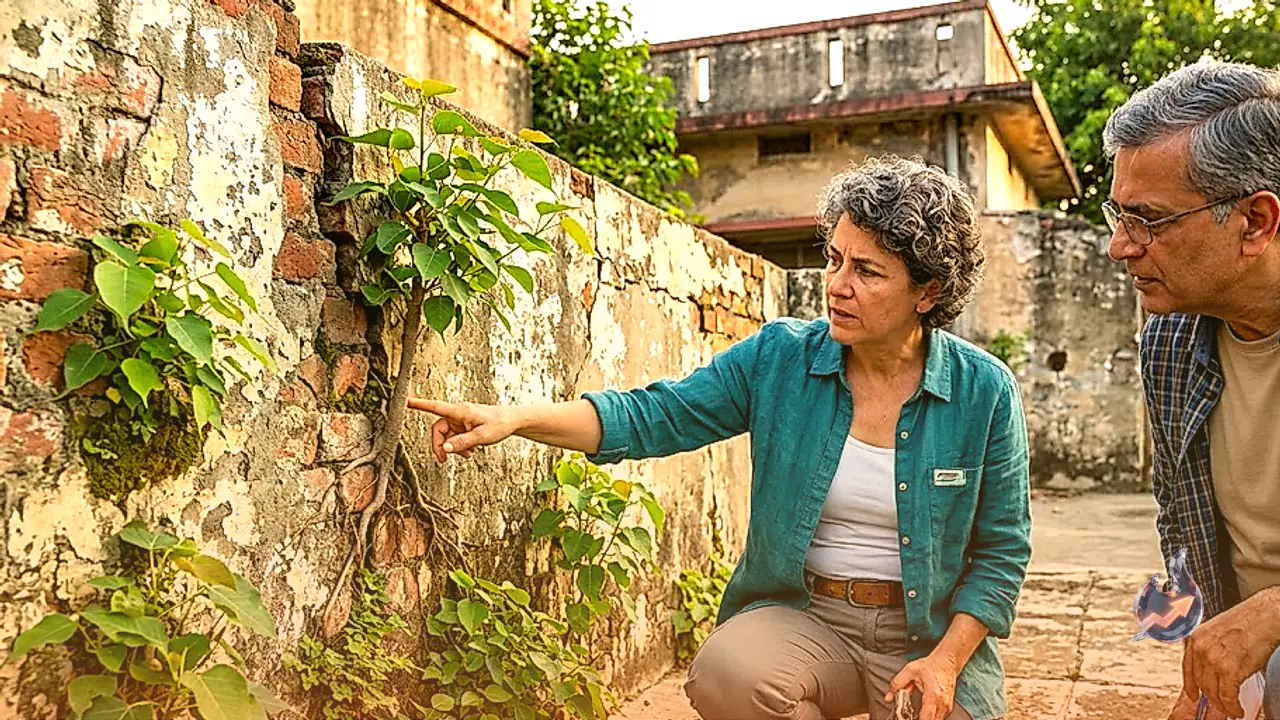



















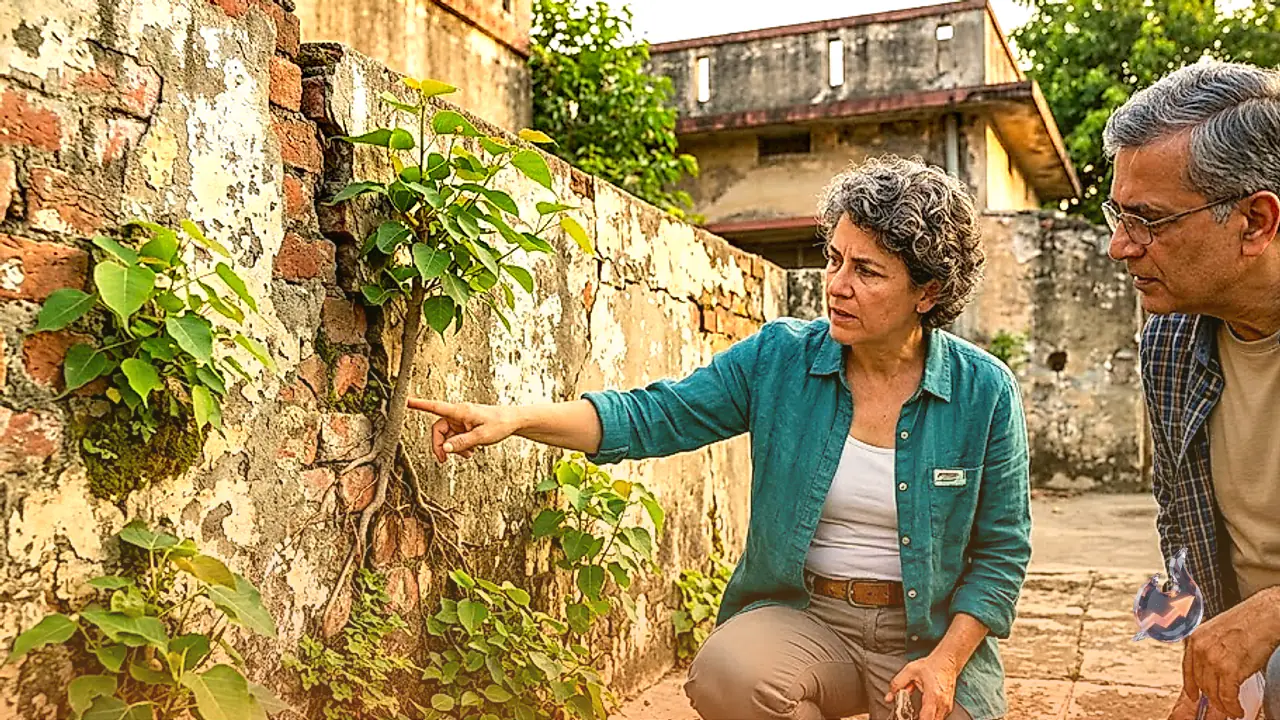

Residential structures, historic constructions, and modern multi-storey buildings often develop unwanted vegetation, tough grass, and young saplings of large trees such as banyan and peepal along their walls and roofs. While such growth may appear insignificant in its initial stages, the expanding root networks gradually penetrate mortar joints and structural cracks. This development compromises the brickwork, ruins plaster finishes, and poses serious challenges to the long-term structural integrity of the property. Addressing these concerns, Dr. Manish Kushwaha, in-charge officer of Bahraich Agricultural Research Centre, has shared key insights into how these seeds reach elevated surfaces and the effective scientific measures property owners can adopt to resolve the issue permanently.
How Tree and Weed Seeds Reach Rooftops and Wall Cracks
A common puzzle for homeowners is how heavy tree species manage to sprout on concrete ledges without topsoil or deliberate planting. According to Dr. Manish Kushwaha, seed dispersal relies on specific botanical features and natural vectors. Many weed varieties produce seeds equipped with specialised feathery plumes or parachute structures known as pappus. When strong breezes blow, these lightweight units become airborne, drifting over long distances and settling high up into damaged plaster, fractured parapets, and hairline crevices of tall buildings. Other species yield microscopic, featherweight seeds that rise directly with open air currents from nearby fields directly onto rooftops.
Animals and birds represent another prominent transmission channel. Certain seeds feature barbed exteriors or hook-like hairs that cling firmly to animal fur or human clothing. As squirrels, cats, and rodents navigate along boundary walls, drainage pipes, and eaves, these clinging seeds brush off against rough surfaces. When the animals groom or rub against masonry, the seeds lodge into open crevices where they await favourable germination conditions.
Moisture and Rainy Weather Trigger Deep Root Formation
A trapped seed remains dormant inside a dry wall crevice for extended periods without sustaining any harm. The situation changes drastically with the onset of the monsoon. Rainwater seeps into unsealed cracks, saturating the interior mortar with moisture. Drawing on internal food reserves contained within the endosperm, the seed germinates and pushes out green shoots. Once the shoot establishes itself, the nascent root system extracts dissolved lime, minerals, and atmospheric moisture directly from the masonry. As the plant expands, its woody roots exert mechanical pressure inside the joints, widening the cracks year after year.
Preventive Sealing and Timely Uprooting Strategies
Dr. Kushwaha highlights that timely prevention serves as the primary line of defence against structural deterioration. Homeowners must systematically inspect all external surfaces for spalled plaster, damaged expansion joints, and visible crevices before the rains begin. Any detected fissures should be thoroughly packed and sealed using cement mortar, waterproof filler, or flexible putty. Denying the seeds a stable pocket of moisture prevents airborne particles from settling and sprouting.
Routine manual maintenance is equally critical for smaller annual weeds. Any fresh green growth observed along roof gutters or exterior mouldings must be pulled out by hand before the plant matures into its reproductive phase. If a weed is allowed to form seed heads, those seeds will drop into adjacent cracks, causing the infestation to multiply during the next wet spell.
Mulching Rooftop Gardens with Wood Shavings
Rooftop gardening in raised masonry beds, containers, and pots has become widespread in urban homes. Because these beds are watered daily, they create ideal microclimates for persistent weeds to take root and spread seeds toward building edges. To manage this without constant manual weeding, Dr. Kushwaha recommends applying a protective mulch layer. Spreading a 1 inch thick layer of wood shavings or sawdust over the soil surface in pots and raised beds cuts off sunlight from reaching the topsoil. Even when weed seeds germinate under the surface, the absence of natural light prevents photosynthesis, causing the seedlings to turn pale and wither away naturally.
Safe Chemical Elimination of Wall-Grown Banyan and Peepal
Vigorous saplings of peepal or banyan embedded in structural walls should never be ripped out by brute force. Because their root fibrils snake through deep cavities, pulling them abruptly can shear large chunks of masonry and destabilise the wall. Instead, a targeted chemical protocol should be implemented. The plant stem should first be cut flush with the masonry surface using a sickle or small hand saw.
Immediately following the cut, the remaining stump must be coated or sprayed with an appropriate herbicide, such as a contact herbicide like paraquat or a systemic herbicide such as glyphosate. This application should be repeated 2 to 3 times at strict intervals of 10 days. The systemic action ensures that the chemical translocates deep into the subterranean root mass, drying the woody tissue completely from within. Once dried, the roots decompose harmlessly without the sapling regenerating.
Managing Surrounding Open Plots and Empty Land
Open ground surrounding an apartment complex or bungalow often serves as an uncontrolled breeding ground for invasive species. In smaller garden patches, a manual weeding tool should be used to pull out plants along with their complete taproots. For extensive vacant plots, running a rotavator or tractor-drawn plough turns the soil over, exposing the roots to dehydrating sunlight. Where mechanical equipment cannot reach and no desirable ornamental or fruit trees exist, targeted applications of contact herbicides can be sprayed. If new weed patches emerge after 15 to 20 days, a single repeat spray provides thorough control. Implementing these scientific precautions protects building durability and eliminates troublesome wall vegetation permanently.