























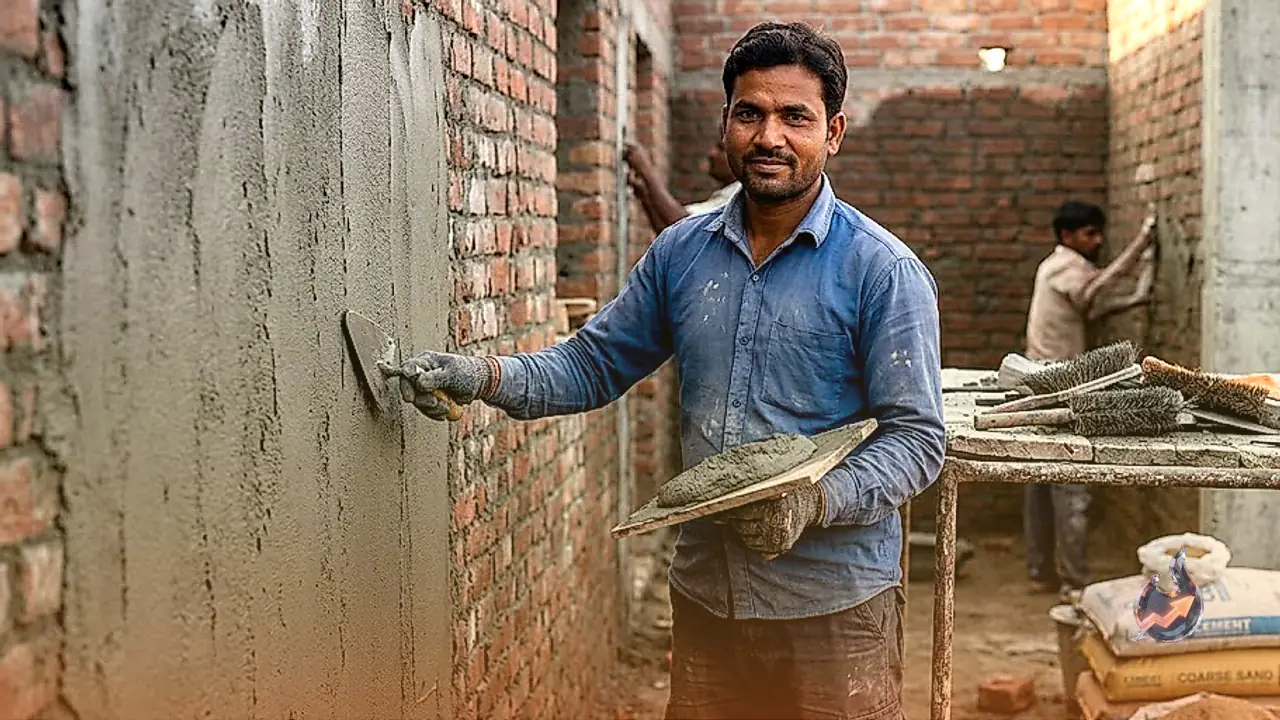

Shortly after the construction of a house or building is completed, plaster often begins flaking and peeling away from walls and ceilings. Beyond spoiling the aesthetic appeal of living spaces, this issue triggers genuine concerns regarding structural safety. Addressing the factors behind this common failure, experienced mason Shivprakash from Yadav village in Bahraich district has broken down the critical construction errors that lead to crumbling plaster and how to prevent them.
Why Plaster Fails and the Need for Pre-Watering
According to Shivprakash, the primary triggers for plaster detachment are inadequate surface curing with water and improper application of the cement slurry. Before applying plaster to any masonry wall or ceiling, water must be thoroughly sprayed across the surface starting at least two days in advance. This extended soaking cools the masonry completely and allows the bricks to absorb moisture to full capacity. When dry masonry is left untreated, it pulls moisture directly out of the fresh plaster mortar, depriving the cement of the hydration required to set firmly.
Surface Preparation Using Wire Brushes
Thorough physical preparation of the masonry surface is just as vital as moisture curing. Any dust, loose mud, or existing debris accumulated on the brickwork must be scraped away using a wire brush. This cleaning must continue until the red bricks are clearly exposed and free of loose particulate matter. Even when dealing with walls that are not entirely fresh, soaking the structure with water and cleaning the base thoroughly remains essential to create a reliable mechanical bond for the new mortar.
The Standard 4:1 Mix Ratio and Thickness
The ultimate strength and service life of plaster rest upon the exact balance of materials within the mortar. Shivprakash emphasizes that the standard benchmark ratio for durable plaster is 4:1, representing four pans of coarse sand or maurang to one pan of cement. Every batch must be measured carefully and blended uniformly. Careless manual mixing leaves pockets where sand dominates without sufficient cement binding, causing the plaster to form weak crusts that peel off within two to four years. Blending coarse sand rather than ordinary fine sand with cement creates a markedly more resilient compound, provided the applied layer maintains a thickness of at least half an inch.
Technical Best Practices for Long-Term Durability
Ensuring plaster remains intact for decades requires following this sequential process without taking shortcuts. Combining two full days of moisture saturation, vigorous cleaning with a stiff wire brush, a meticulously blended 4:1 mortar formulation, and a uniform half-inch application thickness keeps surfaces smooth and eliminates crumbling. Adhering to these practical parameters during new construction or major renovation projects safeguards the investment and keeps residential structures sound for years to come.