


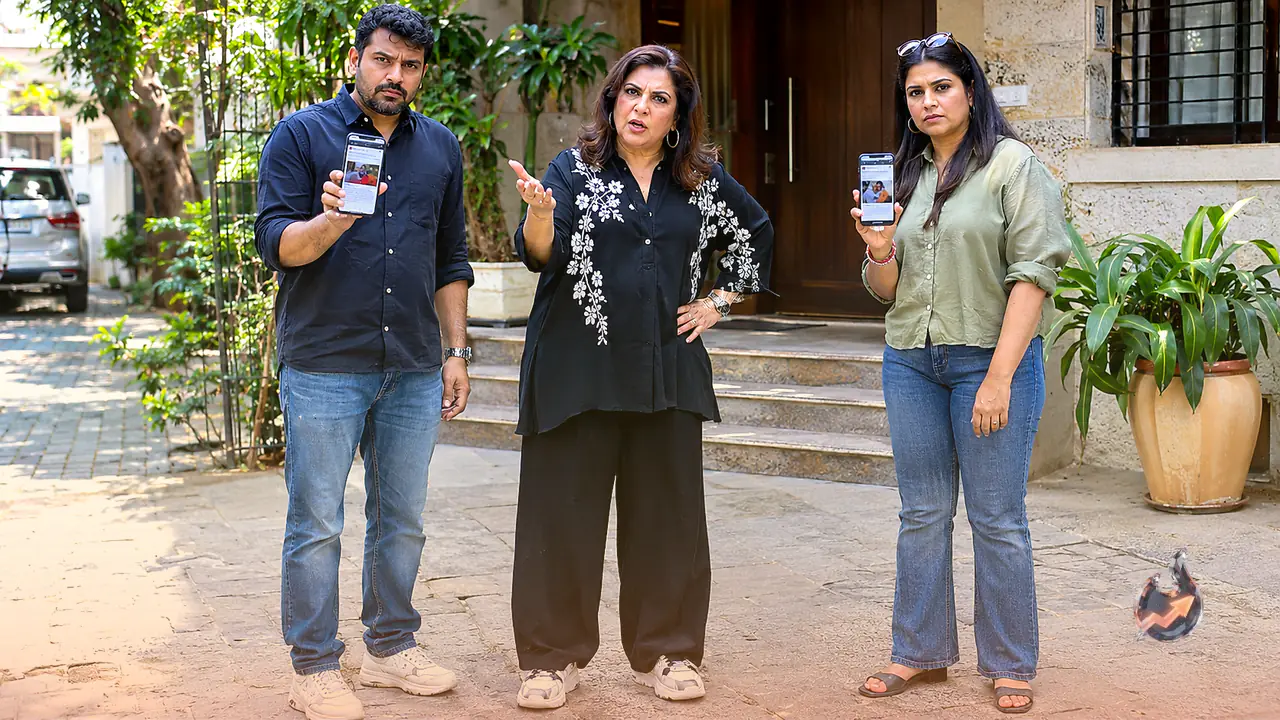


















Sitting down directly on the ground and returning to an upright standing posture without placing hands on the floor may sound straightforward, yet it often humbles even regular gym enthusiasts. Soha Ali Khan, known for prioritizing physical conditioning as an uncompromising personal passion, recently introduced this functional mobility challenge to test joint mechanics and physical stability. The exercise serves as a direct diagnostic for hip flexibility, muscular endurance across the lower body, and dynamic bodily balance.
Surprising Outcomes During Gym Trials
While trying out this movement routine alongside workout companions, the observed responses turned out to be eye-opening. Although a few participants managed the transition smoothly, several individuals found this seemingly basic physical movement remarkably difficult to execute. Reflecting on the exercise, she remarked, "This challenge may look easy, but it shows how strength, balance, flexibility, and coordination help us do everyday movements easily." The exercise highlighted that aesthetic physical conditioning does not automatically translate into effortless body mechanics or seamless neuromuscular synchronization.
The Biomechanics of Rising Without Support
The mechanics of this drill require an individual to descend all the way to the floor and then push back up to a standing stance without resting their palms, elbows, or knees on any surface. Explaining the physical demands behind the drill, Soha pointed out that people rarely train their bodies for the natural motion patterns required in real life. Successfully completing the move demands an intricate balance between hip mobility, leg strength, core stability, and full-body spatial coordination. A deficit in any of these components disrupts the entire kinetic sequence, making it nearly impossible to stand up unsupported.
Preserving Physical Independence With Age
Speaking from her own vantage point at 45, the actor underscored the long-term stakes of neglecting functional movement patterns. She noted that struggling with this motion in one's mid-forties hints at far steeper hurdles down the road when reaching seventy-five. Vital everyday activities—such as bending over to gather objects, tackling staircases, and maintaining solid footing while walking—gradually degrade if not actively cultivated. When muscle power, joint range, and physical balance are allowed to erode over time, even basic domestic tasks turn into strenuous chores.
Rethinking Fitness Beyond Bulking and Weightlifting
Challenging the common obsession with muscle mass and cosmetic sculpting, Soha emphasized that genuine wellness extends far beyond lifting heavy plates. The foundational aim of exercising should center on sustaining personal autonomy and self-reliance as years advance. Building the ability to move freely, walk confidently, and navigate daily environments without relying on external assistance represents the true benchmark of lifelong physical fitness.