























Star anise holds an irreplaceable spot among whole culinary spices thanks to its deeply aromatic profile and rich licorice-like flavor. Beyond elevating everyday cooking, this distinctive star-shaped spice carries an array of therapeutic compounds and natural properties that offer notable health benefits. It aids healthy digestion, soothes indigestion and flatulence, and provides relief from common chest congestion, persistent coughs, and seasonal colds. Furthermore, it gives a healthy push to daily metabolism while imparting an inviting fragrance to savory broths and curries. In retail grocery markets, standard star anise commonly trades between ₹600 and ₹1,000 per kilogram, while superior premium grades demand even higher prices. By cultivating this high-value spice tree directly at home, passionate gardeners can secure a perpetual supply of organic spice while cutting kitchen grocery bills. Achieving healthy growth simply demands a clear understanding of seed selection, soil preparation, planting conditions, and routine maintenance.
Botanical Origins and Natural Growth Habits
Scientifically classified as Illicium verum, star anise is an evergreen tree indigenous to the dense forest landscapes of southern China and northern Vietnam. When grown under supportive environmental conditions with abundant sunlight and regular moisture, the mature tree can attain a height of roughly 5 meters, which translates to approximately 16 feet. The species naturally thrives in subtropical to tropical climates characterized by warm and consistently humid weather. Because extensive regions across India mirror these exact atmospheric conditions, growing the tree in spacious home gardens or deep outdoor containers is entirely achievable.
Choosing Genuine and Viable Seeds
The foundation of a flourishing star anise tree lies in obtaining authentic and viable planting material. It is strictly essential to verify that the seeds or nursery saplings belong specifically to Illicium verum. Home growers must actively avoid Japanese star anise, scientifically known as Illicium anisatum, because its pods contain potent neurotoxins and are completely unsafe for human consumption despite looking almost identical to the culinary spice. Additionally, always source fresh seeds from reliable suppliers, as the germination viability of star anise seeds drops sharply with age.
Preparing the Ideal Soil Mixture
Before introducing the seeds to the soil, an effective propagation technique involves soaking them in lukewarm water for a full 24 hours. This brief soaking period softens the hard outer seed coat and substantially speeds up the natural germination cycle. Meanwhile, blend a well-draining potting substrate using two parts fertile loamy soil, one part well-rotted organic compost, and one part coarse sand or horticultural perlite. This precise combination ensures loose aeration and dependable drainage, preventing soggy soil around tender root structures while retaining the gentle moisture the plant demands.
Sowing Seeds and Transplanting Young Saplings
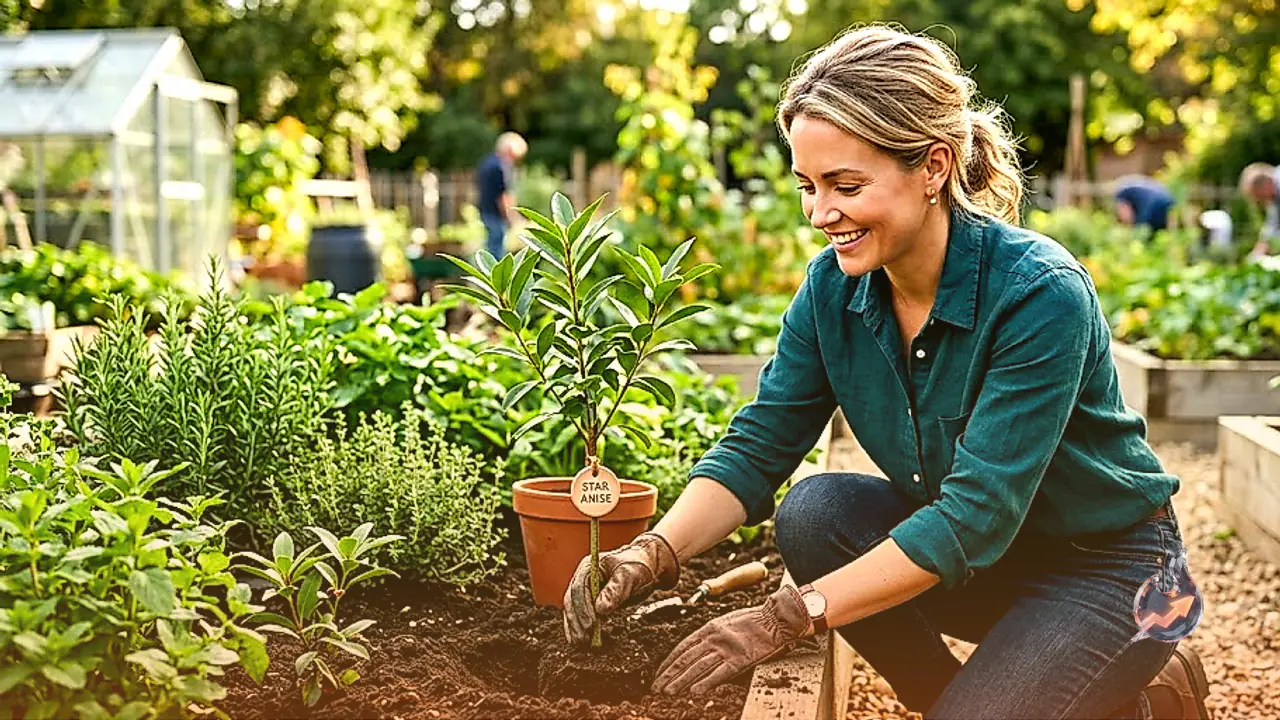
Fill small starter pots or seed trays with the prepared substrate and gently press each seed to an approximate depth of 1 inch, or about 2.5 cm. Position the germination containers in a warm, sheltered location where the surrounding ambient temperature reliably hovers around 25°C, or 77°F. Star anise seeds require steady thermal warmth to break dormancy, typically sending up green shoots within 2 to 4 weeks. Once the young seedlings establish vigor and reach an overall height of 15 to 20 cm, carefully transplant them into substantial patio pots or directly into prepared garden ground.
Ongoing Care, Fertilization, and Pest Management
Maintaining the vigor of a growing star anise tree requires consistent horticultural oversight. Keep the growing medium evenly moist at all times, but remain cautious never to allow standing water, as severe waterlogging can swiftly rot the root system. Support ongoing canopy and root development by applying natural organic fertilizer, such as balanced compost tea, every 2 to 3 months. To safeguard the foliage against insect infestations and fungal blights, periodically spray the plant with organic neem oil solutions or mild soapy water washes.
Harvesting Mature Pods and Long-Term Storage
Because star anise matures as a perennial woodland tree, growers must practice long-term patience during early vegetative development. The tree usually requires about 6 to 8 years from seed germination before producing its first harvestable seed pods. Nevertheless, once the tree crosses the maturity threshold, it continues yielding bounty for several decades. Harvest the star-shaped capsules just before they achieve full ripeness, precisely when their coloration transitions from vibrant green to rich earthy brown. Lay the harvested pods under direct sunshine to cure thoroughly, then store them in airtight containers away from humidity to preserve their signature aromatic oils for years.