






















Growing flowering plants is one of the most rewarding gardening pursuits, but seeing two completely different colors of blooms flourish on a single rootstock is truly captivating. For home gardeners aiming to produce both red and white roses within the same container, vegetative propagation through budding and grafting offers a reliable, proven solution. Success depends on selecting healthy plant tissue, grafting during the right calendar window, blending balanced potting soil, and maintaining consistent moisture levels.
The Method for Grafting Dual Colors on One Rootstock
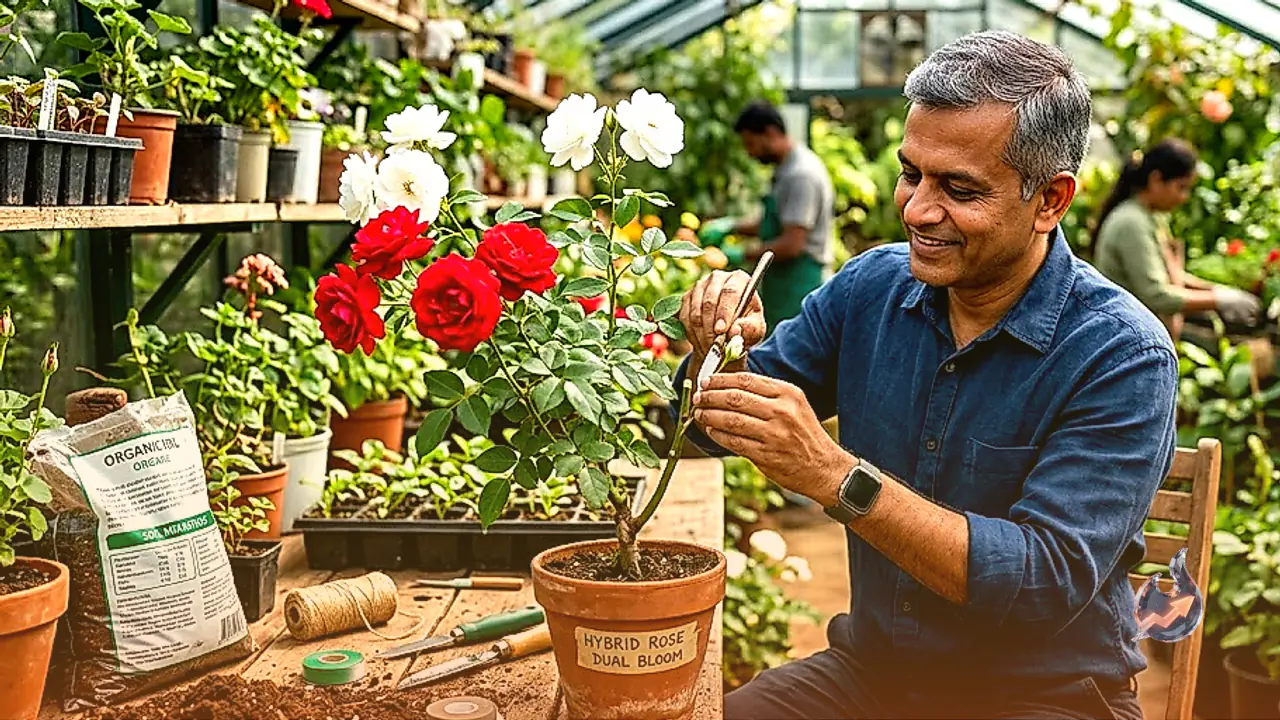
According to Rakesh Rajwade, the most dependable technique for producing multiple bloom shades on one plant is T-budding. The procedure begins by choosing a vigorous rootstock specimen with a well-developed, healthy root network. Next, gardeners must select mature, active buds from the desired donor plants, ensuring the bud is fully developed but has not yet opened into a bloom.
Using a sanitized, sharp grafting knife, individual buds are carefully sliced away from both the red and white parent rose bushes. The gardener then makes a clean T-shaped cut through the bark on two separate branches of the chosen rootstock. Each harvested bud is gently inserted beneath the raised bark flaps of the respective cut branch. Once fitted securely, grafting tape is wrapped firmly around the incision, sealing the graft union from air pockets, pathogens, and moisture loss while leaving the bud eye exposed.
Ideal Seasonal Windows for Budding
Timing plays a defining role in whether the cambium layers of the bud and rootstock unite successfully. Rakesh Rajwade emphasizes that the months of October and November offer the most favorable environmental conditions for carrying out rose budding. If that autumn window is missed, gardeners can also perform the technique during the late winter surge in February and March.
When budding is executed toward late September or throughout October, fresh shoots generally begin emerging by November, setting the stage for subsequent flower development. Under standard growing conditions, the grafted buds establish a firm vascular union and initiate vegetative emergence within roughly one month.
Post-Grafting Care and Moisture Control
Once the budding procedure is wrapped up, special attention must be paid to plant placement and watering routines. The container should be kept in a sheltered spot that prevents exposure to harsh downpours and avoids waterlogging the root zone. Consistent moisture must remain present in the substrate, yet standing water must be prevented at all costs to protect delicate young tissues from rot. Routine, measured irrigation ensures the newly grafted union remains hydrated during cellular fusion.
Understanding Major Rose Varieties
Horticultural specialists categorize cultivated garden roses into several distinct classes, with Miniature, Tea Hybrid, and Floribunda standing out as three prominent groups. Each variety presents unique growth patterns and flowering habits.
Miniature roses are recognized for their compact form and abundant small blossoms. Tea Hybrid varieties, by contrast, are celebrated for generating single, large, high-centered flowers perched atop individual sturdy stems. Floribunda roses bridge these habits by producing generous clusters of blooms along branching stems, giving the plant a full, dense floral display.
Pot Selection and Substrate Preparation
Providing ample space for underground root expansion is vital for vigorous vegetative performance. Gardeners should select containers measuring between 12 and 16 inches in diameter, or even larger. Confining roses to small pots restricts root development and stunts overall vegetative vitality.
Equally critical is formulating an aerated, nutrient-rich potting medium. The recommended substrate recipe incorporates approximately 40 percent garden soil, 30 percent well-decomposed compost, 10 percent sand, 15 percent cocopeat or rice husk, and 5 percent combined neem cake and bone meal. Coarse sand maintains essential porosity and unobstructed drainage, while cocopeat or rice husk retains requisite moisture levels without suffocating root hairs. This structure delivers an ideal growing micro-environment.
Nutrient Inputs and Fertilizer Guidelines
Balanced, disciplined nutrition keeps grafted roses blooming vigorously without causing chemical burn. Experts suggest applying light, controlled doses of NPK 19:19:19 to sustain vegetative and bud vigor. This chemical supplement works best alongside organic inputs, including bone meal, neem cake, and well-cured farmyard manure. Gardeners must always calibrate fertilizer volume to actual plant requirements rather than applying excess amendments.