






















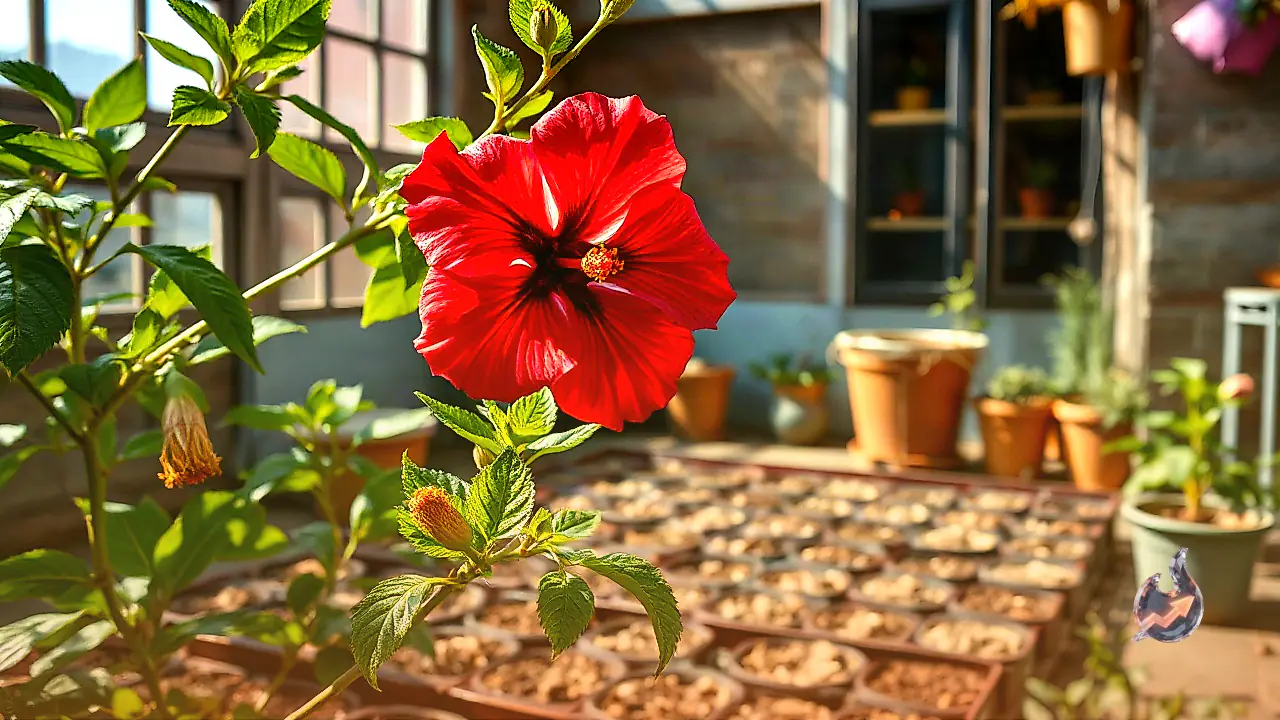

The auspicious festival of Navratri is scheduled to commence on 11 October, marking nine sacred days dedicated to the worship and adoration of Goddess Durga. During this spiritual period, devotees traditionally offer sacred bhog, fresh seasonal fruits, and special flowers favored by the deity. The vibrant red hibiscus holds immense religious significance as a cherished floral offering for the Goddess. While purchasing flowers from commercial markets remains a common daily practice, having a blooming plant right on your balcony or terrace garden makes morning prayers effortless while infusing the household with spiritual serenity and vibrant greenery.
Cultivating a hibiscus plant is relatively straightforward, and it adapts remarkably well whether planted directly in an open garden plot or potted inside a container on a sunny apartment balcony. Under normal circumstances, a newly propagated stem takes roughly 1 to 2 months to establish itself and initiate budding. Therefore, taking a proactive approach and adopting proper botanical practices becomes crucial to accelerate root establishment and foliage growth. Employing strategic horticultural care significantly shortens the time required for a young branch to transform into a blossoming shrub.
Step-by-step propagation from stem cuttings
To successfully propagate hibiscus, select a semi-mature, healthy stem and snip a cutting measuring between 5 to 8 inches in length. Prepare the cutting by gently stripping away all foliage from the lower portion of the stem, allowing only 2 to 3 leaves to remain at the very top. To accelerate the cellular division necessary for root emergence, dip the freshly cut basal end into a rooting hormone powder before planting.
The potting medium must provide superb drainage to prevent waterlogging and subsequent root decay. A balanced soil blend composed of equal parts garden soil, coarse sand, and organic compost serves as the ideal foundation. Plant the cutting to a depth of 2 to 3 inches within the prepared soil mix and add a light splash of water. Situate the container in a warm location shielded from intense direct afternoon sun while still receiving plenty of bright, diffused natural light.
Root development and nutrient requirements
A plant can produce robust floral blooms only after creating an extensive and sturdy root network beneath the soil. Maintaining consistent light moisture in the soil is critical, though excessive soaking must be avoided to prevent fungal problems. As root establishment proceeds, ensure the growing sapling receives 5 to 6 hours of daily sunlight alongside regular nourishment.
For growers seeking earlier flowering, selecting cuttings taken from mature, already-established hibiscus mother plants yields faster growth compared to tender juvenile stems. Enrich the soil once every month by incorporating well-rotted cow dung manure or nutrient-rich vermicompost into the upper layers. Fertilizers fortified with phosphorus and potash are particularly effective in stimulating bud formation and vivid flowering. Additionally, perform periodic pruning to eliminate desiccated, frail, or dead twigs, allowing the shrub to direct its vitality into active growth nodes.
Realistic expectations for flowering timelines
Gardening naturally demands patience, and a newly inserted stem cutting offers no guarantee of producing blooms within an ultra-short span of 15 days. Biologically, blossoms appear only after the root system has settled deeply and the stem has generated sufficient vegetative maturity. When nurtured with consistent sunlight, rich organic nutrition, and disciplined watering, the young shrub flourishes within a few months to yield an abundant harvest of radiant red flowers.