





















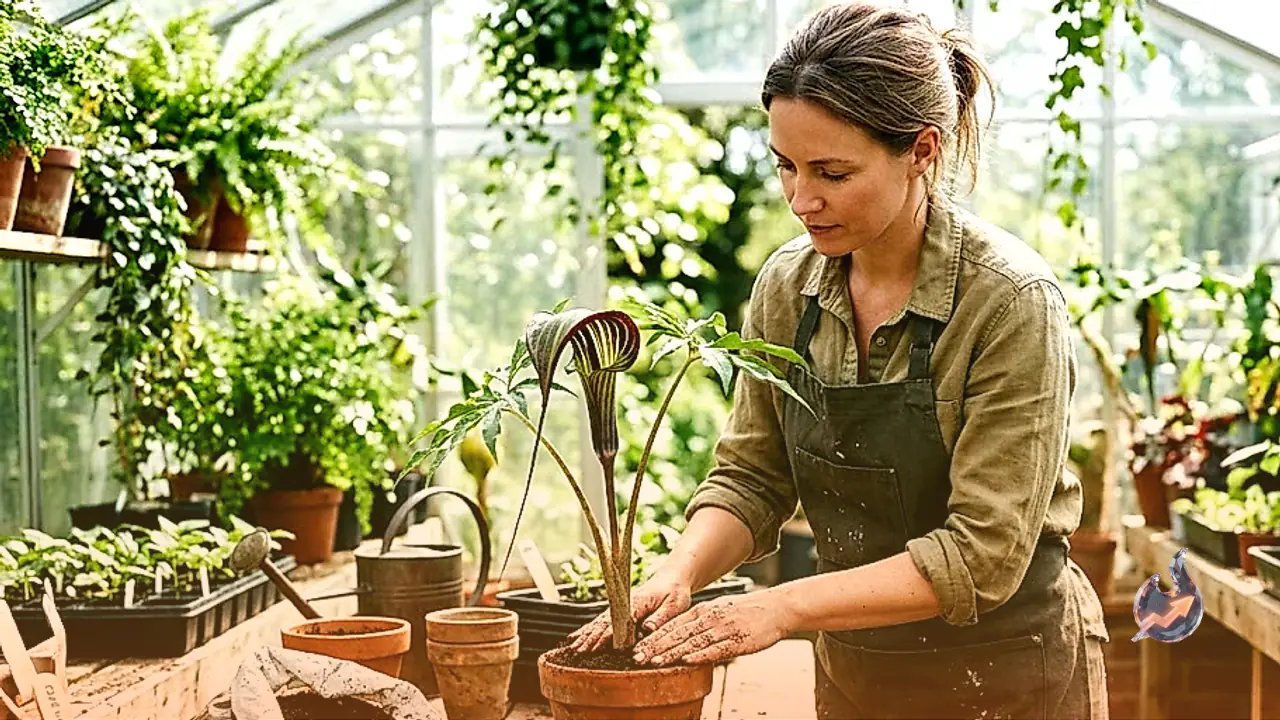

Gardeners looking to add a truly striking and unconventional presence to their home terrace or balcony often turn to the cobra lily. Botanically known as Arisaema, this rare perennial has captured widespread attention because its distinctive bloom looks remarkably like a venomous cobra rearing its hood. As curiosity around unique botanical specimens grows, demand for this plant has climbed steadily among gardening enthusiasts. Cultivating it successfully at home in a container requires only an understanding of its specific soil needs and climate sensitivities.
Choosing the Container and Blending the Right Potting Mix
Growing the cobra lily inside a container is far safer and more manageable than planting it directly into open garden beds, as pots allow complete control over moisture and positioning. The container should be at least 10 to 12 inches deep to give the root system and bulb sufficient room to establish. It is critical that the pot includes adequate drainage holes at the base so that surplus moisture can escape freely without waterlogging.
The plant requires loose, airy, and free-draining soil that will not become compact or soggy over time. To assemble an ideal planting blend, combine 40 percent standard garden soil, 30 percent cocopeat or vermicompost, and 30 percent clean sand. This blend produces a lightly acidic, porous medium that closely matches the natural growing conditions the perennial requires.
Planting the Bulb at the Proper Depth
The cobra lily propagates from underground tubers or bulbs, and planting orientation is vital for successful sprouting. Set the bulb roughly 3 to 4 inches deep within the prepared potting mix. During placement, ensure that the sprouting point faces upward; burying it upside down will prevent the shoot from breaking through the surface properly. After positioning the bulb, cover it loosely with the remaining soil blend and apply a gentle watering to settle the mix around it.
Sunlight, Irrigation, and Summer Temperature Management
Direct, harsh sunlight is extremely damaging to the cobra lily, as the plant cannot tolerate scorching rays. Keep the container in full shade, beneath the canopy of larger garden trees, or under a protective green net on a balcony where it receives only gentle, filtered daylight and cool air circulation.
Water management must be handled with precision. The soil should stay lightly moist to the touch without ever turning waterlogged or muddy, as stagnant water causes the bulb to rot rapidly. Water only when the top layer of soil feels slightly dry. When outdoor summer temperatures climb past 40 degrees Celsius, move the container indoors to a cool, shaded, and well-ventilated location. Misting the foliage lightly with water each morning during hot periods helps maintain essential humidity around the leaves.
Fertilizer Requirements and Long-Term Maintenance
Cobra lilies do not demand heavy or frequent feeding to stay healthy. During the initial growth phase, minimal organic enrichment is all the plant needs. Adding a small amount of vermicompost or well-decomposed leaf mold just once or twice a year provides all the essential nutrition necessary for steady development. With reliable shade, modest feeding, and protection from heat, this unusual perennial makes an exceptional display in any domestic plant collection.