





















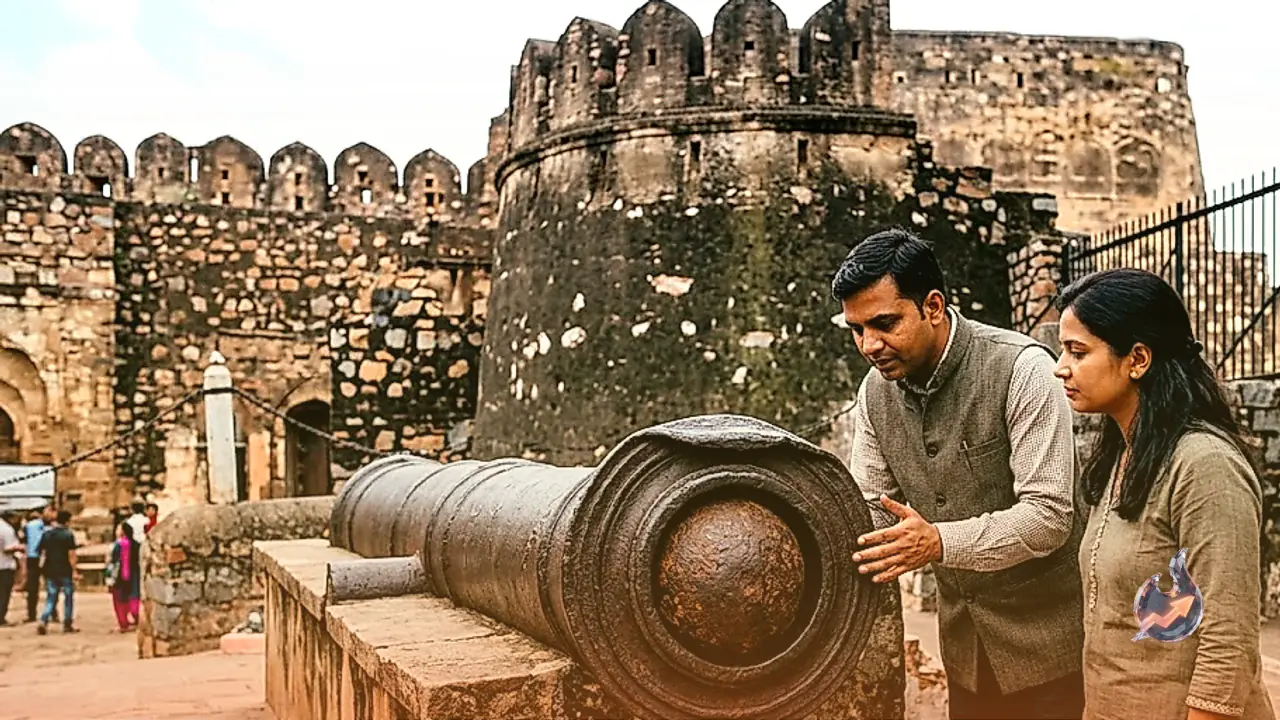

The historic Jhansi Fort in Uttar Pradesh stands as a enduring monument to India's First War of Independence. Among the various military artifacts preserved within its ramparts, the Kadak Bijli cannon presents a uniquely fascinating historical study. During the uprising of 1857, Rani Lakshmibai deployed the fort's formidable artillery to resist advancing British forces. Visitors exploring the fort today encounter numerous relics from that intense conflict, but the Kadak Bijli cannon draws immediate notice due to an unusual feature. An iron shell remains firmly lodged inside the barrel of the cannon, setting it apart from standard artillery pieces of the era.
The 1857 Uprising and British Sabotage
Artillery pieces during the nineteenth century were traditionally designed to launch heavy iron projectiles over long distances using gunpowder charges. However, the condition of the Kadak Bijli cannon reveals a completely different story. Military historians explain that as Rani Lakshmibai's gunners inflicted severe damage on British positions, the besieging forces sought ways to neutralize the fort's firepower. To prevent the Indian fighters from continuing to operate this heavy weapon, British troops deliberately jammed a massive iron ball inside the cannon barrel, rendering it completely inoperable.
Unique Shell Design and Internal Belting
According to historian Dr. Sunil Tiwari, the jammed iron ball is direct historical evidence of the British effort to decommission the weapon during the siege. The construction of the embedded shell displays remarkable characteristics, including a visible belting structure within the barrel. This structural design adds to the intrigue surrounding the artifact. Historians note that plugging a heavy artillery piece with a custom tailored obstruction was a recognized method of disabling enemy weapons when immediate destruction or removal was impractical.
Strategic Importance and Fort Defense
Viewing the Kadak Bijli cannon simply as an ancient military exhibit overlooks its broader significance in nineteenth-century warfare. During the siege of Jhansi, heavy artillery mounted on fort walls played a decisive role in repelling ground assaults. Preserving fort perimeter defense was vital to Rani Lakshmibai's military campaign. Consequently, neutralizing key cannons like Kadak Bijli represented a major tactical objective for British forces. Today, the cannon remains on display inside Jhansi Fort, offering a tangible link to the strategic struggles and sacrifice of 1857.