

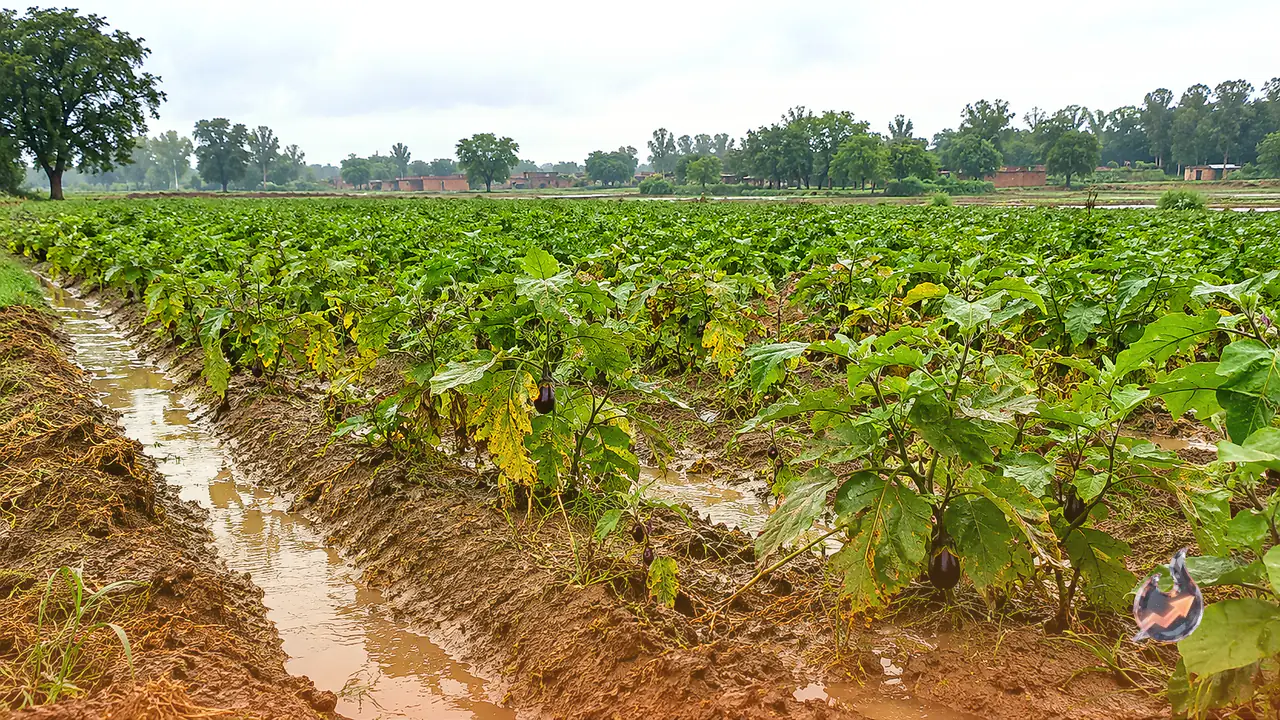




















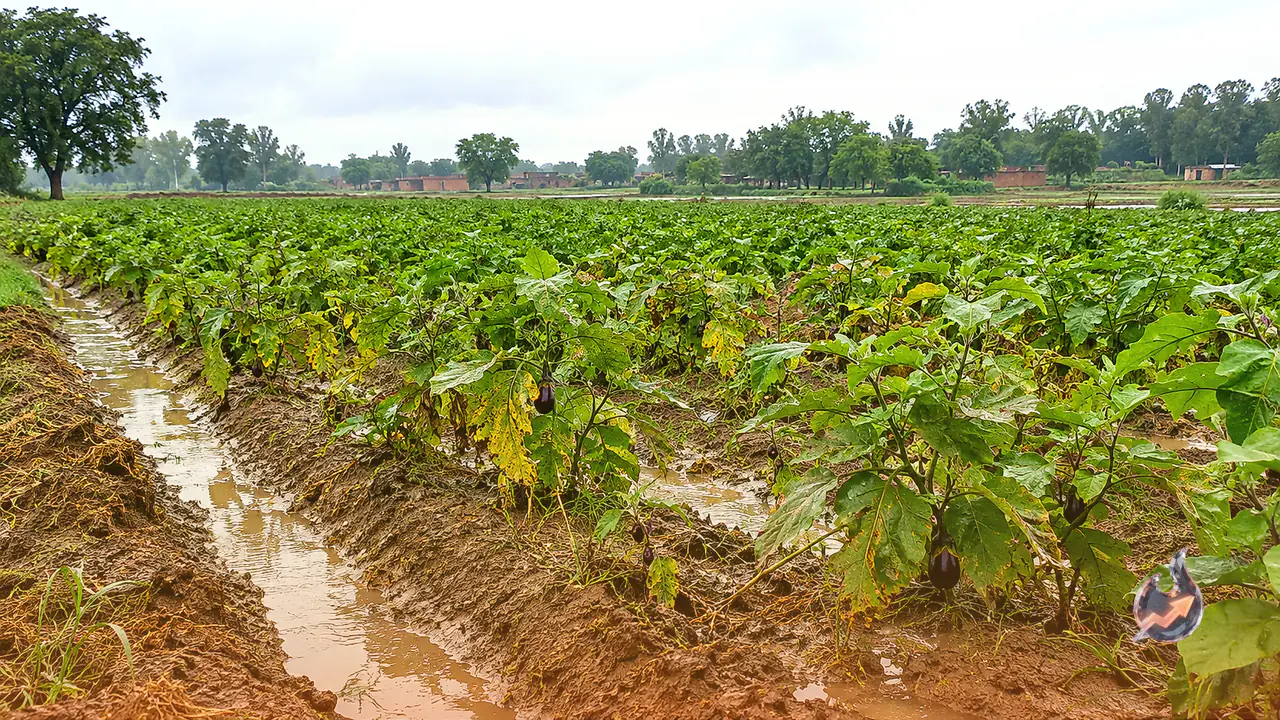

Persistent rains and cyclonic weather patterns across Bhojpur district have begun to inflict substantial damage on vegetable production. Farmers cultivating brinjal crops find themselves under increasing strain as water stagnation and elevated field humidity stall the natural development of their plants. Prolonged saturation has triggered a sharp slump in fruit formation alongside a surge in pest infestations, sparking widespread alarm over yield shortfalls and financial distress.
Brinjal cultivation spans roughly 300 hectares across Bhojpur district. Agrarian communities across Narayanpur in Koilwar block, as well as Koilwar, Jagdishpur, Barhara, Tarari, Bihiya, and Ara Sadar areas, grow this vegetable on an expansive commercial scale. Prior to the protracted rainy spell, these plots delivered robust, abundant harvests. However, continuous downpours have disrupted field conditions, leading to frequent grievances over stagnant fruit set, insect attacks chewing foliage, and whole plants withering away prematurely.
Saturated Soils Stifle Root Respiration and Growth
Agricultural scientist Dr. Vikash Singh points out that standing water within brinjal fields generates severe physiological stress. Excessive moisture lingering around the root zone suffocates the plants, weakening root integrity and throwing soil nutrient balances into disarray. When roots are unable to absorb essential inputs, overall plant vigor and fruiting cycles take a direct hit. The foremost remedial measure for growers is creating immediate drainage channels to expel standing runoff and maintain balanced moisture levels around the beds.
Targeted Fertilizer Rations and Foliar Nutrition to Revive Fruiting
Dr. Vikash Singh explains that restoring depleted plants after heavy rain demands systematic and balanced nutritional supplementation. Where fruiting has stalled, growers can apply one kilogram of urea, two kilograms of SSP (single superphosphate), and one kilogram of potash per cottha, tailored to field conditions and crop requirements. This root-zone application re-establishes basic macronutrient supplies necessary for renewed vegetative activity.
To overcome micronutrient deficiencies and stimulate flowering, a dedicated foliar wash is recommended. Growers should dissolve 15 grams of glucose, 2 grams of chelated zinc, and 2 grams of boron per liter of water before spraying the canopy thoroughly. Field fertilizer applications should ideally align with soil testing recommendations and specialized agronomic advice rather than arbitrary field additions.
Identifying and Curbing the Destructive Fruit and Shoot Borer
Wet weather sharply escalates the threat posed by the fruit and shoot borer insect in brinjal crops. This pest bores directly into tender terminal stems and developing fruits, leaving them hollow, damaged, and vulnerable to decay. Affected vegetables fail quality grading, drastically diminishing market realization. According to the agricultural scientist, growers must first inspect their stands to pinpoint the exact pest identity and severity before selecting an intervention.
For rigorous control of fruit and shoot borer, sprays containing Spinosad 45 SC, Emamectin Benzoate 5 SG, Chlorantraniliprole 18.5 SC, or Fipronil can be deployed. These agrochemicals should be diluted and applied strictly in accordance with product label instructions and recommended doses. Indiscriminate tank mixing of diverse pesticides without technical guidance must be avoided to prevent crop toxicity and chemical resistance.
Routine Field Scouting Key to Sustaining Yields
Dr. Vikash Singh advises growers to institute regular field scouting throughout the post-rain cycle. Monitoring leaves, stems, and immature fruits permits early detection and swift containment of emerging outbreaks. Maintaining clean drainage paths, resisting unnecessary preventative insecticide sprays, and providing calibrated nutrition will safeguard brinjal acreage from rain-induced ruin.