






















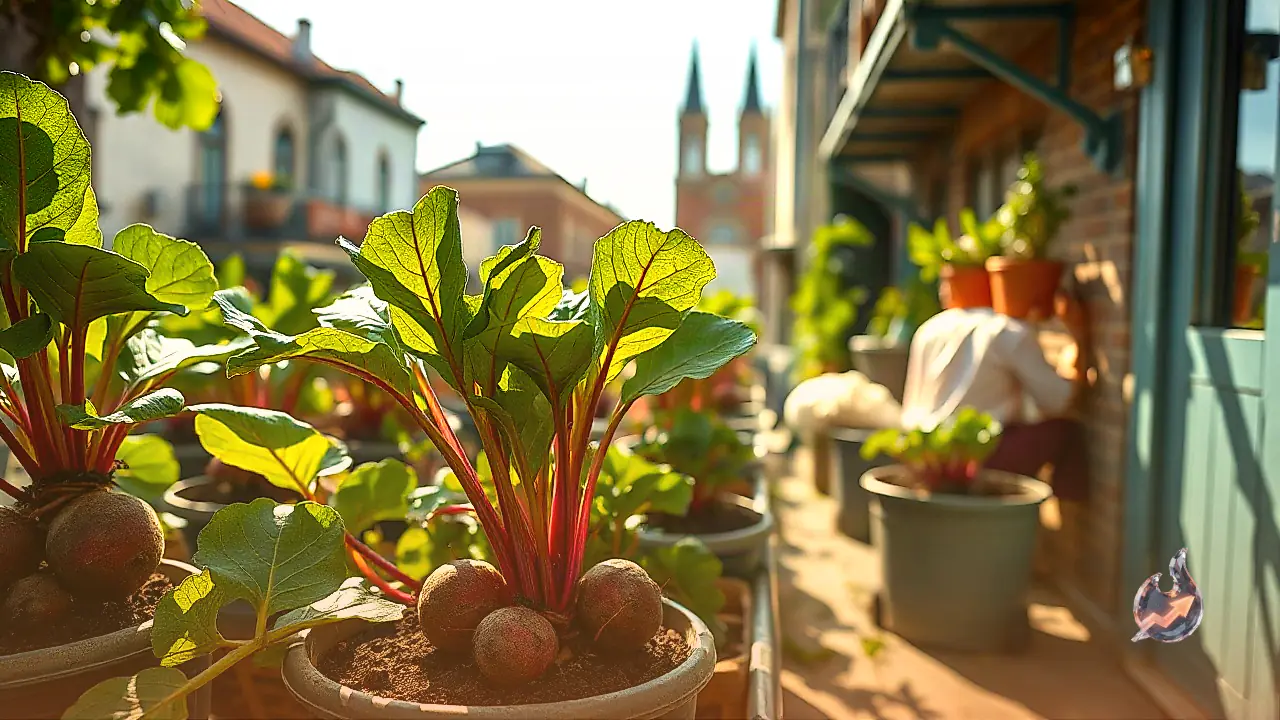

Cultivating fresh beetroots in containers offers home gardening enthusiasts an efficient way to produce nutritious vegetables in compact urban spaces. Because the edible portion of the beetroot develops underground as a swollen taproot, the plant does not demand sprawling land or extensive surface area. When provided with deep enough pots, loose, well-draining soil, and consistent daily sunlight, healthy beets thrive right on a balcony or terrace. Understanding each stage of cultivation ensures steady growth and a dependable yield without common potting mistakes.
Selecting Deep Pots and Ensuring Proper Drainage
The foundation of container-grown root vegetables begins with picking the right vessel size. Gardeners should select pots or fabric grow bags measuring at least 10 to 12 inches in depth. Shallow containers restrict vertical taproot growth, inevitably stunting the vegetable and preventing the root from swelling properly. In addition, verifying that each container has functional drainage holes at the base is essential, as trapped moisture around the bottom quickly suffocates delicate root systems.
Formulating Loose, Porous, and Nutrient-Rich Potting Soil
Root crops depend heavily on soil texture for smooth, symmetrical development. Beetroots require loose, well-aerated, and free-draining soil that allows roots to expand downward without resistance. A balanced mix can be created by combining ordinary garden soil with thoroughly decomposed compost or vermicompost, supplemented by a modest amount of coco peat to maintain light moisture. Gardeners must carefully sift out hard clay clods, large pebbles, and debris, as physical obstructions deform expanding roots and impede uniform growth.
Sowing Seeds at the Correct Depth and Spacing
Once the container is filled, moisten the growing medium gently before planting. Sow beetroot seeds to a depth of approximately 1 to 2 centimeters, maintaining a spacing of several centimeters between individual sowing points. Burying seeds too deep delays emergence or prevents germination entirely. Cover the planted seeds with a thin layer of fine soil and water sparingly with a gentle spray. Under favorable conditions, green shoots begin emerging through the surface within a few days.
Thinning Seedlings, Managing Sunlight, and Regulating Moisture
As seedlings grow and start crowding one another, thinning becomes a necessary step. Carefully pluck out the weaker seedlings to establish adequate spacing, which gives the remaining sturdy plants sufficient room for root enlargement. Beetroots demand several hours of direct daylight and sunshine every day for active photosynthesis. Moisture levels should remain evenly damp without becoming waterlogged; apply water only when the top layer of soil feels dry, as excessive saturation elevates the risk of fatal root rot.
Recognizing Maturity and Harvesting at the Right Stage
The overall maturation timeline for container beetroots depends largely on the specific cultivar selected and prevailing weather conditions. Gardeners can assess readiness when the crown of the root visibly swells and pushes up near the soil surface. Carefully pulling up a single root serves as a reliable test before clearing the batch. Timely harvesting is vital, as leaving mature beetroots in the ground for too long causes certain varieties to turn tough, woody, and unpalatable.