





















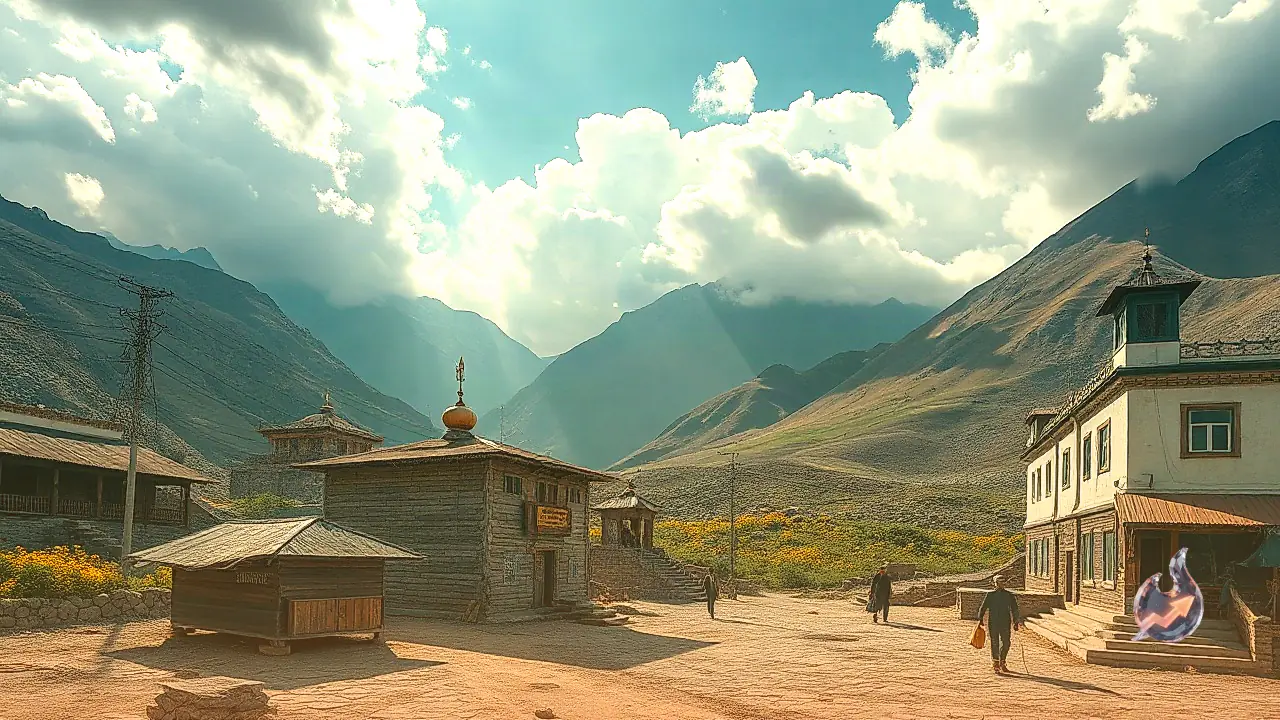

Towering mountain ranges at an elevation of roughly 11000 feet in Chamoli are welcoming the monsoon rains. The moment raindrops graze this high-altitude landscape, the terrain cloaks itself in rich emerald green. A soft alpine fragrance fills the fresh air, while cascades flowing down misty cliffs give the entire valley an ethereal atmosphere. Located in the Chamoli district of Uttarakhand, the Valley of Flowers opens its gates to explorers exclusively between July and September. This narrow seasonal window coincides with the arrival of the monsoon, which transforms the rugged terrain into a vibrant canvas of wildflowers that stretches as far as the eye can see.
Geographic Setting and the 1931 Discovery
From a geographic standpoint, the valley forms a rare alpine basin nestled between the Zanskar and Greater Himalayan ranges in the Western Himalayas. The protected conservation zone comprises two key components: the 87-square-kilometre Valley of Flowers located within Chamoli district, and the sprawling expanse of Nanda Devi National Park. British mountaineer Frank S. Smythe first introduced this hidden wonderland to the outside world in 1931. Stumbling upon the basin and its bewildering diversity of blooming flora, he was completely captivated by the scenery and formally named it the Valley of Flowers.
Over 600 Floral Varieties and Distinct Wildlife
During the monsoon months, the valley becomes a sanctuary for more than 600 varieties of rare wildflowers that rarely thrive anywhere else on Earth. Among these blooming clusters are diverse kinds of orchids, wild poppies, and primulas scattered across the meadows. The area is also famous for the revered Brahmakamal, an alpine bloom of great cultural and botanical significance. Trekking along the designated pathways reveals a spectacular variety of plant species that few travelers ever witness in normal habitats. In addition to its botanic wealth, the basin shelters notable wildlife, including the musk deer, rare langurs, and the red fox. Thousands of butterfly varieties flutter continuously over the blossoms, adding movement and color to the alpine setting.
The Natural Ecosystem of the Alpine Meadows
The geographic layout of sloping bugyals, or alpine meadows, combined with regular monsoon precipitation, provides the ideal ecosystem for natural waterfalls to emerge and delicate floral species to flourish. Trekkers ascending into this altitude frequently describe the landscape as an otherworldly realm brought down to earth. Every curve along the trail offers an untouched vista of lush ridges, dramatic rock faces, and crystal-clear mountain streams, making it a dream destination for naturalists and hiking enthusiasts.
Travel Routes and Trekking Plan from Delhi
Reaching this World Heritage site from Delhi involves a mix of transit options depending on personal travel preferences. Travelers opting for the road journey can head from Delhi toward Dehradun, continuing onward through Joshimath to reach Govindghat. Covering this 310-kilometre highway corridor typically requires between 8 and 10 hours of drive time. From Govindghat, travelers move up to Ghangharia village, the final settled hamlet on this route. Ghangharia serves as the primary base camp, from where the walking trail to the Valley of Flowers is a direct 4-kilometre trek that ascends to a height of 12000 feet.
For those traveling by rail, the nearest major railhead is Rishikesh, located around 273 kilometres away from Govindghat by road. Air travelers have two viable options: flying into Pantnagar Airport from Delhi, which leaves a travel distance of roughly 120 kilometres to the Valley of Flowers, or landing at Jolly Grant Airport in Dehradun, situated around 300 kilometres from the destination.
Nearby Attractions and Spiritual Landmarks
A journey into the valley allows visitors to explore several adjacent cultural and geographic landmarks. Situated in close proximity are the revered Sikh pilgrimage destination Hemkund Sahib and the sacred Hemkund Tal lake. The historic transit hub of Joshimath sits along the access highway. Travelers can also visit Mana, recognized as India's last border village adjacent to Tibet in Uttarakhand. Furthermore, the remarkable landscapes of Nanda Devi National Park lie just 40 to 50 kilometres away, providing breathtaking panoramas alongside visits to charming traditional Himalayan hamlets.