






















Soaps remain a daily necessity across every household, relied upon multiple times a day to wash away environmental grime and excess facial oils. For those seeking alternatives to store-bought commercial bars, preparing soap at home using fresh aloe vera pulp offers a gentle and rewarding domestic option. Long valued in traditional personal care routines, aloe vera helps refresh the skin while leaving it smooth and conditioned. Achieving the right consistency and texture, however, depends on adhering to accurate ingredient measurements and careful preparation methods.
Required Ingredients and Ideal Proportions
Successfully making soap in a home kitchen requires measured ingredients and straightforward components. For beginners, utilizing a premade natural or transparent glycerin soap base avoids the hazards of handling raw caustic soda. To produce approximately 500 grams of finished soap, balance around 450 grams of glycerin base with 50 grams of fresh aloe vera gel.
To enhance the emollient properties of the bar, small quantities of coconut oil or vitamin-E can be incorporated into the melted liquid. Those who enjoy scented cleansing bars may also introduce a few drops of lavender or tea tree essential oil, though fragrance remains entirely optional. Individuals with easily irritated or sensitive skin should exercise caution with aromatic oils, as unscented options generally minimize allergic reactions.
Extracting the Pulp and Melting the Soap Base
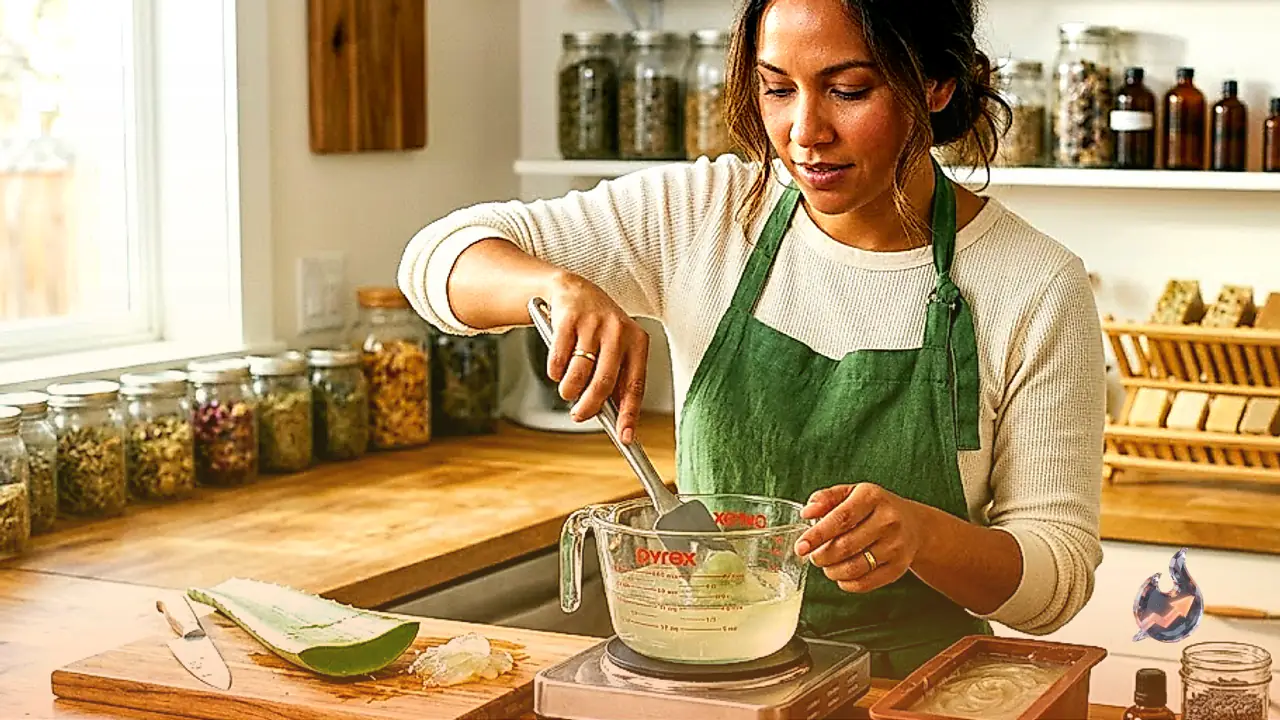
Preparation begins by harvesting fresh leaves from an aloe vera plant. Once cut, the leaf secretes a yellow sap that must be thoroughly drained away before use. After washing the leaf with clean water, slice open the skin to scoop out the transparent inner gel. Puree the clear gel using a blender and pour it through a fine strainer to eliminate any residual leaf fibers or lumps.
Next, chop the 450 grams of glycerin soap base into small cubes for uniform heating. Rather than subjecting the base to direct stove heat, which can scorch the ingredients, employ a double boiler setup. Suspend a heat-resistant bowl containing the soap chunks over a pot of gently simmering water, allowing the rising steam to melt the base evenly and gradually into a smooth liquid.
Blending and Setting into Molds
Once the glycerin cubes have completely dissolved, remove the container from the heat source and let the liquid cool slightly. Adding ingredients while the base is boiling hot can degrade delicate botanicals. Stir in the 50 grams of strained aloe vera gel until fully incorporated. If using coconut oil, vitamin-E, or essential oils such as lavender or tea tree, blend them in during this cooling window.
Pour the thoroughly combined liquid into silicone soap molds while it remains fluid. Allow the filled molds to rest undisturbed on a level surface for 4 to 6 hours until the bars solidify completely. Gently pop the firm bars out of their flexible silicone cavities. Store finished bars in a dry, ventilated spot away from standing water to keep them firm.
Skin Benefits, Limitations, and Important Precautions
Aloe vera soaps are widely recognized for delivering a soothing and moisturizing sensation. Individuals who often experience tightness, flaking, or irritation from regular commercial cleansers may find homemade aloe bars considerably gentler on their moisture barrier. The formulation effectively lifts dirt while preserving superficial hydration.
Nevertheless, realistic expectations are important. Homemade cleansing bars should not be regarded as medical remedies for chronic conditions such as acne, hyperpigmentation, eczema, or active dermatitis. Because soap remains on the skin for only a brief period before rinsing away, its impact is limited to gentle cleansing and short-term surface softness. Additionally, because fresh aloe pulp introduces natural water content, homemade bars have a shorter shelf life than mass-manufactured soaps with synthetic preservatives. Crafting smaller batches, storing the bars in dry conditions, and conducting a preliminary patch test on an arm will ensure safe and enjoyable daily use.