

















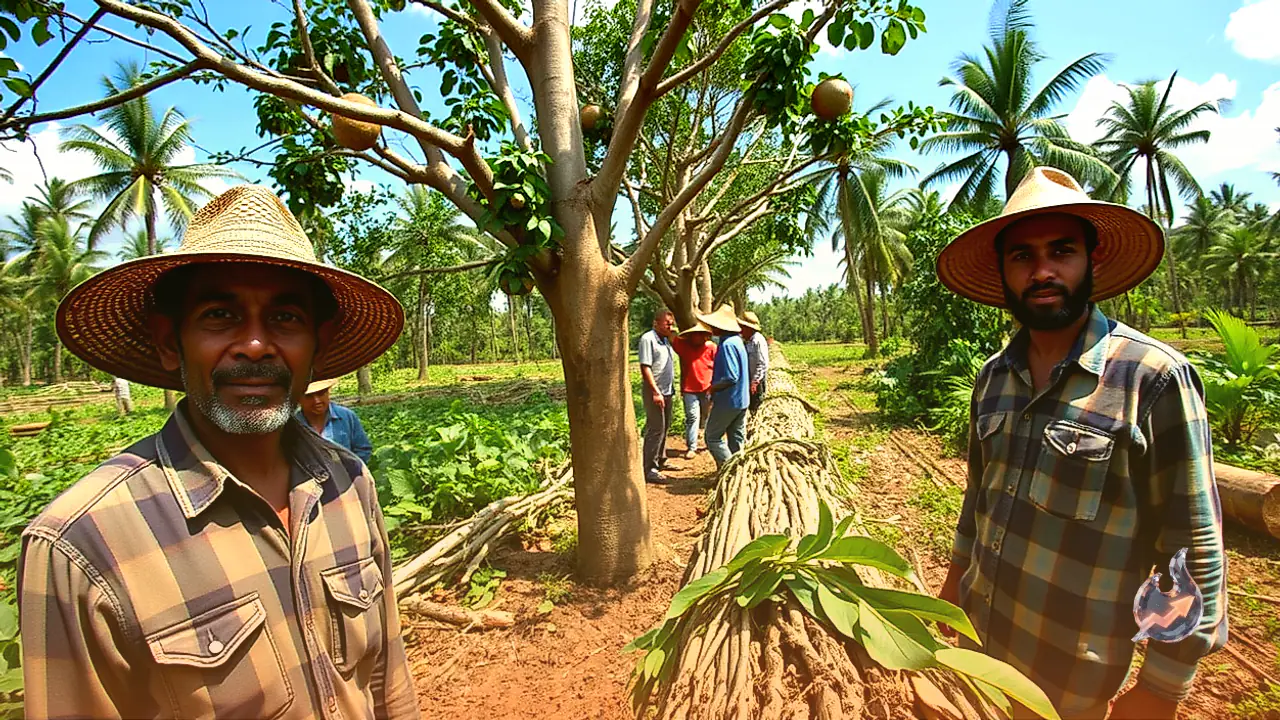

Commercial tree cultivation is seeing a notable preference for mahogany among rural producers looking for strong market returns. In Bihar's West Champaran region, cultivators involved in timber forestry frequently favor this variety over alternative commercial options because of its rapid maturation cycle. High industrial requirement for building watercraft, luxury furniture, gun stocks, doors, window frames, and intricate decorative sculptures keeps purchasing activity elevated. Even so, many growers struggle to pinpoint the precise point of harvesting readiness, leading to unnecessary delays in harvesting.
Growth Timeline and Trunk Girth Indicators
Vegetation specialist Ravikant Pandey notes that a mahogany tree typically achieves full cutting readiness within 12 to 20 years, depending on care and local climate conditions. The main stem of a fully developed tree becomes sturdy and exceptionally thick. When ready for commercial timber extraction, the trunk's diameter reaches a minimum of 12 to 15 inches or even greater. A trunk meeting these measurements confirms that the inner timber has accumulated sufficient density.
Bark Textures and Core Wood Shading
In its younger years, the tree displays an exterior layer that feels smooth and looks light brown. As development proceeds toward full maturity, the outer surface darkens significantly into a deep brownish or almost pitch-black shade, developing distinct crevices and wrinkled fissures. Growers can also scrape a minor section of the outermost layer to examine the underlying wood. Fully mature timber presents a rich reddish-brown, deep crimson, or bright coppery tone, whereas immature sapwood retains a pale pinkish or yellowish cast.
Canopy Elevation and Global Market Presence
An adult mahogany tree usually attains a standing height between 40 and 60 feet, occasionally extending beyond that mark. Its upper limbs and rich foliage spread outward to construct a dense, shielding canopy. Alongside African blackwood, mahogany timber is renowned for withstanding direct sunlight and moisture without deteriorating over lengthy periods. That lasting resilience against diverse weathering factors drives steady procurement across domestic markets as well as international trade channels.