






















Selecting durable timber remains the most critical decision when setting up a new home or undertaking a major interior renovation project. Many homeowners invest significant sums into expensive wood varieties, only to find visible cracks, warping, or severe hollow damage caused by termites and wood borers just a few years later. The unexpected deterioration of costly materials rarely stems from the species of tree alone; rather, it hinges entirely on post-harvest processing and structural conditioning.
The Scientific Foundation Behind Saharanpur Woodcraft
Saharanpur district in Uttar Pradesh has earned global renown for its intricate wood carving traditions and vibrant commercial timber trade. Skilled artisans and seasoned traders in the regional hub maintain that simply purchasing an inherently robust timber variety offers no guarantee of durability. The genuine strength and longevity of any wooden structure depend fundamentally on whether the raw logs underwent rigorous chemical preservation and standardized scientific seasoning before entering the workshop.
Comparing Teak, Sheesham, and Secondary Timber Species
Sheesham and teak wood, commonly known as sagwan, rank as the gold standard for domestic furniture tailored to Indian environmental conditions. Both varieties possess an exceptionally dense grain structure that naturally resists insect infiltration far better than standard timber varieties. Alongside these premium options, neem and mango wood see extensive utilization for crafting specialized goods. In export markets abroad, buyers frequently exhibit stronger demand for gift items and handicraft pieces manufactured from mango wood and acacia, also known as babool, than for massive furniture units.
Deep Fiber Protection Using Boric and Borax Solutions
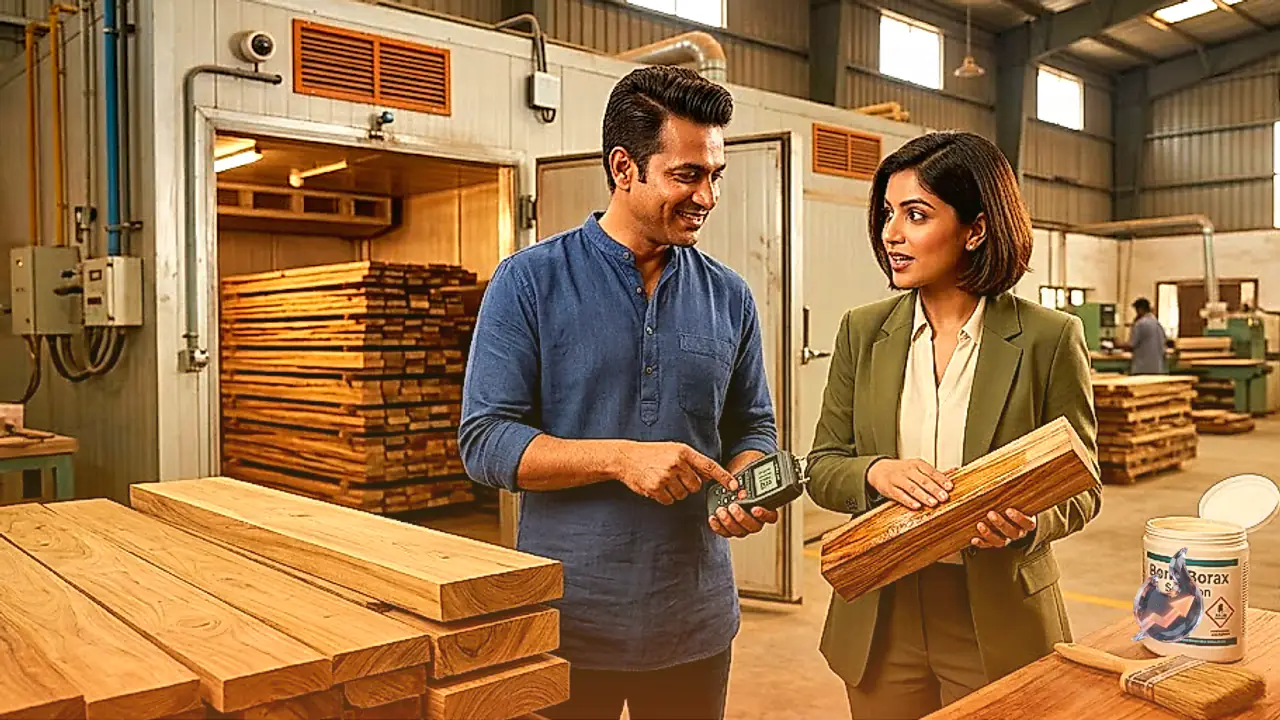
Shielding untreated raw timber against decay requires specific chemical procedures. Local timber seasoning specialist Tanzim Nawaz highlights that treating raw wood with a compound solution of boric acid and borax delivers the most dependable protection available. This chemical formulation penetrates straight into the interior grain fibers, establishing a chemical barrier that completely wipes out the risk of infestation from termites and wood-boring larvae. Administering an accurate chemical preservation cycle instantly extends the functional operational lifespan of standard timber by a solid 10 to 15 years.
Regulating Natural Moisture Down From 95 Percent
Fresh timber arriving directly from forestry harvests or sawmills typically carries a natural internal moisture level of around 95 percent. Crafting beds, cabinets, or dining sets directly from such soaked logs invariably leads to severe post-drying warping, shrinking, and deep structural fissures. Tanzim Nawaz points out that regulated drying chambers and modern industrial kilns systematically extract this excessive liquid in a controlled thermal environment. Once properly seasoned, internal moisture measurements fall sharply to just 10, 12, or a maximum of 14 percent, making the wood completely stable for fine artisanal detailing and enduring joinery.
The Quality Risks Posed by Substandard Charcoal Kilns
The recent emergence of unauthorized drying kilns and substandard heating setups in local markets poses serious quality concerns for buyers. Forcing timber dry with crude, uncontrolled thermal blasts hardens the exterior perimeter while leaving the internal cellular framework stressed and structurally fragile. When exposed to normal ambient humidity inside a household, such improperly processed timber quickly absorbs atmospheric dampness, triggering seasonal expansion and surface distortions. Ensuring that purchased lumber originates from authenticated seasoning facilities remains essential for crafting heirloom furniture.