






















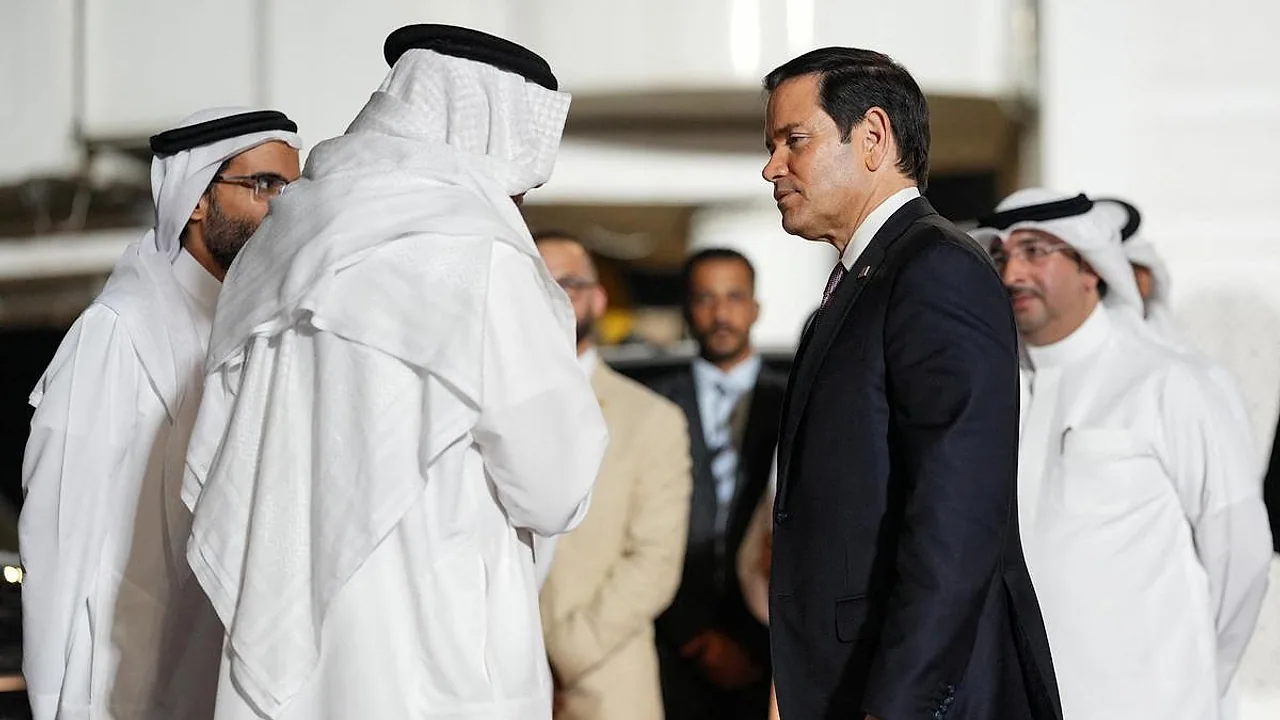

As a fragile peace process with Iran takes shape, Washington is working several fronts at once. Secretary of State Marco Rubio is touring Kuwait and Bahrain to reassure Gulf capitals, while the Trump administration has asked Congress for a supplemental $87.6 billion to cover war costs. At the same time, tensions in the Strait of Hormuz refuse to cool, with fresh attacks on ships and warnings from Iran's Revolutionary Guard Corps raising doubts about how durable any settlement will be.
Meanwhile Israeli strikes on Lebanon continue, Prime Minister Benjamin Netanyahu's political standing is under strain, and Republican senators in Washington have openly clashed with President Trump over his handling of the conflict. Developments are moving fast on every front, with consequences rippling from oil markets to regional diplomacy.
Rubio's Gulf tour: an effort to rebuild trust
US Secretary of State Marco Rubio gave Gulf states a firm assurance on Wednesday that Washington will fully protect their interests as it works toward a lasting resolution of the Middle East war with Iran. Rubio is trying to restore confidence among countries that bore the brunt of Iranian missile and drone strikes during the war, and whose crucial oil and gas exports were effectively choked off by Iran's blockade of the Strait of Hormuz.
During his stop in Kuwait City, Rubio said the United States and Gulf states would remain united on every front in negotiations for a permanent settlement with Iran. We will stay completely aligned with our partners in the Gulf, he said, making clear that Washington would consult extensively with Gulf states on every decision taken in these talks. Earlier on Wednesday he held separate meetings with the top leadership of Kuwait and the United Arab Emirates.
After arriving in the Bahraini capital Manama late on Wednesday, June 24, 2026, Rubio joined a meeting of the Gulf Cooperation Council, or GCC, on Thursday. Manama also hosts the US Navy's Fifth Fleet. The GCC comprises six Sunni monarchies in total, including Saudi Arabia, Qatar, Oman, the United Arab Emirates, Kuwait and Bahrain. Rubio acknowledged that presenting this peace deal to Gulf leaders is a difficult task, since these countries fear that giving Iran too many concessions would strengthen Tehran and upset the regional balance on security and oil supply.
Closing out his West Asia trip, Rubio told Gulf foreign ministers in Bahrain that the United States wants a lasting peace with Iran, one that does not compromise the security and prosperity of regional allies. We want a deal, he said bluntly, but not at any cost. He added, we want to make sure that no part of this agreement harms the security, stability or prosperity of our partners in the Gulf region.
Rubio also made clear there is no support among Gulf states for any toll on ships passing through the Strait of Hormuz. Bahrain's Foreign Minister Abdullatif bin Rashid Al Zayani, who chaired the GCC meeting, welcomed Oman's proposal for a safe corridor for ships passing through the strait.
Washington seeks $87.6 billion to cover the cost of the Iran war
The Trump administration presented Congress with a supplemental budget request of $87.6 billion on Wednesday, most of it earmarked for expenses stemming from the Iran war. The request raises the prospect of fresh friction with lawmakers already unhappy about the conflict. The proposal, posted on the White House website and formally transmitted to Congress, sets aside $67.15 billion for the armed forces.
That figure is on top of the roughly one trillion dollar defense budget approved last year, and separate from the $1.5 trillion Donald Trump is seeking for next year. According to the White House, the new money is meant to cover operational costs tied to the Iran war, including salaries and readiness for military personnel, replenishing depleted weapons stockpiles, and classified programs. Of the military budget, $21 billion will go toward weapons procurement, strengthening the American defense industrial base, and maintaining key strategic capabilities.
Strait of Hormuz: warnings and attacks continue side by side
Iran's Islamic Revolutionary Guard Corps, or IRGC, made clear on Thursday that safe passage through the Strait of Hormuz is possible only along routes designated by Iran. It rejected as unacceptable and dangerous any alternative route announced without coordination with Iran, warning that ships failing to comply with these terms will face action. Tehran insists it will apply this as a maritime service fee rather than a toll, while Washington argues it is an international waterway that should carry no charge at all.
Amid that dispute, Oman's top diplomat Badr Al Busaidi told a meeting of Rubio and Gulf foreign ministers in Manama that the future arrangement for the strait includes no provision for any transit fee. Iran's Foreign Minister Abbas Araghchi said that, following a recent joint statement in Muscat, Iran and Oman would hold talks to define the future administration and maritime services of the Strait of Hormuz. Writing on the social media platform X, Araghchi said he had a positive phone conversation with Oman's foreign minister Al Busaidi, and that both countries are committed to advancing this process together with neighboring states.
President Donald Trump, welcoming the memorandum of understanding reached between Iran and the United States, said it was now time to restart engines and restore the flow of oil. But the biggest challenge facing ship owners and crews lies beneath the surface of the water. According to Ajit Kumar Sukumaran, a retired additional director general of shipping, vessels are not built to sit idle for long stretches. He explained that even while stationary, a ship functions like an active industrial system that needs regular maintenance, security and regulatory oversight, which is why resuming operations after a long standstill is affecting both efficiency and crew welfare.
Despite Iran's warnings, a Liberian oil tanker safely passed through the Strait of Hormuz on Thursday. The tanker, named Stoic Warrior, used a new route recommended by a United Nations maritime agency, hugging Oman's coastline. The vessel had announced its intention to cross the strait in advance. Setting out on Thursday morning, the tanker headed toward the coastal areas of the United Arab Emirates and then Oman, before passing near Oman's Musandam peninsula, the very route Oman developed jointly with the UN's International Maritime Organization, or IMO.
But tensions did not stop there. A cargo ship near the Strait of Hormuz off Oman was damaged after being struck by an unidentified object. The British maritime security agency UKMTO said the incident occurred 7.5 nautical miles, or 14 kilometers, southeast of Dibba in Oman's Musandam province, with the vessel struck on its starboard side, damaging its bridge. According to the captain, there were no injuries and no environmental damage. British maritime security firm Vanguard Tech identified the vessel as the Singapore-flagged container ship Ever Lovely.
Following that attack, the UN's maritime agency IMO suspended its program to evacuate hundreds of stranded ships and thousands of sailors through the Strait of Hormuz. IMO Secretary General Arsenio Dominguez said in an official statement, today I received news of an attack on a vessel in the Gulf of Oman that had transited through the Strait of Hormuz and which was not operating under the IMO evacuation framework. I have decided to temporarily pause implementation of this program, to reconfirm that the safety guarantees needed for vessels on our evacuation list, and for all other ships present in the region, remain effective.
Later, two US officials, speaking on condition of anonymity, disclosed that Iran had opened fire on Thursday on a cargo ship attempting to cross the Strait of Hormuz. That vessel had already reported being struck by a projectile. According to UKMTO, the ship was 7.5 nautical miles southeast of Oman's Dibba port when the projectile hit its starboard side.
Rubio, addressing the GCC meeting in Bahrain on Thursday, warned in blunt terms that if Iran imposes charges on ships passing through the Strait of Hormuz, the practice would spread to other waterways around the world and could trigger total chaos. International waterways are not the property of any single nation, he said, calling it a foundational principle of today's world, without which chaos would spread everywhere. He added, if we accept that being close to someone's territorial boundary lets them charge money on an international waterway, that idea will spread like a pandemic across the world.
Oil prices slide toward pre war levels
Crude oil prices fell further on Thursday, edging close to levels last seen before the Iran war began, as growing hopes of increased supply from the Middle East outweighed concerns about demand. At 03:37 GMT, Brent crude futures for August delivery were down $1.22, or 1.65 percent, at $72.52 a barrel, while US WTI crude fell $1.02, or 1.45 percent, to $69.32 a barrel. Both contracts touched their lowest levels since February 27.
Iran lashes out at NATO over accusation of complicity
Tehran accused NATO on Thursday of complicity in the US Israeli war against Iran, after NATO Secretary General Mark Rutte publicly acknowledged the alliance's support for the United States in the conflict. Donald Trump had earlier accused allied nations of failing to back the war effort. In response, Rutte told Fox News that hundreds of American military aircraft had flown out of airbases in Italy. Rutte also said Romania had cut commercial flights during the Iran war to free up its airports for American refueling tanker planes.
Iran's foreign ministry spokesman Ismail Baqaei sharply condemned NATO's admission of what he called active complicity. Writing on the social media platform X, Baqaei said, this is a clear and stark admission of NATO's active participation in an illegal war of aggression against a sovereign UN member state. He further accused NATO of blatantly violating the mandatory norms of international law and the core principles of the UN Charter.
A major threat to Netanyahu's political credibility
Experts, former US officials and diplomats believe that any deal between the United States and Iran could be a significant political blow, not just to Israel's Iran policy but to Benjamin Netanyahu personally. Netanyahu has spent decades positioning himself as the leader who could bend Washington to his terms on Iran.
He built his political identity on the claim that he alone, among Israeli leaders, could keep the United States and Israel aligned on a single path regarding Iran. Leveraging Republican support, he established himself as an influential figure capable of shifting the policies of American presidents, consistently arguing that only military pressure could keep Tehran in check. A direct US Iran settlement could weaken that entire political narrative.
Ashura observed under the shadow of war
Shia communities around the world marked the holy day of Ashura, a symbol of sacrifice and martyrdom. The significance of this year's observance has grown given the months long war in Iran and Lebanon. The day commemorates the martyrdom of Imam Hussein, grandson of the Prophet Muhammad, in the Battle of Karbala in 680 CE, when he refused to submit to the Umayyad caliphate and was killed along with his family and companions.
That historical event became the central cause of the split between Sunni and Shia Islam and remains a powerful symbol of resistance against injustice. Iran and Lebanon, home to large Shia populations, have been at war for several months. This week, talks began to finalize a fragile ceasefire agreement between the United States and Iran.
Violence in Lebanon shows no sign of easing
The Israeli army said on Thursday, June 25, 2026, that one of its soldiers was killed during operational activity in southern Lebanon, without sharing further details of the incident.
Separately, despite some reduction in fighting between Israel and Hezbollah, an Israeli strike on a vehicle in southern Lebanon killed three people. According to Lebanon's state news agency, an enemy drone struck the vehicle on the road between Zawtar and Mayfadoun, killing three and wounding one. This marks the third fatal incident since Tuesday, June 23, 2026, taking the death toll from Israeli strikes this week to at least seven. The strike came as Israeli and Lebanese officials were in Washington for a fifth round of direct talks. The Israeli army later said its troops had spotted five Hezbollah fighters in Zawtar al Sharqiya who posed a direct threat, and said it had targeted Hezbollah members in two separate incidents.
Iran backed Hezbollah accused Israel of an open violation of the ceasefire, saying the drone strike killed three civilians in southern Lebanon. The group called it a direct attack on civilians, while Israel had already said those killed were armed Hezbollah fighters, not civilians. Hezbollah said this was the third open ceasefire violation by Israel, one that Israel itself has acknowledged.
Senior Israeli and Lebanese officials also denied reports that Israel had withdrawn its forces from southern Lebanon. A US official had claimed Israel pulled back some troops from the buffer zone as a goodwill gesture. But an Israeli defense official clarified that policy had not changed and that troops would remain in the buffer zone. A senior Lebanese military official said the situation on the ground contradicts the American claim, and that Israeli forces remain deployed in the buffer zone, where they are also blocking Lebanese army personnel from entering.
Government spokesman David Mencer told reporters plainly that Israel will not withdraw its forces from southern Lebanon until Hezbollah is disarmed and demilitarized. He said Israel is responsible for protecting its citizens and will not tolerate any terrorist group near its border. He reiterated that any redeployment of Israeli forces will happen only after the demilitarization of southern Lebanon and the disarmament of Hezbollah, adding, we were in this same position in 2024 too, when Hezbollah was supposed to be disarmed, but that did not happen.
Meanwhile, Ismail Qaani, commander of the Quds Force of Iran's Revolutionary Guards, said through state media that Israel should voluntarily withdraw from the whole of Lebanon or be forced to flee in defeat. Last week, the United States and Iran signed an interim agreement to end hostilities on all fronts, including Lebanon, promising to preserve Lebanese sovereignty, a commitment Tehran argues requires Israeli troops to leave southern Lebanon.
Responsibility for the school attack may never be established
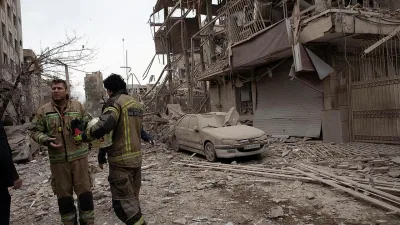
US President Donald Trump said on Wednesday, June 24, 2026, that who was truly responsible for the deadly attack on a girls' school in Iran on February 28 may never come to light. The attack, which took place on the first day of the Iran war, killed several children. It first emerged in March that an early internal US investigation suggested the American military may have been responsible for the deadly strike in Minab, in southern Iran. The Pentagon has since widened the scope of its investigation but has not confirmed any preliminary findings. Speaking to reporters, Trump said he does not think this issue will ever be resolved, and that fixing responsibility for the deadly incident, while the investigation continues, likely will not be possible.
A standoff over war powers in the Senate
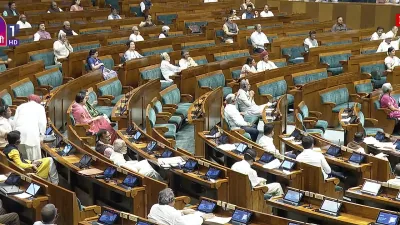
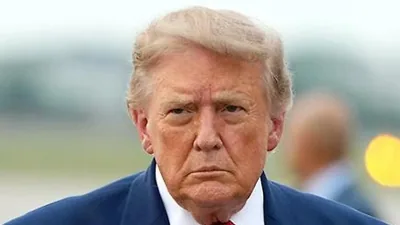
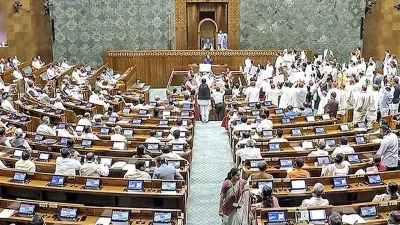
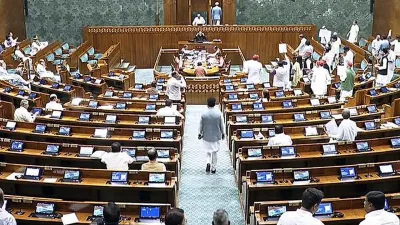
President Donald Trump confronted Republican senators directly over their opposition to his military campaign against Iran. Following that clash, Senate Republicans voted again late on Wednesday, June 24, 2026, to reverse a war powers resolution, just a day after a similar measure had passed. On Tuesday, June 23, 2026, the Senate had voted to restrict Trump's powers over the Iran war. The standoff has deepened rifts within the Republican Party, diverted attention from key election year issues like inflation, and largely stalled normal Senate business. The rejection of the war powers resolution, amid personal attacks and open tension, once again exposed the divisions within the GOP.
Iraq's frustration over its place in OPEC
According to people familiar with Iraq's oil policy, the country may consider leaving OPEC if its quota is not increased. After the United Arab Emirates exited the group earlier this year, Iraq doing the same would be a major blow to OPEC. Iraq is one of OPEC's five founding members. A senior oil official said the Iran war has pushed Iraq into a financial crisis, making a significant quota increase badly needed.
The official said Iraq currently favors remaining a member, but that its demand for a quota increase should be taken seriously. The official warned that if Saudi Arabia and other members do not take the matter seriously, Iraq will keep all options open, while also acknowledging that leaving OPEC now would be premature.
IMF: relief is beginning, but normalization will take time
The International Monetary Fund, or IMF, said energy and commodity prices have eased since the US brokered deal to halt hostilities with Iran and reopen the Strait of Hormuz, though markets and trade will take time to fully normalize. IMF spokesperson Julie Kozack said the next update to the World Economic Outlook, due on July 8, will determine whether to continue the three growth scenarios presented in April based on possible outcomes of the Iran war.
Kozack had earlier said that when the Strait of Hormuz was closed in May, oil prices climbed above $100 a barrel. At that time, the global economy was shifting away from a quick resolution reference forecast toward an adverse scenario projecting global growth of 2.5 percent for 2025.
Pakistan says Iran US talks could resume next week
According to Pakistan, talks between Iran and the United States may resume next week. In a statement issued late on Wednesday, June 24, 2026, Pakistan's foreign office spokesperson Tahir Andrabi said the negotiating process is ongoing. Discussions are underway, Andrabi said, and I expect the talks to resume next week, possibly on Tuesday. This is not a complete halt, just a temporary gap. The prospect of talks resuming is being seen as a sign of progress toward a peace agreement.