
















An unprecedented diplomatic and military security apparatus is currently visible in Tehran, the capital of Iran, where a gathering of international diplomats and heads of state has commenced to bid a final farewell to the country's late Supreme Leader, Ayatollah Ali Khamenei. However, amidst this historic state mourning, a highly sensitive and unexpected security crisis has emerged. Iran's newly appointed Supreme Leader, Ayatollah Mujtaba Khamenei, will not participate in his late father's funeral ceremonies in person. This critical information was officially confirmed by Ayatollah Hakim Elahi, the representative of the Supreme Leader in India. He clarified that this strict decision was taken only after a comprehensive assessment of safety protocols and severe security threats.
Tension has reached its peak within Iranian administrative and security circles. Ayatollah Hakim Elahi explained that due to constant direct threats and the active surveillance systems of Israel, the life of Mujtaba Khamenei is under imminent danger. Consequently, his presence at any public venue with a massive gathering could prove highly hazardous. This concern is not unfounded, as Israeli Defense Minister Israel Katz recently stated publicly that their security agencies have placed Mujtaba Khamenei directly on their active hit list. Following this provocative statement, the friction between Iran and Israel has escalated to unprecedented levels.
Iran's Sharp Warning and Diplomatic Clash Following Israeli Threats
Amidst this military tension, sharp statements are being exchanged at the diplomatic level as well. On Wednesday, July 1, 2026, Iranian Foreign Minister Seyed Abbas Araghchi issued a stern warning directly addressing US President Donald Trump. The Iranian Foreign Minister demanded that Washington restrain Israel, which he characterized as America's pet. This statement came precisely when Israeli authorities were discussing targeting the newly appointed Iranian Supreme Leader. These sharp exchanges have further complicated ongoing backchannel diplomatic negotiations aimed at bringing peace to West Asia.
On Friday, July 3, 2026, preparations for the funeral in various parts of Tehran continued at a rapid pace. Millions of citizens are expected to attend the main state ceremony scheduled for Saturday, July 4, 2026, with people marching toward the capital from all corners of the country to pay their final respects. Not only the domestic population but also high-level delegations and heads of state from several friendly nations are arriving in Tehran, making this event a focal point of international diplomacy.
Pakistan's Mediation Role and Global Representative Participation
Pakistan is currently playing a crucial and highly significant role as a primary mediator in the backchannel talks between the United States and Iran to end the devastating war in West Asia and restore stability to the region. The Pakistani Ministry of Foreign Affairs has officially confirmed that Prime Minister Shehbaz Sharif will be personally present at the state funeral in Tehran on Saturday. Furthermore, China, Afghanistan, and Iran's neighboring nations in the Caucasus region have also announced that they are sending special diplomatic and high-ranking delegations to Tehran to demonstrate the continuity of bilateral relations during this difficult time.
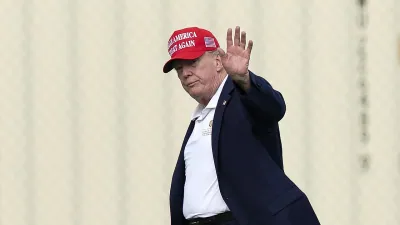
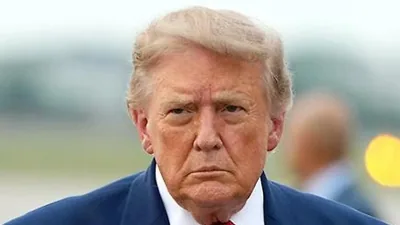
Amidst these continental tensions, a surprising and highly significant claim has emerged from US President Donald Trump. President Trump asserted that during ongoing diplomatic talks, Iran has accepted virtually all of Washington's major and stringent conditions. The US administration firmly believes that the primary and sole purpose of these negotiations is to prevent Tehran from developing nuclear weapons under any circumstances. In an exclusive interview with a major American business television network, President Donald Trump expressed absolute confidence that both nations are now on the verge of signing a historic and comprehensive formal agreement that could reshape the future of the entire region.
Donald Trump's Optimism and Relocation of the Supreme Leader's Body
During his television interview, President Donald Trump stated in clear terms that he believes the Iranian diplomatic team has agreed to almost all of the demands required by the United States to finalize the treaty. Meanwhile, the body of Iran's late Supreme Leader Ali Khamenei, who was killed in joint US-Israeli airstrikes, has been transferred to the massive and sacred religious venue of the Imam Khomeini Grand Mosalla complex in Tehran. Confirming the transfer on a social media platform, the state media and official news agency IRNA stated that the body of the martyr leader of the Islamic Revolution has reached the Imam Khomeini Grand Mosalla and is prepared for public viewing and the arrival of dignitaries.
Amidst several days of internal turmoil and high-level security meetings within Iran, General Ahmad Vahidi, the powerful chief of the paramilitary Revolutionary Guards (IRGC), has finally made a public appearance. Since the outbreak of the war in the Middle East, he had been completely absent from the public eye, fueling speculation that he might also be a target for Israeli intelligence agencies. Photos and video footage released by Iranian state media showed General Ahmad Vahidi participating in a highly critical strategic planning meeting for the funeral of the 86-year-old late Ayatollah Ali Khamenei. He was later seen sitting somberly near the casket during a private memorial service held on Thursday night, July 2, 2026, close to the late leader's former residence in central Tehran.
General Ahmad Vahidi's Sudden Return and the Funeral Procession Schedule
International military and political analysts believe that General Ahmad Vahidi plays a central role in shaping Iran's rigid and uncompromising diplomatic policy regarding the talks to end the ongoing war with the United States. He is part of the highly influential and select inner circle of strategists who are in direct contact with the new Supreme Leader, Ayatollah Mujtaba Khamenei. Notably, Mujtaba Khamenei was also injured in the same Israeli airstrike on February 28 that claimed the life of his father, Ali Khamenei, and he has not been seen in public since then.
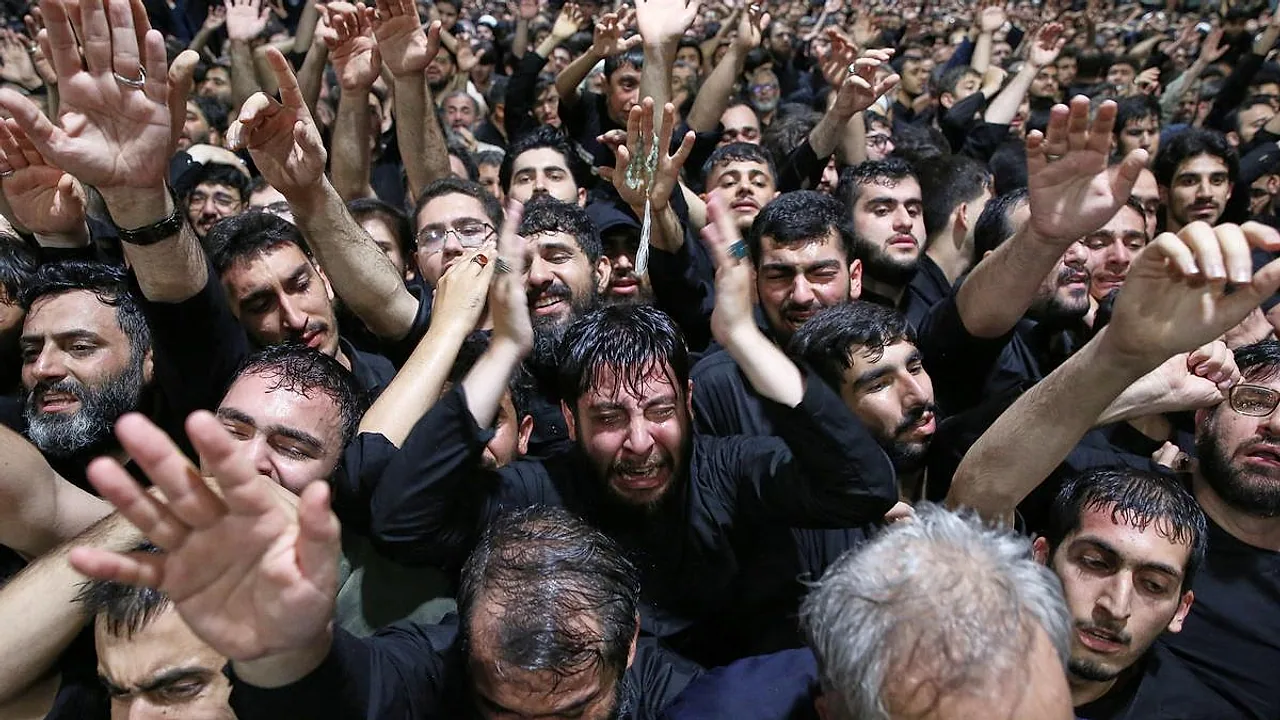
On Friday, a massive sea of mourners dressed in black filled all the main avenues of Tehran. According to international media reports, the state funeral ceremonies will be held in various phases over a period of six days, from July 4 to July 9. People gathered in the capital carried Iranian national flags and portraits of their late leader, singing traditional elegies and lamentations. The initial photographs of the late leader's casket have also been released, showing it kept in a special chamber decorated with the national colors of Iran.
The casket is draped with an extremely holy red flag brought directly from the shrine of Imam Hussein, bearing religious inscriptions in white letters. The Iranian government and religious bodies have declared this historic red flag as the ultimate symbol of continuous resistance against injustice, great sacrifice, and unwavering devotion to truth.
Impact on Global Oil Markets and Cautious Financial Optimism
Just before the long holiday weekend for US Independence Day, international crude oil prices registered a modest increase. Amidst this intense regional conflict, a very cautious optimism is being observed among investors and global traders regarding the ongoing peace negotiations between the United States and Iran. At 0407 GMT, Brent crude futures registered a gain of 46 cents, or approximately 0.64 percent, reaching a price of $72.26 per barrel. Similarly, West Texas Intermediate (WTI) rose by 32 cents, or approximately 0.47 percent, closing at $69.01 per barrel.
Because the national public holiday for US Independence Day falls on Saturday, all major US financial and stock markets will remain closed on Friday. Consequently, the attention of global traders is focused entirely on the political and military developments in Tehran, as any signal emerging from there could directly impact global energy supplies and oil prices.
Condolences from the Indian Delegation and Other Diplomatic Envoys
In official video and photographic footage released by the Iranian embassy, the high-level delegation representing the Government of India was seen paying respects before the body of the late leader Ali Khamenei. The delegation, which arrived in Tehran to express the deep condolences of the Indian government and its people, included Union Minister of State Pabitr Margherita and the Honorable Governor of Bihar, Syed Ata Hasnain.
Former Jammu and Kashmir Chief Minister Mehbooba Mufti also shared video footage of the tribute ceremony on her social media handle, showing the Indian representatives paying respects to the late Ayatollah. Minister of State for External Affairs Pabitr Margherita shared on social media platform X that he and the Honorable Governor jointly represented India to pay tribute. Additionally, an official statement from the Bihar Lok Bhavan noted that Governor Syed Ata Hasnain also expressed his deep condolences to the families of all innocent victims of the recent conflict in West Asia.
Stern Warnings from Parliament Speaker Mohammad Baqer Qalibaf
Iranian Parliament Speaker and current chief nuclear negotiator Mohammad Baqer Qalibaf took a highly rigid stance, warning both the United States and Israel. Speaking to Iranian news agencies, he stated that if the United States and its ally Israel back out of the promises and commitments made during ongoing diplomatic talks, Iran will not hesitate to resume necessary and stringent measures to protect its interests. This statement comes at a time when Iran is striving to keep its domestic political and administrative apparatus united during this massive crisis.
Extremely strict security arrangements have been put in place at the massive religious hall in Tehran, where the body is kept for public viewing. Following the ceremonies in Tehran, the body of Ali Khamenei, who ruled Iran undisputed for 37 years, will be taken to the highly sacred Shia theological centers of Qom in Iran, and Najaf and Karbala in Iraq. Finally, on Thursday, he will be laid to rest in the city of Mashhad, which houses Iran's holiest and principal shrine.
Discussions on Donald Trump's Policies at the Upcoming NATO Summit
The issue of Iran is also expected to be a major topic of discussion at the NATO summit to be held in the Turkish capital, Ankara, next week. European leaders will attempt to resolve differences with US President Donald Trump regarding the issues of Iran and Greenland. Simultaneously, European nations want to signal their readiness to assume greater responsibility for their own regional defense and security, particularly at a time when Washington is hinting at reducing its commitments and financial contributions to the alliance.
During this crucial summit meeting, all NATO member states are highly expected to reiterate their pledge to increase defense spending and internally strengthen the security of the European continent, ensuring that any changes in US policies do not directly affect their own interests.
Presence of President Masoud Pezeshkian and the Iranian Cabinet
Iranian President Masoud Pezeshkian arrived near the casket of late Supreme Leader Ali Khamenei on Friday to pay his respects and offer special prayers. He was accompanied by several cabinet ministers and members of the country's top diplomatic team. In footage broadcast on state television, President Pezeshkian was seen offering prayers in an emotional state. A traditional black turban was placed on top of the casket, which, according to Shia tradition, is worn only by respected religious figures who are direct descendants of Prophet Muhammad.
Top military and civil officials were also present at the main mourning assembly held on July 3, 2026. President Pezeshkian met warmly with Hassan Khomeini, the grandson of the first leader of the Islamic Revolution, Ruhollah Khomeini. Prominent figures such as military commander Mohsen Rezaee, Foreign Minister Abbas Araghchi, Chief Justice Gholam-Hossein Mohseni-Ejei, and Parliament Speaker Mohammad Baqer Qalibaf were present on the stage, showcasing the country's internal political unity.
Pakistani Delegation's Arrival and Diplomatic Mediation Efforts
Pakistani Prime Minister Shehbaz Sharif and the powerful Army Chief, Field Marshal Asim Munir, arrived in Tehran on a special aircraft on Friday. The delegation, which arrived to pay respects to the Supreme Leader who was killed in a joint US-Israeli airstrike in February, included several high-ranking Pakistani officials. Among them were National Assembly Speaker Ayaz Sadiq, Deputy Prime Minister and Foreign Minister Ishaq Dar, Information Minister Attaullah Tarar, Pakistan Peoples Party (PPP) Chairman Bilawal Bhutto Zardari, and Sindh Province Chief Minister Murad Ali Shah.
According to an official statement issued by the Pakistani Prime Minister's Office, Pakistan stands fully with its brotherly neighbor Iran during this severe crisis. The Pakistani leadership paid respects by placing their hands on the casket, reflecting the strengthening diplomatic ties between the two nations during this critical period.
Arrival of Taliban and Saudi Arabian Envoys in Tehran
Afghan Foreign Minister Amir Khan Muttaqi of the Taliban administration also arrived in Tehran on Friday and paid his respects before the late Supreme Leader's casket. Interestingly, Muttaqi's visit took place just hours after his prominent political opponent, Ahmad Massoud, paid tribute at the same venue. Ahmad Massoud's late father was famously supported by Iran during the 1990s. Additionally, Saudi Arabia's Deputy Foreign Minister Waleed Al-Khereiji arrived in Tehran with a special delegation to express his condolences.
Following the major military operation by Israel and the United States on February 28, Iran retaliated by targeting US military bases located in several Gulf countries, including Saudi Arabia. Thousands of innocent lives have been lost in this severe conflict, with Iran and the Hezbollah-controlled areas of Lebanon suffering the most significant economic and humanitarian losses.
Israeli Military Operations in Southern Lebanon and Houthi Warnings
Meanwhile, the devastation of war shows no signs of abating on the ground. The Israel Defense Forces (IDF) announced on Friday, July 3, 2026, that they launched heavy airstrikes on approximately 10 strategic targets belonging to Hezbollah in southern Lebanon. These strikes were in response to recent attacks on Israeli soldiers deployed along the border. Senior Israeli military commanders reiterated that they would not withdraw their forces until Hezbollah is completely disarmed across Lebanon.
An official military spokesperson stated that their fighter jets and long-range weapons completely destroyed several key infrastructure sites, weapons depots, and a large transport truck used for delivering weapons, causing a significant setback to Hezbollah's forward combat capabilities.
On another front, Yemen's Houthi rebels issued an extremely severe and direct warning to Saudi Arabia. Houthi military spokesperson Yahya Saree stated in a video message that if Saudi Arabia attempts to violate their airspace or block any Iranian civilian aircraft arriving in Yemen, they will launch widespread missile and drone strikes targeting major Saudi international airports, ports, and oil refineries. This warning came after reports that Saudi Arabia had blocked an Iranian plane from landing in the Yemeni capital.
Strict Security Measures and Public Viewing in Tehran
By Friday evening, the Grand Mosalla religious complex in Tehran had been completely transformed into an impenetrable military fortress. Large contingents of riot police were deployed, and security barricades with barbed wires were erected around the venue. Despite these stringent measures, the resolve of the public remained unshaken, and hundreds of thousands of people gathered to stand in long queues nearly 10 hours before the gates were scheduled to open.
The body of the late leader will remain at this complex for public viewing day and night until Monday, July 6, 2026. The main gates of this holy complex will open to the general public at 6:00 AM local time (0230 GMT) on Saturday, July 5, after which a massive influx of mourners is expected to attend this historic memorial service.