






















Military escalation and intense diplomatic maneuvers swept across the Middle East as security conditions in the Persian Gulf worsened rapidly. Projectile strikes on commercial cargo vessels near the strategic Strait of Hormuz and targeted drone strikes against a US military facility in Kuwait pushed the region into heightened crisis mode. Accompanied by the sinking of an Indian merchant ship off the Yemeni coast and drone attacks on a Saudi airport, regional dynamics reached a critical juncture. Simultaneously, conflicting narratives emerged between Washington and Tehran regarding bilateral negotiations, while mediating nations including Oman, Qatar, and Pakistan moved to prevent broader economic and military destabilization.
Escalation in the Strait of Hormuz and Maritime Security Concerns
According to formal incident disclosures from the United Kingdom Maritime Trade Operations (UKMTO) on Tuesday, August 4, an unidentified projectile struck a cargo vessel navigating roughly 20 nautical miles (37 kilometers) northeast of Al Khasab off the coast of Oman. While the identity of the vessel was not immediately disclosed, its crew alerted regional maritime authorities, prompting an immediate investigation into the attack. Authorities have not yet released full details regarding casualties or structural damage sustained by the vessel.
In a separate maritime incident near Yemen's territorial waters, an Indian cargo vessel capsized and sank after being hit by a projectile. India's Shipping Minister confirmed the development on social media platform X, confirming that the Yemen Coast Guard responded swiftly to execute a rescue operation, safely recovering all 14 crew members from the sinking ship.
Commercial shipping through the Strait of Hormuz faces severe disruption following Iran's reinstatement of its maritime blockade originally imposed during early hostilities. Iranian naval assets have intercepted vessels attempting to navigate the narrow passage and opened fire on selected commercial ships, threatening global energy transit routes.
Despite the military confrontation, regional officials revealed that negotiators from Oman and Iran have achieved substantive progress on a bilateral framework to reopen the waterway. Under the proposed compromise, commercial vessels would enter the Persian Gulf via Iranian-controlled sea lanes and exit through Omani-monitored channels. In exchange for security monitoring and environmental safety services, transiting ships would pay service fees, contingent upon Washington lifting its economic blockade on Iranian commercial ports.
Drone Attacks on US Base in Kuwait and Spreading Regional Conflict
Parallel to the maritime strikes, military hostilities expanded to ground infrastructure in the Gulf. Iran's Islamic Revolutionary Guard Corps (IRGC) executed a targeted strike against a US military facility located in Kuwait utilizing at least three uncrewed aerial vehicles. The attack triggered loud explosions across Iraq's southern Basra province bordering Kuwait and Iran. Regional broadcasts confirmed that the drone strikes caused a massive fire within the targeted facility on Tuesday morning.
Further south, Yemen's Houthi movement escalated operations against Saudi Arabian infrastructure. Houthi military spokesman Yahya Saree announced that Houthi drone units conducted precision strikes against sensitive installations at Najran Airport in southern Saudi Arabia. Saree stated the action was launched in retaliation for Saudi aerial drone operations over Saada and Hajjah provinces. In response, Saudi aviation authorities suspended all operational flights at Najran Airport. The strike follows a broader cycle of confrontation after Houthis declared a blockade on Saudi crude exports last month, which drew retaliatory Saudi airstrikes against Houthi positions.
Addressing the widening theatre of military operations, Iranian President Masoud Pezeshkian emphasized that Iranian forces were acting solely to protect territorial borders and sovereignty, maintaining that Tehran has no desire to expand the geographic scope of the conflict.
Conflicting Claims Between Washington and Tehran Alongside Diplomatic Efforts
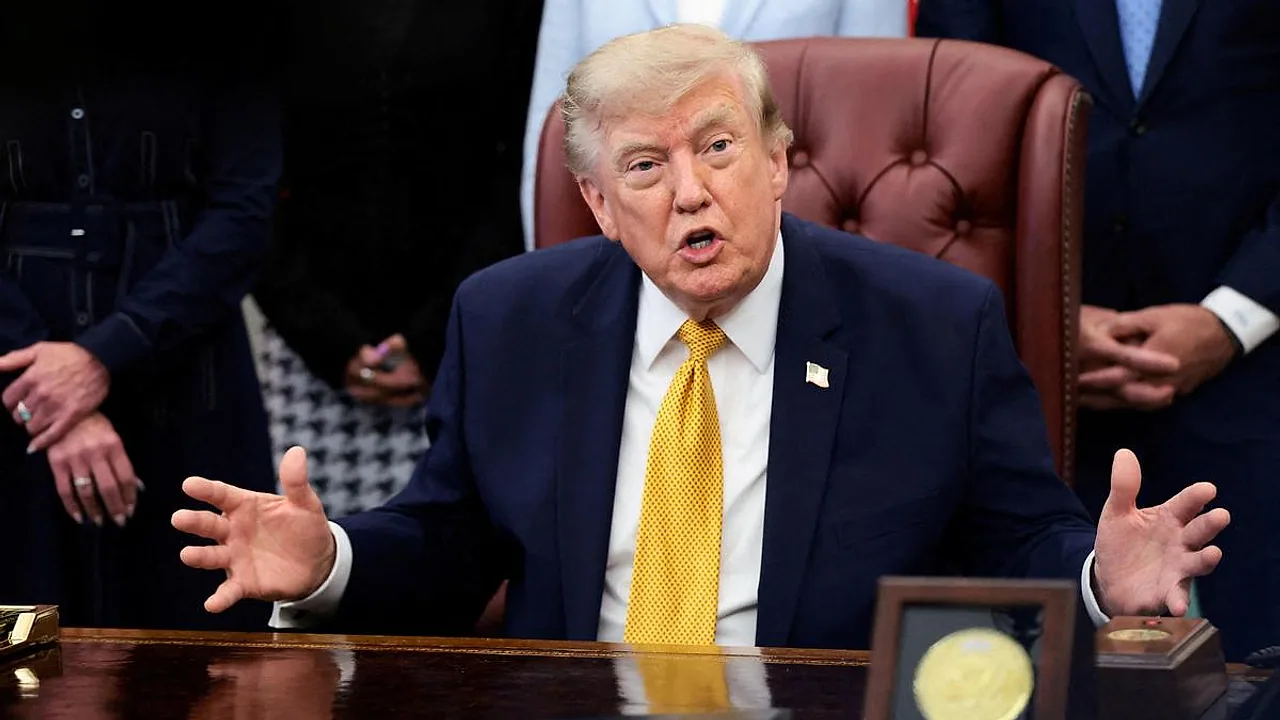
Diplomatic messaging between Washington and Tehran offered starkly contrasting views of current engagement. Speaking to journalists at the White House on Monday, August 3, US President Donald Trump insisted that discussions with Tehran were actively underway. Describing the moment as a critical juncture representing a last chance before decapitation, Donald Trump stated he consented to maintain diplomatic channels following direct requests from regional leaders in Saudi Arabia, the United Arab Emirates, and Qatar.
However, Iranian Foreign Ministry spokesman Esmaeil Baghaei explicitly refuted claims of direct dialogue with Washington. Esmaeil Baghaei clarified that Tehran is not engaged in negotiations with US officials, maintaining that current diplomatic exchanges are conducted exclusively with Oman to resolve maritime access through the Strait of Hormuz.
Adding a timeline to diplomatic expectations, US Treasury Secretary Scott Bessent indicated during an interview on CNBC that a tentative accord to reopen the Strait of Hormuz could be finalized by Wednesday, August 5. Scott Bessent explained that US efforts remain focused on securing unimpeded commercial navigation through the waterway to stabilize international energy pricing.
To prevent further escalation, a trilateral diplomatic effort involving Qatar, Oman, and Pakistan is actively coordinating draft proposals between the opposing sides. Qatari Foreign Ministry spokesman Majed Al-Ansari confirmed that mediators are facilitating message exchanges. Concurrently, Pakistani Foreign Minister Ishaq Dar extended an official invitation to Iranian Foreign Minister Abbas Araghchi for urgent bilateral consultations in Islamabad.
Rome Talks Between Lebanon and Israel and Resistance from Hezbollah
In another critical arena of Middle Eastern diplomacy, delegation-level talks between Lebanon and Israel commenced on Tuesday at the US Embassy in Rome under American guidance. Scheduled through Thursday, the negotiations aim to establish a structured withdrawal of Israeli military forces from southern Lebanon, building upon a preliminary framework established in Washington in June that outlined Hezbollah disarmament, Israeli withdrawal, and Lebanese army deployments in designated pilot zones.
The diplomatic initiative encountered fierce opposition from Hezbollah Secretary-General Naim Qassem. In a televised broadcast, Naim Qassem condemned direct negotiations, asserting that direct talks with Israel would yield only humiliation, disgrace, and continuous concessions for Lebanon. Naim Qassem also targeted Lebanese President Joseph Aoun, accusing him of abandoning neutral stewardship in favor of a divisive political stance.
Global Oil Market Volatility and Price Reactions
Developments in the Strait of Hormuz directly influenced global crude oil markets. Following a sharp 7 percent sell-off in the preceding session that brought prices to a three-week low, benchmark crude futures staged a modest recovery on Tuesday, August 4.
Front-month Brent crude futures advanced by $0.62, or 0.7 percent, to settle at $84.39 per barrel at 0055 GMT. Simultaneously, US West Texas Intermediate (WTI) crude gained $0.61, or 0.7 percent, to trade at $80.95 per barrel, recovering slightly after dropping more than 5 percent to near a one-week low in the prior session. Market analysts note that energy prices will remain vulnerable to rapid swings until a definitive diplomatic agreement guarantees safe passage through regional sea lanes.