




















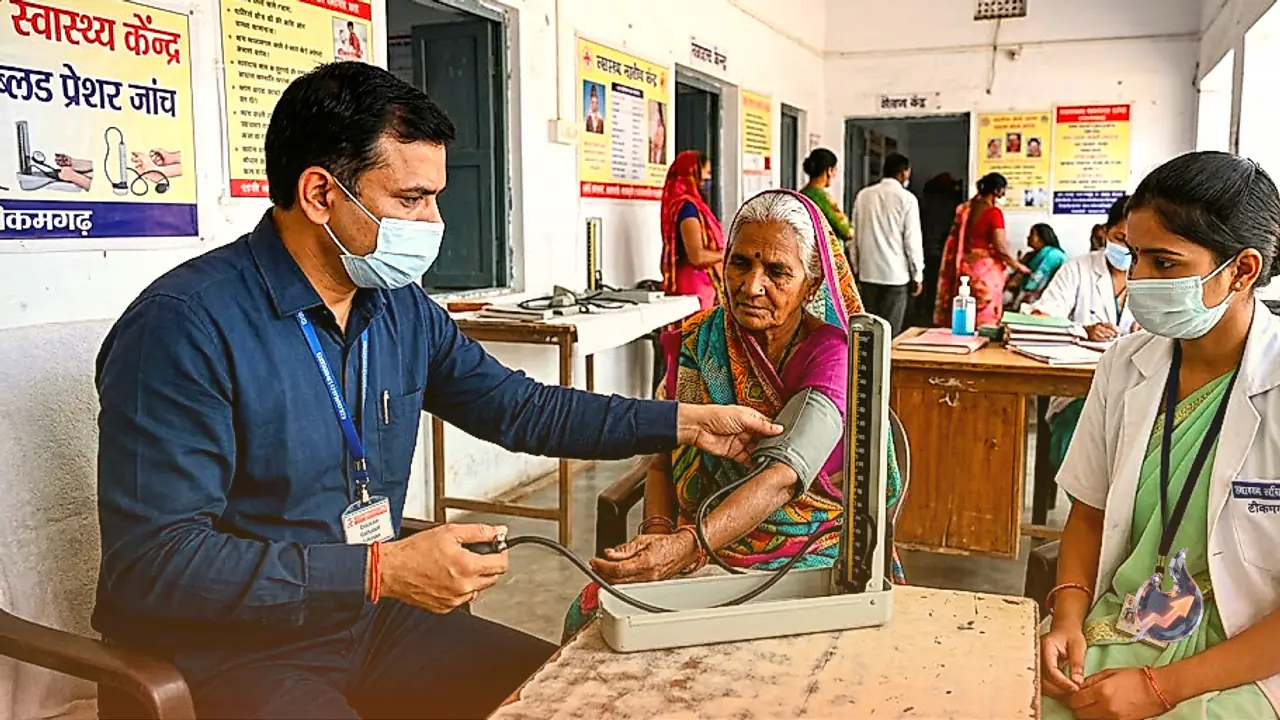

The ground reality of healthcare infrastructure in Madhya Pradesh came to light when district collector Vivek Kumar Shrotriy visited a rural medical facility to review local arrangements. During a surprise inspection of the Sapon sub-health center, the administrator encountered a situation that once again raised serious concerns over the quality of grassroots healthcare services. A video capturing the incident has since surfaced, sparking widespread debate regarding the actual academic credentials and practical competence of healthcare personnel posted at government-run rural centers.
Community Health Officer Fails to Measure Blood Pressure
When Collector Vivek Kumar Shrotriy entered the Sapon sub-health center, community health officer Ritu Ahirwar was attending to a female patient. The situation took an awkward turn when the official realized that the staff member was completely unable to complete the process of measuring the patient's blood pressure. Taken aback by the inability to perform such a basic medical checkup, the collector intervened directly. He stepped in to explain the correct procedure of blood pressure measurement, demonstrating the essential steps and technique right on the spot to guide the struggling worker.
Questions Raised Over Academic Qualifications and Degrees
Following the inability to carry out the basic examination, the collector questioned the community health officer about her educational background and professional degrees. He sought detailed information regarding her qualifications to understand how someone with formal medical credentials could struggle so profoundly with a routine task like checking blood pressure. As the inspection progressed, the focus shifted from general infrastructure to evaluating the actual practical efficiency and skill sets of the personnel deployed at the facility.
Local Villagers Highlight Irregular Operations of the Center
During the administrative visit, local villagers seized the opportunity to voice their grievances concerning the functioning of the sub-health center. Residents complained that the Sapon center rarely remains open on a regular schedule, forcing local people to travel elsewhere or suffer immensely even for minor medical examinations. According to the villagers, this erratic functioning directly impacts the accessibility of essential healthcare services for ordinary families. The community urged the administration to streamline operations and ensure the center functions consistently every day.
Strict Directives Issued to Officials for Systemic Improvements
After listening carefully to the grievances raised by the residents, Collector Vivek Kumar Shrotriy directed the concerned officials to overhaul the existing arrangements immediately. He emphasized that the services at the sub-health center must be operated regularly and efficiently so that patients receive medical attention precisely when needed. This administrative inspection is considered significant because sub-health centers bear the primary responsibility of delivering fundamental health screening and initial diagnostic care to rural populations.