





















More than half of June is already gone, yet Sagar in the Bundelkhand region has logged just two and a half inches of rain so far. Pre-monsoon activity has finally begun, but the monsoon itself is trailing nearly 11 days behind its usual date. On top of that, the weather department has warned of below-normal rainfall this year because of El Nino, a forecast that has left rain-dependent farmers anxious. The big question now is simple: what exactly is El Nino, and how badly will it hit your crop?
Dr. K.S. Yadav, chief scientist at the Sagar Krishi Vigyan Kendra, breaks it down. According to him, the El Nino effect warms the mid-ocean waters of the Pacific, and that directly disturbs the eastern coast and the monsoon that sweeps from the south across to the west. It is on this basis that the IMD and the Central Agriculture Ministry have flagged the possibility of roughly 10 percent less rainfall this season. That is what the El Nino effect means, and it is why rainfall is expected to fall short.
Monsoon Reaches Madhya Pradesh 11 Days Behind Schedule
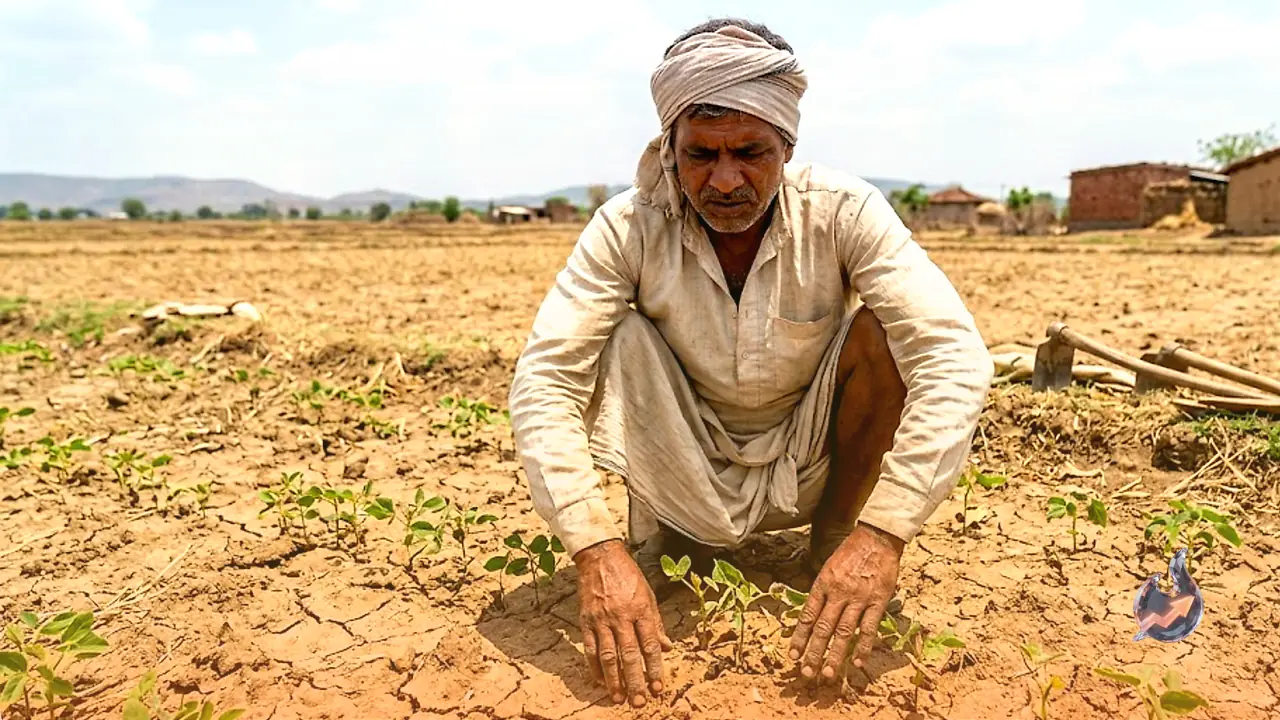
Dr. Yadav explains that if rainfall drops, the first casualty will be the sowing window and the entire seasonal cycle. The monsoon is already late, and 60 to 70 percent of farmers in Bundelkhand farm purely on rain. Normally the monsoon arrives here between 15 June and 21 June. For a crop like soybean, this kind of delay means farmers fall behind right at the start.
The second worry is that El Nino keeps temperatures elevated. Dry spells lengthen, and there is a real chance that no rain falls for 15 to 20 days at a stretch. That leaves crops parched, reduces pollination, cuts down pod formation and triggers a sharper outbreak of pests and diseases. The whole seasonal rhythm goes off track, and once Kharif is delayed, the damage spills over into the Rabi season as well.
Advice for Soybean, Maize and Urad Growers
The expert advice is for farmers growing soybean, maize and urad to be especially careful right now. The most important rule: sow only after the monsoon delivers 75 to 100 mm of rain. Farmers should lock in three things. First, plant short-duration crops. If you want to grow soybean, get it in by 10 July and use a 90-day variety. Second, always carry out seed treatment. And third, treat the seed with PSB and Rhizobium culture.
The Math Behind 1230 mm Over Four Months
The districts said to face the greatest El Nino risk include Dhar, Jhabua, Barwani, Neemuch, Ratlam, Datia, Sagar, Tikamgarh, Chhatarpur, Panna, Shivpuri, Mandla, Satna, Betul, Chhindwara, Khandwa and the areas around them. Vivek Chhalotre, the scientist in charge at the Sagar meteorological centre, notes that Sagar receives 1230 mm of rain across the four-month monsoon season. With the directorate projecting a 10 percent shortfall, that translates to roughly 130 mm less rain this time.
The historical numbers are sobering too. In Sagar, of the nine times El Nino has been observed, the district recorded below-normal rainfall on six of those occasions. Rain will keep falling early on, but the later months will see a drop that can directly hurt crops. That is why farmers are being urged to use 80 to 85 day varieties. The weather department's mobile apps, Damini and Meghdoot, can also prove genuinely useful for farmers.