






















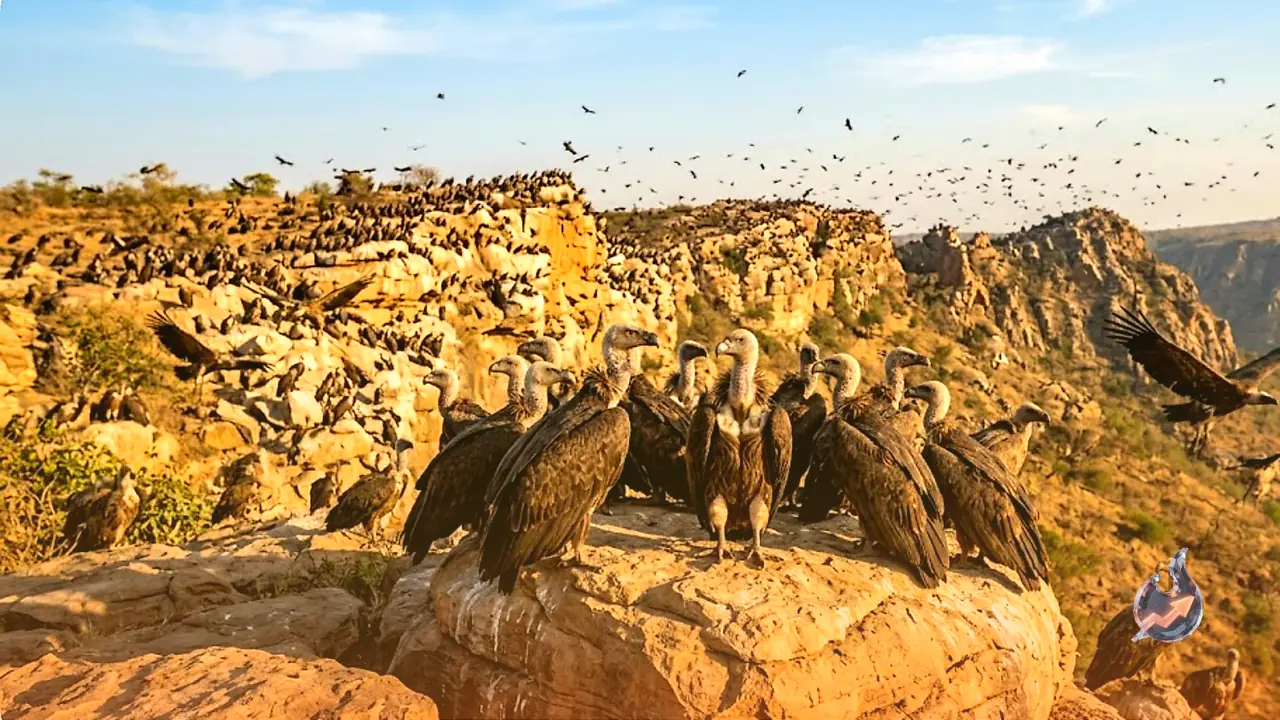

Vultures have made a dramatic comeback in Satna district of Madhya Pradesh, with a fresh survey showing the highest population of these birds anywhere in the state. During the recent summer count, 1568 vultures were spotted in Satna in a single day, while the three day average stood at 1178 vultures per day. Once pushed to the brink of extinction, these birds are now appearing in large numbers across the hills and forests of the Vindhya region, and the figures are being seen as a major win for vulture conservation not just in Madhya Pradesh but across the country.
Why the Count Happens Twice a Year
Satna's Divisional Forest Officer Mayank Chandiwal explained that the district conducts a vulture census twice every year, once in winter and once in summer. The reason lies in the birds' behaviour, since some vulture species are migratory and move to other regions depending on the season before returning. That is why forest officials run separate counts in both seasons, to arrive at accurate and reliable numbers.
According to Chandiwal, the winter count held between February 20 and 22 this year recorded a three day average of 757 vultures per day. The summer count that followed, conducted between May 22 and 24, saw the average climb to 1178 vultures per day. The standout moment came on May 24, when 1568 vultures were counted together in a single day, a figure being described as the highest ever recorded in the district.
Five Species in Winter, Four in Summer
Madhya Pradesh is generally home to seven vulture species, three migratory and four local. The February count recorded five species, the Egyptian vulture, White rumped vulture, Cinereous vulture, King vulture and Long billed vulture. Of these, the Cinereous vulture is a migratory species while the remaining four are local. During the May count, all four local species were spotted in large numbers.
Forest Staff Trained Before the Count
Chandiwal said that before this year's count began, the forest department organised special training for its officers and staff. Environmental activist Dilsher Khan, who has worked in vulture conservation for years, had earlier conducted a workshop in Sidhi. With his support, a two day training programme was also held in Satna. The training covered forest guards, deputy rangers, range officers and officials from the SDO office, and included detailed guidance on correctly identifying vulture species, scientific counting methods and common mistakes to avoid. The forest department believes this training is what allowed this year's count to be more accurate and comprehensive than before.
A Eurasian Vulture's 2300 Kilometre Journey Put Satna on the Map
Satna has previously drawn national attention for its vulture conservation work. Some time ago, an injured Eurasian vulture found in a field here was rescued and treated in Bhopal. It was later fitted with a GPS tracker, which recorded a flight of nearly 2300 kilometres as the bird travelled from India to Kazakhstan and Uzbekistan. The episode brought international recognition to the vulture conservation efforts underway in Satna and Madhya Pradesh.
Why Saving Nature's Cleanup Crew Matters
Vultures are regarded as nature's most important cleanup crew. By feeding on animal carcasses, they help keep the environment clean and prevent the spread of several diseases. Their numbers had once fallen sharply due to the side effects of certain drugs, but sustained monitoring, rescue operations, treatment, conservation drives and scientific tracking by the forest department are now helping the population recover. The fresh numbers from Satna suggest that if these conservation efforts continue, the vulture population could grow even stronger in the years ahead.