























The monsoon-season wells on farms in Madhya Pradesh's Balaghat district are turning into silent killers for local farmers this year. Just before the rains arrive, when farmers climb down into disused wells to pull out or repair irrigation motors without a second thought, poisonous gas that has built up over months inside the sealed well proves fatal within moments. In just a matter of days, three separate incidents in the district have already claimed four farmers' lives, and local officials say hardly a monsoon season passes without such news emerging from one part of Balaghat or another, with grieving families left behind each time.
Farmers collapsed the moment they climbed in
In Sitkutola village under the Navegaon police station area, farmer Laxman Lilhare climbed down into his farm well with no idea whatsoever that toxic gas had built up inside it. The moment the gas overpowered him, he lost consciousness, fell inside the well, and died on the spot.
A similar tragedy followed just days later in Mararitola village under Kirnapur police station, where a farmer named Ashok Kaware descended into a well and died after being overcome by poisonous gas. The very next day, on July 9, two more lives were lost together in Pipartola village, also under Kirnapur police station. Two friends, Mahesh Chaudhary and Yuvraj Bisen, had gone down to fix a motor when the gas overwhelmed both of them and they died on the spot. Balaghat records several such deaths every year just before the rains, leaving farming families to grieve for the very people who went out to earn a living in their own fields, often the household's sole breadwinners.
What actually creates the gas inside a well
Every June, farmers across the district rush to prepare for the sowing season, cleaning out their wells and pulling motors out before the monsoon floods them. What most don't realize is that a well left sealed and undisturbed for months allows silt and decaying matter settled at the bottom to slowly release methane gas, while oxygen levels inside the enclosed space drop sharply at the same time. A farmer gets no warning from outside, since the gas is invisible and often has no noticeable smell either. The moment he climbs in, direct exposure to methane combined with the shortage of breathable oxygen is enough to choke the life out of him within minutes, sometimes before anyone above even realizes something is wrong.
The simple test to run before going down
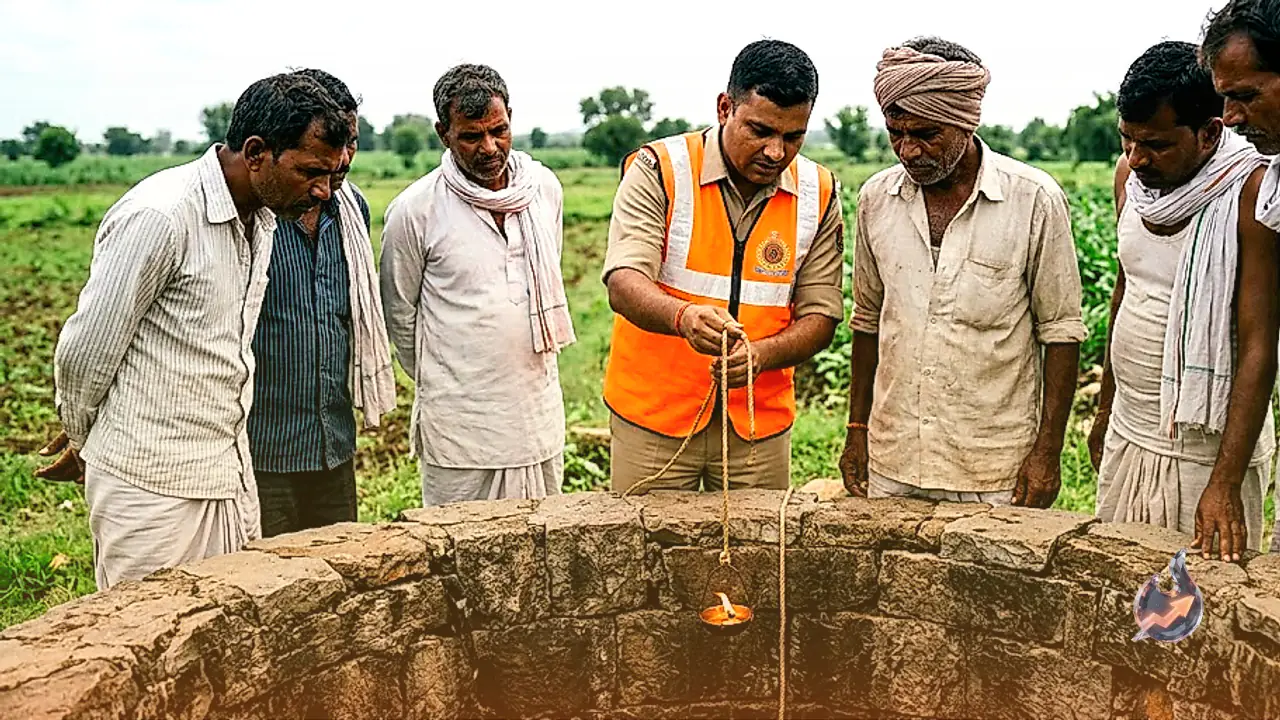
SDRF district commandant L K Udde explained that wells left shut for long stretches carry the highest risk of gas build-up. According to him, anyone planning to enter an old or long-closed well should first place a lit lamp or candle inside a bucket and slowly lower it down into the well on a rope. If the flame goes out partway down, it is a clear sign that oxygen is critically low and dangerous gas is present, and nobody should make the mistake of climbing into that well under such conditions until it has been aired out properly.
How to make a gassy well safe again
Udde also advised that if gas is suspected inside a well, farmers should first spray a strong jet of water down into it before anyone enters, since this stirs up the trapped air and helps break up the gas build-up to some extent. Repeatedly lowering and dropping a rope-tied bucket full of water into the well can also push out a large share of the gas trapped inside. If entering the well becomes truly unavoidable, the person going down should tie themselves securely with a rope so they can be pulled out immediately if needed, and at least one other person must always stay stationed at the top to keep watch and call for help without delay if something goes wrong.
Administration's appeal to farmers
The district Home Guard and Civil Defence Department has appealed to the public never to enter a well, septic tank, borewell or any other enclosed space without first testing for gas, and without proper safety equipment and a trained rescue team on hand. The department has warned that toxic gas and oxygen depletion inside such confined spaces can prove fatal, and a person entering alone can lose consciousness within seconds, leaving no time to call for help from inside. It has advised that in any emergency, the police, Home Guard or the district control room should be alerted immediately and without delay, so that a trained rescue team equipped for confined-space rescues can reach the spot in time.